
Docodonta: Mesozoic mammaliaforms with specialized molars
Docodonta are an extinct group of Mesozoic mammaliaforms known for complex molars, dentary jaws, and diverse ecologies including terrestrial and semi‑aquatic forms such as Castorocauda.
Overview
Docodonta is a group often treated as an order or suborder of early mammaliaforms that lived during the mid‑ to late‑ Mesozoic era. They are best known for highly specialized molar teeth and for having a lower jaw formed primarily by the dentary bone. Fossils are most commonly isolated teeth and jaw fragments, although a few exceptionally complete specimens have been found.
Image gallery
10 Images

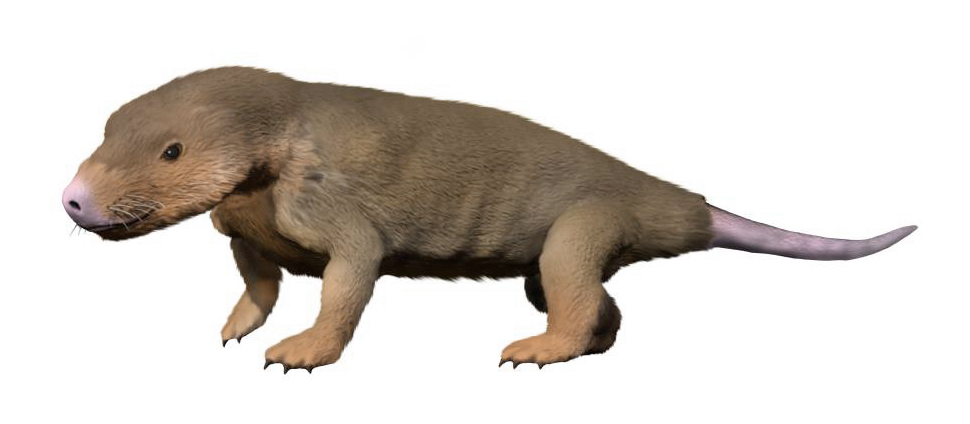


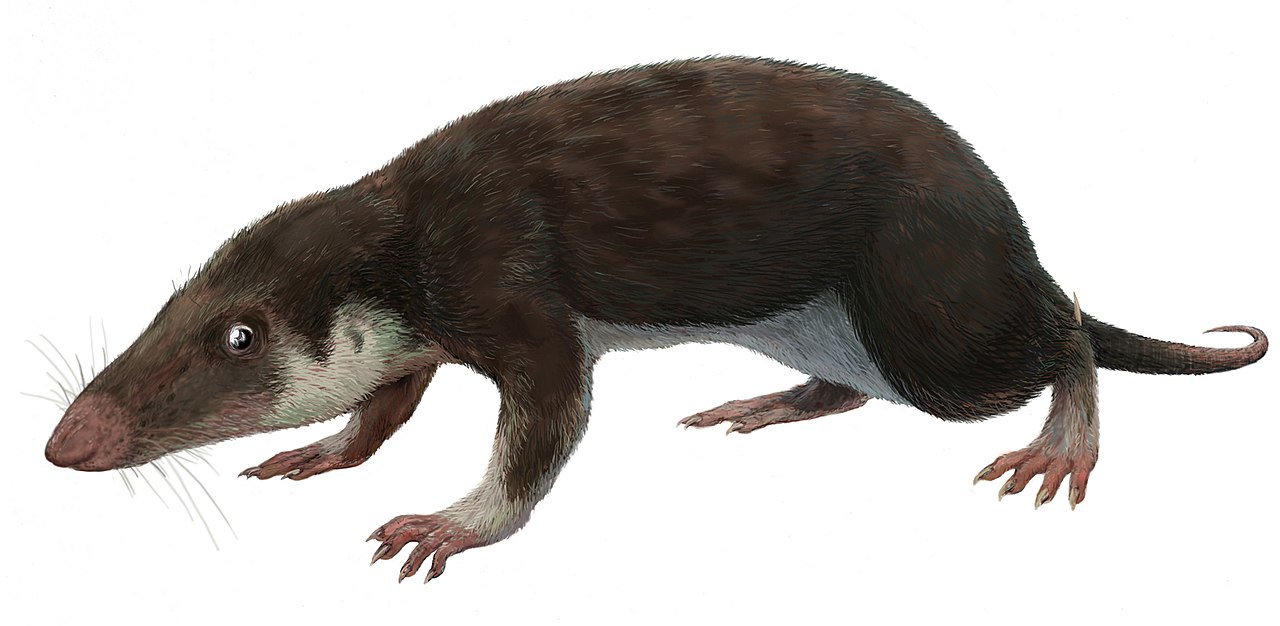


Anatomy and dentition
Docodonts possess complex, cusped molars that differ from the simpler tooth patterns of some contemporary groups. The arrangement and interlocking of cusps allowed efficient processing of food and is the feature that gave the group its name. Their single‑bone lower jaw (dentary) resembles that of true mammals, and many docodonts show other mammal‑like traits such as differentiated teeth (incisors, canines, premolars, molars) and indications of a well‑developed jaw musculature.
Fossil record and history of discovery
Remains of docodonts first appeared in Mesozoic deposits and were historically known mainly from isolated dental remains and partial jawbones. Those tooth fossils were sufficient to recognize the distinctive molar patterns and to separate docodonts from other early mammaliaforms. More complete discoveries have clarified aspects of their skeleton and lifestyle, prompting detailed reappraisals of their biology and relationships.
Ecology and notable genera
Most docodont species are interpreted as herbivorous or insectivorous, but the group shows ecological variety. The genus Castorocauda, for example, is interpreted as adapted to a semi-aquatic life: its postcranial anatomy and teeth indicate swimming ability and a diet that likely included fish. Castorocauda is also significant because an almost complete skeleton preserved fur, demonstrating that insulating body covering and aspects of mammal‑like thermoregulation were present in at least some docodonts.
Classification and significance
There is debate over terminology and placement. Some researchers include docodonts within a broad definition of Mammalia because of mammal‑like jaws and teeth, while others reserve the name crown-group Mammalia for the clade that contains living placentals and marsupials and their common ancestor, excluding groups like docodonts. Therefore many authors prefer the more inclusive term mammaliaformes for docodonts and related lineages. Their combination of derived dental features and diverse lifestyles makes them important for understanding early mammal evolution and ecological diversification in the age of dinosaurs.
Distinctions and open questions
Docodonts occupy an intermediate position in the transition from primitive synapsids to true mammals. They are generally considered less closely related to living placentals and marsupials than are living monotremes, which contributes to differing opinions about whether they belong inside the strict mammal crown group. Ongoing discoveries and new analytical techniques continue to refine their phylogenetic placement, functional anatomy, and the range of ecological roles they played during the Mesozoic.
- Key features: complex molars, single‑bone lower jaw, varied diets.
- Common remains: teeth and jaw fragments; rare complete skeletons provide exceptional insight.
- Importance: sheds light on the early evolution of mammal traits such as fur and endothermy.
Questions and answers
Q: What is Docodonta?
A: Docodonta is an order or suborder of extinct mammaliaforms that lived during the mid- to late-Mesozoic era.
Q: What are some features of docodonts?
A: Docodonts have sophisticated molars, a single bone lower jaw (the dentary), and were primarily herbivorous or insectivorous.
Q: Are docodonts considered mammals?
A: Generally, yes. However, those authors who limit the term "Mammalia" to the (living) crown group exclude docodonts and use the term mammaliaformes instead.
Q: How was Castorocauda adapted?
A: Castorocauda was adapted to a semi-aquatic life and had teeth which suggest it ate fish.
Q: What makes Castorocauda important in paleontology?
A: The first find of Castorocauda was an almost complete skeleton, which is rare in paleontology. It also breaks the "small nocturnal insectivore" stereotype as it was noticeably larger than most Mesozoic mammaliaform fossils, giving absolutely certain evidence of hair and fur which suggests mammalian-type temperature regulation.
Related articles
Author
AlegsaOnline.com Docodonta: Mesozoic mammaliaforms with specialized molars Leandro Alegsa
URL: https://en.alegsaonline.com/art/28116
Sources
- palaeos.com : Docodonta from Palaeos
- sciencemag.org : "A swimming mammaliaform from the Middle Jurassic and ecomorphological diversification of early mammals"
- ui.adsabs.harvard.edu : 2006Sci...311.1123J
- doi.org : 10.1126/science.1123026
- pubmed.ncbi.nlm.nih.gov : 16497926
- news.nationalgeographic.com : "Jurassic "beaver" found; rewrites history of mammals"