
Dual in-line package (DIP) — through‑hole integrated circuit packaging
Dual in-line package (DIP) is a common through‑hole package for integrated circuits and discrete components, featuring two parallel rows of pins for easy mounting, prototyping, and socketing.
Overview
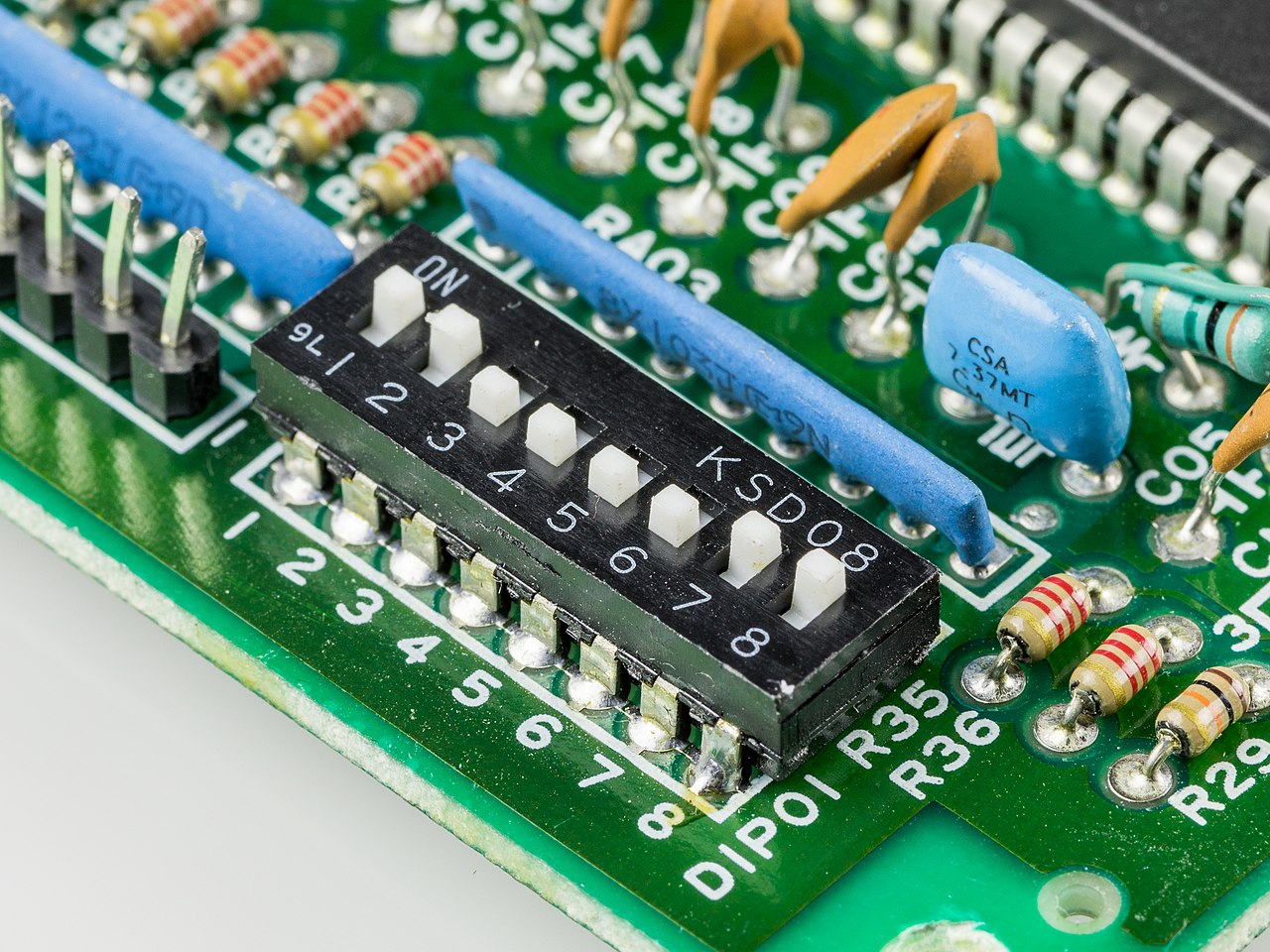
A dual in-line package (DIP or DIL) is a rectangular electronic package with two parallel rows of metal pins used to connect an enclosed device to a printed circuit board (PCB) or a solderless breadboard. The enclosed device is most often an integrated circuit, but DIPs can house other components such as resistor arrays, LED arrays or mechanical switches like a DIP switch.
Image gallery
10 Images




Design and characteristics
DIPs are built from a molded body — typically plastic or ceramic — with leads protruding from both long sides. Materials commonly used include molded plastic (plastic) for low cost and ceramic (ceramic) when thermal stability or hermetic sealing is required. Pins are arranged on a regular pitch (commonly 0.1 inches / 2.54 mm) so devices can be easily placed into breadboards and standard PCBs.
Common forms and conventions
Pin counts vary by device; small DIPs may have as few as four pins while others used in logic or memory reach several dozen pins. A molded notch or a dot marks the end of the package associated with pin one, and pins are numbered sequentially around the body. Leads are intended for through‑hole soldering and can be inserted into sockets for removable mounting.
History and development
DIPs emerged as a practical packaging style during the early years of integrated circuits, offering a balance of mechanical robustness and ease of manual assembly. Through the late 20th century they were ubiquitous for microprocessors, memory chips and discrete logic. With the rise of surface‑mount technology, many modern designs moved away from DIP for space and automated assembly reasons, but DIPs remain important for education, prototyping and legacy systems.
Uses, advantages and limitations
- Advantages: easy to handle, compatible with sockets and breadboards, straightforward to test and replace.
- Limitations: larger board area compared with surface‑mount packages, limited high‑frequency performance, less suitable for automated high‑density assembly.
Variants and related packages
Several derivatives exist, including narrow DIPs, ceramic dual in‑line packages for military or high‑reliability use, and smaller or gull‑wing lead variants designed for surface mounting. When choosing a package, designers weigh mechanical needs, thermal characteristics and assembly methods.
Overall, the dual in‑line package remains a simple, robust and widely recognized form factor that continues to serve hobbyists, educators and industries where ease of handling and retrofitability are valued.
Related articles
Author
AlegsaOnline.com Dual in-line package (DIP) — through‑hole integrated circuit packaging Leandro Alegsa
URL: https://en.alegsaonline.com/art/29072