
Depleted uranium: properties, uses, history and safety
Depleted uranium is the dense byproduct of uranium enrichment used in military munitions and civilian shielding. It is weakly radioactive, chemically toxic and the subject of environmental and health scrutiny.
Overview
Depleted uranium is the residual metallic material left after uranium enrichment reduces the proportion of the fissile isotope uranium‑235. It consists predominantly of the isotope uranium‑238, and therefore has lower radioactivity than enriched fuel. Because uranium metal is unusually dense for a common metal, depleted uranium has been adapted to applications that benefit from high mass in a small volume.
Image gallery
10 Images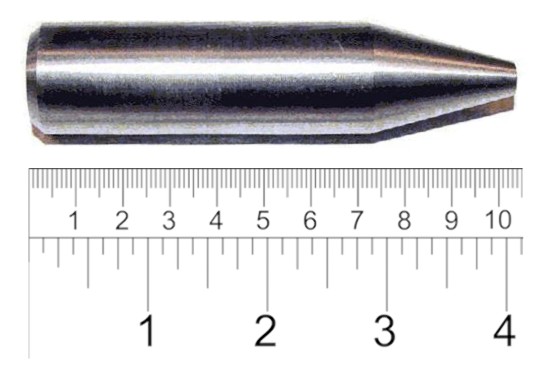






Physical and chemical characteristics
Key physical features that distinguish depleted uranium include high density, metallic hardness, and a tendency to form fine oxide particles when abraded or impacted. These oxides and the metal itself are chemically toxic in ways similar to other heavy metals. Under high‑velocity impact, fragments of depleted uranium may ignite (a pyrophoric reaction) and produce airborne particles; this behavior contributes both to its effectiveness as a penetrator and to concerns about inhalation exposure.
Common uses and examples
Depleted uranium has both military and civilian uses. In military contexts it is incorporated into kinetic energy penetrators and armor because its mass concentrates kinetic energy on a small area. Examples include projectiles used as armor‑piercing bullets or rounds fired by heavy machine guns and tank guns; in broader terms it has been used in other weapons and vehicle components where high density improves performance. The extra mass increases the energy transfer on impact (kinetic energy), contributing to penetration capability. Civilian applications exploit the same density advantage for radiation shielding, counterweights, and ballast in aerospace and industrial equipment.
Production, nuclear role and development
Depleted uranium is generated as a byproduct when natural uranium is processed to increase the fraction of U‑235 used in civilian nuclear reactors or nuclear weapons. Although not a primary fuel, the abundant U‑238 in depleted uranium can act as a fertile material in reactors: when it absorbs neutrons it may transmute into plutonium, which can be used as fuel. Proposed technologies such as traveling‑wave or other breeder reactor concepts aim to use depleted or natural uranium more directly to generate energy and produce fissile material like plutonium.
Health, environment and regulation
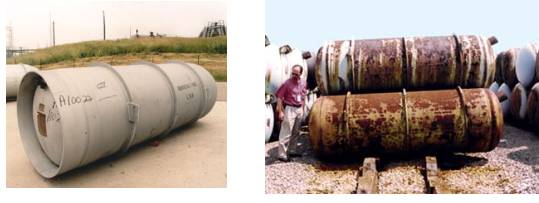
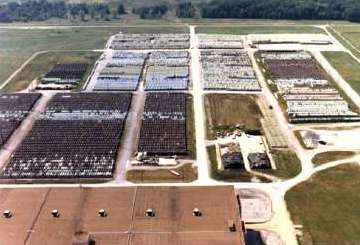
Health and environmental concerns focus on two properties: radioactivity and chemical toxicity. As a metal it is a heavy‑metal toxin; as a residual uranium product it is weakly radioactive. The principal exposure pathways of concern are inhalation of fine particles produced by impact or corrosion and ingestion of contaminated dust or soil. Studies and monitoring after military use have produced mixed findings; some organizations emphasize limited radiological hazard compared with chemical toxicity, while others stress unresolved long‑term environmental and health questions. Many jurisdictions regulate depleted uranium storage, transport and disposal as a type of low‑level radioactive or mixed waste.
Notable facts and distinctions
- Difference from enriched uranium: depleted uranium has less U‑235 and lower specific radioactivity than fuel‑grade or weapons‑grade uranium.
- Performance in munitions: its density and impact behavior make it effective for penetration; the same properties produce oxidized particulates that raise safety questions.
- Civilian uses: besides military roles, it is used for shielding, ballast and counterweights where dense metal is required.
- Long‑term issues: contamination from battlefield use can persist locally and is subject to remediation and monitoring efforts.
Because depleted uranium sits at the intersection of metallurgy, nuclear technology and environmental health, practical discussion of its use requires attention to engineering benefits, regulatory frameworks and responsible handling to limit chemical and radiological exposure.
For introductory resources and technical reports see links to topics such as enrichment, reactors, weapons, material properties like U‑238, and applications including projectiles, heavy weapon systems, and broader weapons considerations. Additional reading covers the physical concepts of energy transfer and nuclear fuel cycles that can produce plutonium.
Related articles
Author
AlegsaOnline.com Depleted uranium: properties, uses, history and safety Leandro Alegsa
URL: https://en.alegsaonline.com/art/26695
Sources
- nytimes.com : Reactor that burns depleted fuel emerges