
Desiccation: drying, desiccants, effects and applications
Desiccation is extreme drying—the process or state of removing water. Covers mechanisms, common desiccants, industrial and biological roles, historical uses, and distinctions from related terms.
Desiccation denotes either the process of removing moisture from a substance or the resulting state of extreme dryness. It is central to many preservation and manufacturing techniques because limiting water activity slows chemical reactions and microbial growth. The term applies across chemistry, materials science, food technology, ecology and medicine.
Image gallery
5 Images



Characteristics and mechanisms
Removing water may be accomplished physically or chemically. Physical methods include warm-air drying, vacuum drying and freeze‑drying (lyophilization), which remove liquid water or ice. Chemical drying uses hygroscopic materials—called desiccants—that adsorb or absorb water. Common desiccants include silica gel, molecular sieves, calcium chloride and activated alumina. In many systems the goal is to reduce the water activity to a level that inhibits spoilage or unwanted reactions.
Types and common practices
- Air drying: simplest method, used for food, wood and herbs.
- Thermal drying: ovens and kilns for industrial processing.
- Freeze‑drying: preserves heat‑sensitive materials by sublimating ice under vacuum.
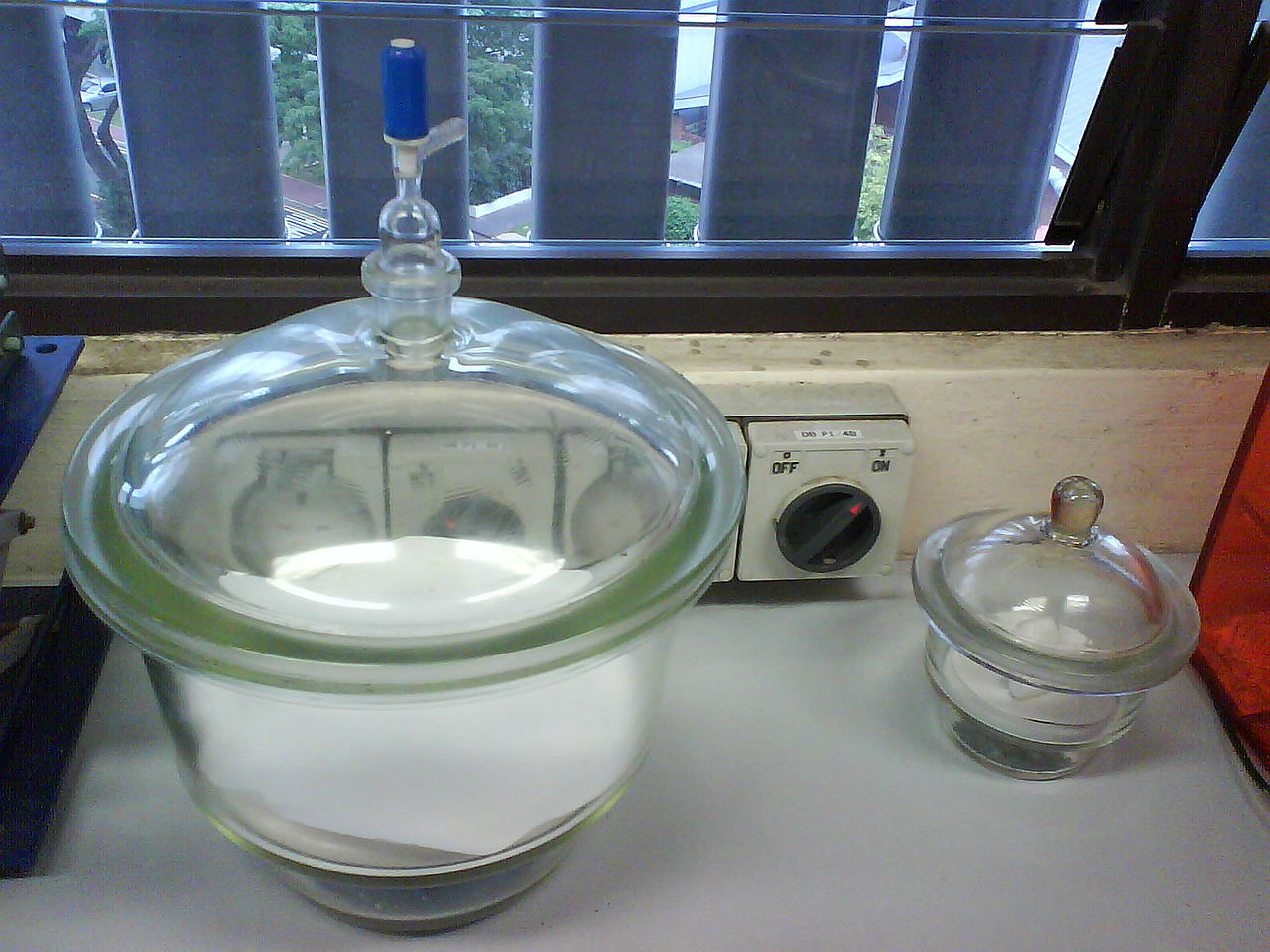
- Chemical desiccation: packets in packaging, laboratory desiccators, and gas-drying columns.
Desiccants are often reusable: many release adsorbed water when heated and can be regenerated for further use.
History and development
Humans have long used drying to preserve food and materials—sun‑drying and smoking are ancient techniques. Over time chemical desiccants and mechanical drying equipment expanded the ability to control moisture precisely. Freeze‑drying emerged in the 20th century as a way to preserve pharmaceuticals and high‑value foodstuffs without chemical alteration.
Uses and significance
Desiccation underpins food preservation, pharmaceutical stability, museum conservation, moisture control in electronics and drying of construction materials. In laboratories, desiccators keep reagents and instruments dry. In industrial gas and air systems, desiccants prevent condensation and corrosion. Controlling moisture is often essential to product quality, shelf life and safety.
Biological tolerance and ecological effects
Some organisms tolerate extreme desiccation through anhydrobiosis: seeds, spores, tardigrades and certain plants can survive losing most body water and recover when rehydrated. Conversely, desiccation at ecosystem scale—drought and soil drying—can damage habitats, alter carbon cycling and stress agriculture.
Distinctions and notable points
Desiccation and dehydration are related: dehydration often refers to biological water loss, while desiccation emphasizes drying to a very low moisture content. Desiccants differ from simple moisture absorbers by their capacity and the way they hold water (adsorption versus absorption). Practical care is required: some desiccants are corrosive, and silica gel packets are labeled to avoid ingestion.
Related articles
Author
AlegsaOnline.com Desiccation: drying, desiccants, effects and applications Leandro Alegsa
URL: https://en.alegsaonline.com/art/26841
Sources
- cell.com : "Tardigrades survive exposure to space in low Earth orbit"
- worldcat.org : R729-R731