
Decapodiformes: ten-limbed cephalopods (squid, cuttlefish and kin)
Decapodiformes are a superorder of cephalopods distinguished by ten appendages—eight arms plus two tentacles. Includes squid, cuttlefish and extinct belemnites; notable for jet propulsion, camouflage and diverse marine roles.
Overview
Decapodiformes are a major grouping within the class Cephalopoda defined by having ten primary appendages: eight shorter arms and two typically longer tentacles. Members occur throughout the world’s oceans, from coastal shallows to the deep sea. Familiar living representatives include cuttlefish and a wide variety of squid, while fossil relatives such as belemnites are well known from the geologic record. The extra pair of appendages and related specializations distinguish decapodiforms from octopuses and other cephalopods (tentacle function).
Image gallery
2 Images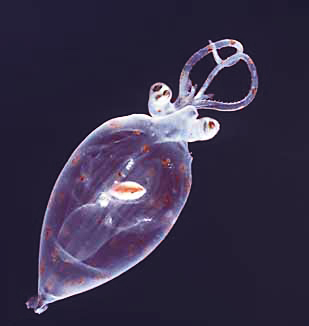

Anatomy and adaptations
Typical features include a muscular mantle for propulsion, a ventral funnel or siphon used for jetting, a beak and radula for feeding, and complex skin equipped with chromatophores for rapid color change. Many species possess an ink sac for defense and paired fins or gliding adaptations for controlled swimming. Buoyancy solutions vary: cuttlefish have an internal calcified cuttlebone, some squid use ammonia-rich tissues, and deep-sea forms show specializations such as elongated bodies or photophores.
Major groups
- Order Sepiida: cuttlefish, notable for their cuttlebone and advanced camouflage.
- Various squid families: true squid range from small coastal species to large deep-water predators.
- Extinct Belemnitida: belemnites, abundant in Mesozoic marine deposits.
Ecology and life history
Decapodiformes fill diverse ecological roles as active predators and prey for fish, marine mammals and seabirds. They capture prey with rapid tentacular strikes and manipulate items with their arms. Many species grow fast, have relatively short lifespans, and reproduce by laying eggs; reproductive strategies vary from guarded clutches to broadcast-spawning. Bioluminescence occurs in several lineages and is used for communication or camouflage.
Human relevance and distinctive facts
Squid and cuttlefish are important in fisheries, cuisine and cultural imagery, and their nervous systems and skin have been studied for insights into learning and camouflage. Fossil decapodiforms like belemnites help paleontologists reconstruct ancient marine ecosystems. Key distinctions from octopodiforms include the two elongated tentacles and different locomotor and buoyancy adaptations.
Related articles
Author
AlegsaOnline.com Decapodiformes: ten-limbed cephalopods (squid, cuttlefish and kin) Leandro Alegsa
URL: https://en.alegsaonline.com/art/26103