
Dendrobates: a genus of poison dart frogs
Dendrobates is a genus of brightly coloured poison dart frogs known for aposematic patterns and potent skin alkaloids; species occur in northern South America and are important in studies of toxicity, behavior, and conservation.
Overview
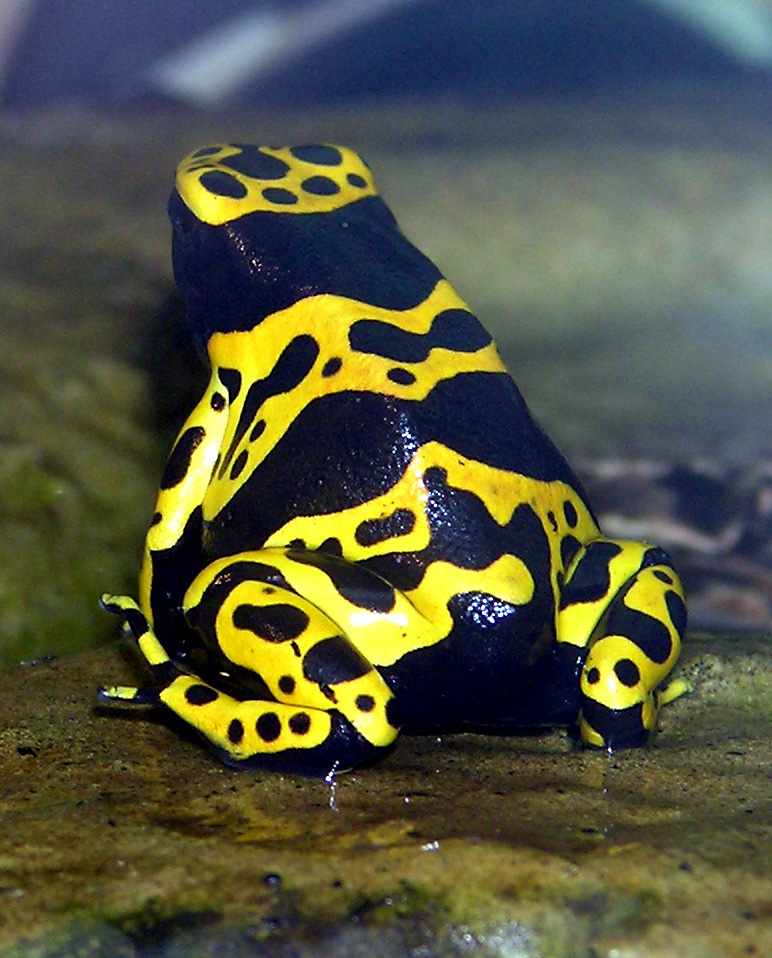
Dendrobates is a genus of small neotropical frogs placed among the poison dart frogs. Members of the genus are noted for striking colour patterns that serve as warning colouration (aposematism) to predators, and for skin alkaloids that can make them highly poisonous to handle if collected from the wild. Their common name derives from indigenous uses of frog toxins to tip darts or arrows.
Image gallery
9 Images


Description and biology
Dendrobates species are typically small, terrestrial frogs with smooth skin and bold dorsal markings in yellows, reds, blacks and blues. Toxicity is not produced internally but is acquired through diet: wild individuals sequester alkaloids from ants, mites and other invertebrates. Frogs reared in captivity on different diets usually show reduced or absent toxins. Reproductive behaviour often includes complex parental care: adults lay eggs on land, then transport tadpoles to water-filled microhabitats such as bromeliad axils.
Taxonomy and history
The taxonomy of poison dart frogs has changed substantially; several species formerly placed in Dendrobates have been reassigned to other genera as research refined relationships. The name and classification reflect historical collecting and study in the 19th and 20th centuries, and modern molecular work continues to clarify species limits and evolutionary history.
Distribution and notable species
Species in the traditional concept of Dendrobates are native to tropical regions of northern South America. One well-known example is the yellow-banded poison dart frog, Dendrobates leucomelas, found across parts of northern South America including Venezuela, Guyana and Brazil. Range sizes and habitat preferences vary by species; many inhabit lowland rainforest and seasonally flooded forests.
Ecology, uses and conservation
Dendrobates play roles as insect predators and as prey whose defenses influence predator behaviour. Their toxins have attracted scientific interest for chemical ecology and pharmacology, while indigenous knowledge documented practical uses. Conservation concerns include habitat loss, over-collection for the pet trade, and disease such as chytridiomycosis. Captive breeding programs, habitat protection and regulatory measures contribute to species management.
Identification and distinctions
- Appearance: bright aposematic colours distinguishing species and populations.
- Toxicity: variable across individuals and populations, linked to diet.
- Taxonomy: many former Dendrobates species now placed in related genera; careful identification requires morphology and sometimes genetics.
For further reading on genus-level treatments, natural history, and conservation actions consult regional field guides and specialist literature (genus overview, family accounts, and site-based resources for distribution and status).
Related articles
Author
AlegsaOnline.com Dendrobates: a genus of poison dart frogs Leandro Alegsa
URL: https://en.alegsaonline.com/art/26548
Sources
- commons.wikimedia.org : Dendrobates
- research.amnh.org : "Dendrobates Wagler, 1830"