
Cygnus X-1: a well-known stellar-mass black hole and X‑ray binary
Cygnus X‑1 is a bright X‑ray source in the constellation Cygnus, widely accepted as a stellar‑mass black hole in a binary system. It has been central to studies of accretion, compact objects, and relativistic astrophysics.
Overview
Cygnus X-1 is one of the brightest persistent X‑ray emitters in the sky and a prototypical high‑mass X‑ray binary. It was identified as a remarkable X-ray source and later classified as a strong candidate for a black hole. Located in the northern Milky Way, the system lies in the direction of the constellation Cygnus, and the name reflects its sky position as the first X‑ray source cataloged in that area. Its study links observations across X‑ray, optical, and radio wavelengths and connects compact‑object theory to observable phenomena.
Image gallery
9 Images





Physical characteristics
The compact component of Cygnus X-1 is generally interpreted as a stellar‑mass black hole in orbit with a massive blue supergiant companion. Typical, widely cited estimates place the compact object's mass at roughly about 15 times the mass of the Sun, which is too large to be a neutron star and consistent with black‑hole models. The corresponding gravitational radius or size of the event horizon is small — on the order of a few dozen kilometres — and can be described informally by reference to the event horizon expected for such a mass.
Discovery and early history
Cygnus X-1 was first detected during a sub‑orbital rocket flight in the 1960s, when early X‑ray astronomy began mapping bright sources beyond the Solar System. Subsequent observations located an optical counterpart and revealed that the bright X‑rays came from a compact object paired with a massive donor star. Over the following decades the system became one of the most extensively studied objects in high‑energy astrophysics, helping to convert theoretical black‑hole candidates into accepted examples.
How it emits X‑rays and related phenomena
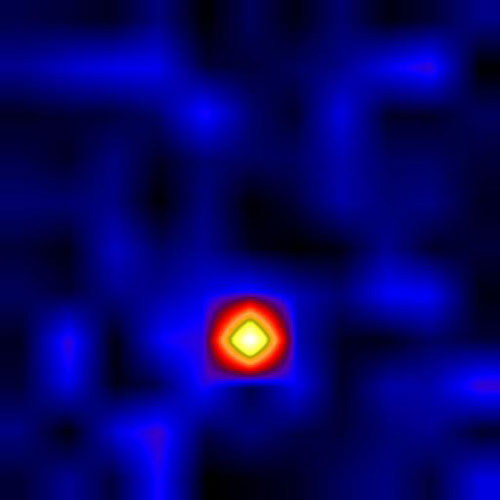
Most of the observed radiation arises when gas from the companion star is drawn toward the compact object, forming an accretion flow that heats to millions of degrees and radiates primarily in X‑rays. Observers have detected spectral states, variability on timescales from milliseconds to days, and occasional radio emission consistent with jets launched near the black hole. These behaviors place Cygnus X‑1 among the strongest X‑ray sources visible from Earth and make it a laboratory for accretion physics.
Scientific importance and notable facts
- Cygnus X-1 served as one of the first objects whose properties offered convincing evidence for astrophysical black holes.
- Because it is comparatively bright and relatively nearby, it provides constraints on black‑hole mass, spin, and accretion geometry that inform models across many systems.
- Detailed timing and spectral studies continue to probe relativistic effects and the interaction between inflows and outflows in compact binaries.
Observational context and further resources
Measurements combine data from X‑ray satellites, ground‑based optical spectroscopy of the companion, and radio monitoring of jet activity. The system is often referenced in reviews and public resources about X‑ray binaries and compact objects; for introductory material see general summaries of Cygnus region surveys and specialized entries on black holes. Together, these data have established Cygnus X‑1 as a keystone object in modern high‑energy astronomy and continue to motivate improved instruments and theoretical work.
Related articles
Author
AlegsaOnline.com Cygnus X-1: a well-known stellar-mass black hole and X‑ray binary Leandro Alegsa
URL: https://en.alegsaonline.com/art/24890