
Alfred de Grazia: Political Scientist, Innovator in Network Analysis, and Author
Alfred de Grazia (1919–2014) was an American political scientist and prolific author who pioneered computer-based social network analysis, advocated personal digital archives, and defended Velikovsky's catastrophism.
Overview
Alfred de Grazia (December 29, 1919 – July 12, 2014) was an American political scientist and writer known for a wide-ranging career that combined scholarship, technical experimentation and public controversy. Born in Chicago, Illinois, he published extensively on political theory, history and methodology and engaged with unconventional ideas that placed him outside some mainstream academic circles. For a concise biographical entry see his profile.
Image gallery
3 Images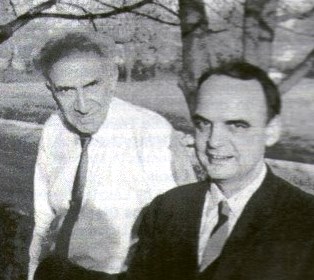


Major contributions
De Grazia made several notable contributions to social science and information ideas. In the 1950s he experimented with early computer techniques to study patterns of social and political relationships, anticipating elements of later social network analysis. In the 1970s he wrote about the possibilities of personal electronic records and archives at a time when digital storage was nascent.
- Early network methods: He explored ways to map and analyze interpersonal and organizational ties using emerging computational tools.
- Personal digital archives: He argued for systems that would allow individuals to collect, preserve and control their own digital documents and correspondence.
- Public intellectual work: He authored books and articles aimed at both specialists and general readers on politics, history and controversial historical theories.
Controversies and interests
De Grazia is also remembered for his defense of Immanuel Velikovsky's catastrophism, a hypothesis that interprets certain ancient myths and historical records as evidence of large-scale planetary and environmental catastrophes. Velikovsky's ideas were contentious and widely debated; de Grazia's advocacy of them placed him among a small group of scholars and commentators who challenged prevailing scientific and historical consensus on those topics. For context on that topic see catastrophism.
Legacy and recognition
Over a long career he combined scholarship, technical experimentation and public engagement. He remained a prolific author and a distinctive voice in debates about methodology, archives and the interpretation of historical catastrophe narratives. Near the end of his life he received formal recognition from France: on December 31, 2013 he was made a Chevalier of the Legion of Honor by decree of President François Hollande, an award noted in contemporary accounts announcing the distinction.
His work is of interest to historians of social science, students of digital preservation ideas, and readers curious about the interface between unconventional historical theories and scholarly debate. While some of his positions remain contested, his early use of computers in social research and his advocacy for user-centered archival ideas foreshadowed developments that became important in later decades.
Related articles
Author
AlegsaOnline.com Alfred de Grazia: Political Scientist, Innovator in Network Analysis, and Author Leandro Alegsa
URL: https://en.alegsaonline.com/art/2479