
Curtiss P-40 Warhawk: Development, Service, and Legacy
The Curtiss P-40 Warhawk was an American single-engine fighter and ground-attack aircraft of WWII, noted for ruggedness, service with the Flying Tigers, and widespread use by Allied air forces.
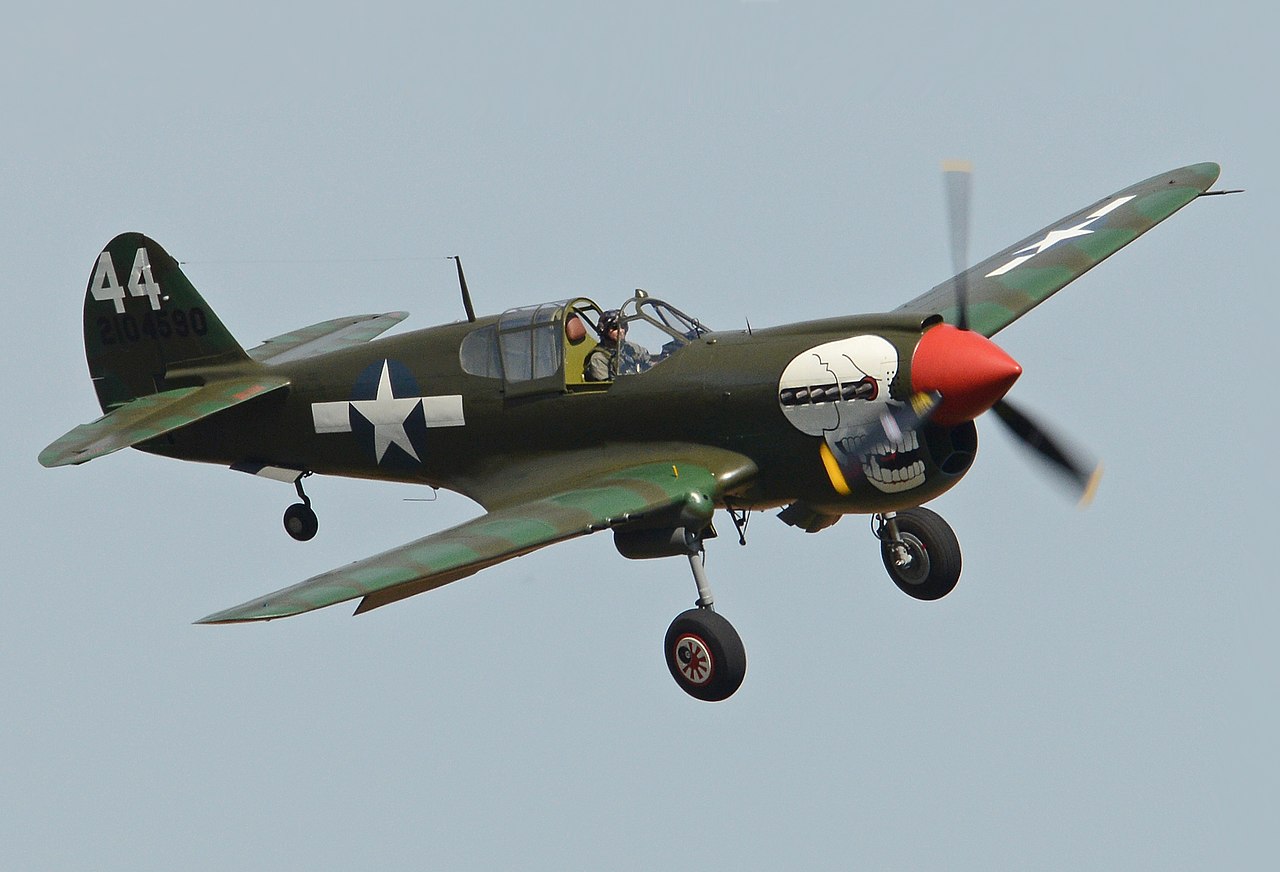
The Curtiss P-40 was a single-engine fighter aircraft produced by Curtiss-Wright that first took to the air in 1938 and soon entered combat in World War II. Intended as a relatively simple, robust design, the P-40 traded the highest-altitude performance of some contemporaries for durability, good low- and medium-altitude speed, and straightforward maintenance in austere conditions. The type became widely distributed among Allied air forces and earned a reputation for toughness and adaptability.
Image gallery
10 Images





Design and development
The P-40 airframe was developed from earlier Curtiss designs and was powered by the Allison V-1710 V-12 engine, which gave strong performance at low and medium altitudes but limited capability at extreme heights compared with some German designs and the Luftwaffe's high-altitude interceptors. The basic layout featured a slim fuselage, a distinctively large chin radiator and intake, and a single-seat cockpit. Armament evolved through the production run: early models carried a mix of machine guns while later versions typically mounted multiple .50 caliber weapons and could be fitted with bombs or drop tanks for ground-attack or escort missions.
Variants and names
- Tomahawk: name used for some early export and British-designated versions.
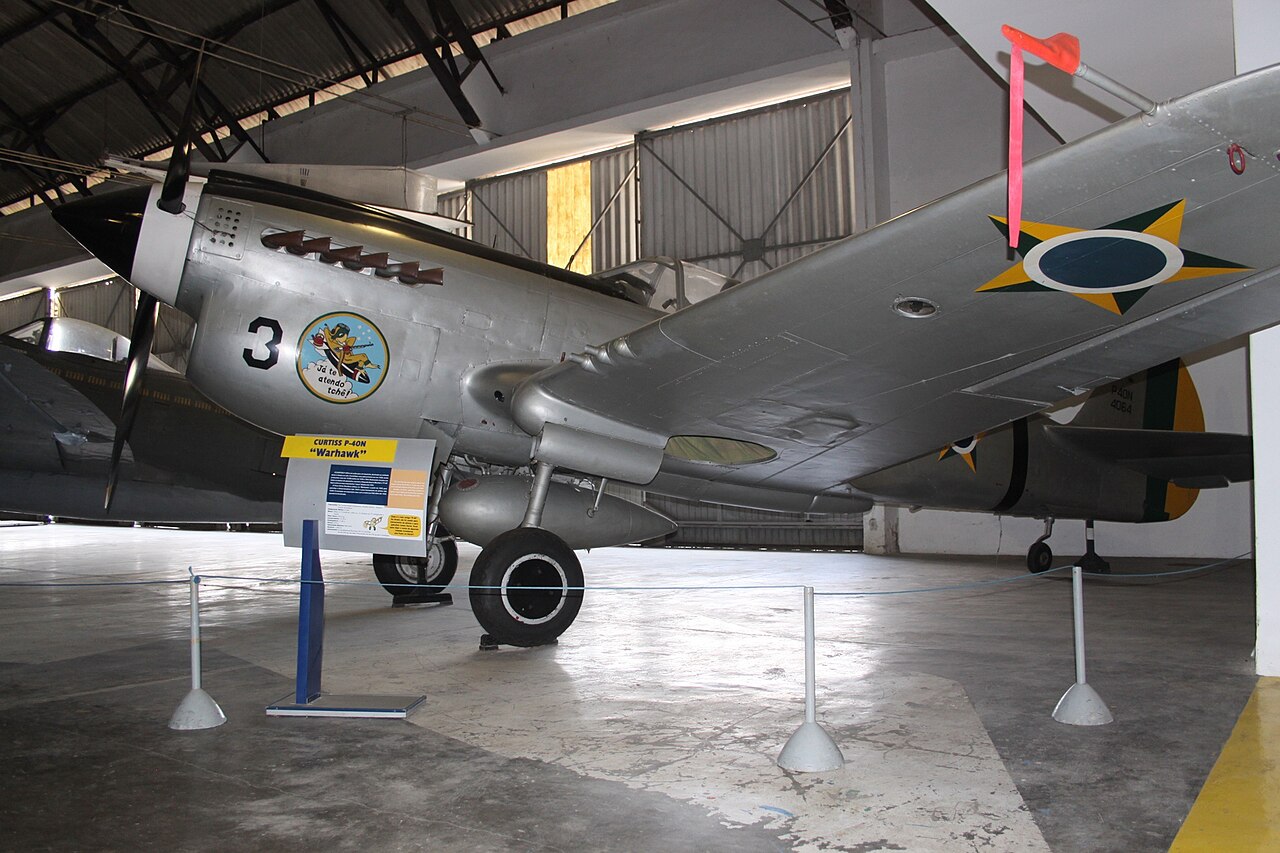
- Warhawk: common US designation for mid- and late-production models.
- Kittyhawk: name used in Commonwealth service for later marks supplied under lend-lease.
Throughout its production life the P-40 family saw incremental changes to engines, armament, cooling systems, and pilot protection. These incremental improvements helped the basic design remain operationally useful even as faster, higher-flying fighters appeared.
Operational history
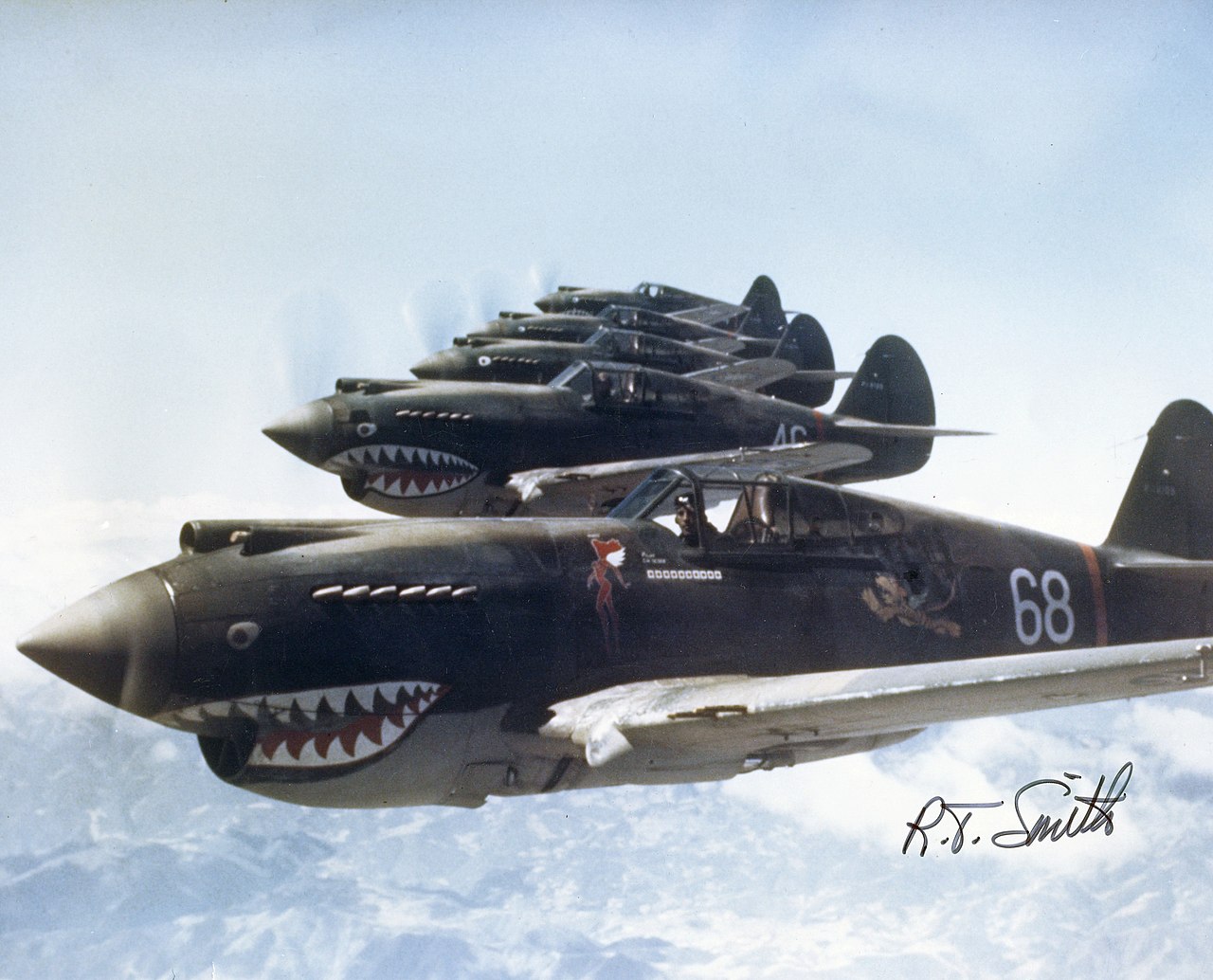
The P-40 served with the United States Army Air Forces and with many Allied and co-belligerent air arms. It achieved particular renown with the American Volunteer Group—better known as the Flying Tigers—a volunteer formation that operated in China under a contract arrangement sometimes characterized as a mercenary or contracted air force. The Flying Tigers famously painted a shark-mouth motif on their noses (shark mouth) and used tactics that exploited the P-40's strengths, such as diving attacks and low-altitude ambushes.
P-40 units fought across many theaters: in North Africa and the Mediterranean with the RAF and US units, in the China-Burma-India theater, and in the Pacific where it performed ground-attack and close-support roles. While generally outclassed at high altitude by some Axis fighters, the P-40's ruggedness, firepower, and good handling in dives made it effective where combat took place at lower levels.
Performance, retirement and legacy
Different marks and conditions produced varying performance, but the P-40 could reach speeds on the order of 360 miles per hour in favorable conditions and offered reliable service for ground-attack and short-range escort missions. As the war progressed, faster and more capable fighters replaced the P-40 in front-line roles; U.S. units gradually phased it out and the type was largely withdrawn from American service by 1948 as the newly established United States Air Force reorganized and modernized postwar forces.
Today the Curtiss P-40 remains a visible symbol of pragmatic wartime design. Restored survivors appear in museums and air displays, and the aircraft is remembered both for the distinctive shark-mouth livery of the Flying Tigers and for the large number of nations that employed it during a period of urgent aeronautical change.
Author
AlegsaOnline.com Curtiss P-40 Warhawk: Development, Service, and Legacy Leandro Alegsa
URL: https://en.alegsaonline.com/art/24754
Sources
- p40warhawk.com : "XP-40."
- usaaf.net : "Army Air Forces Statistical Digest, World War II." · web.archive.org
- commons.wikimedia.org : Curtiss P-40 Warhawk