
Alexandrine parakeet
A large green parakeet native to South and Southeast Asia, known for its red shoulder patches, noisy flocks, and introduced colonies in parts of Europe.
The Alexandrine parakeet (Psittacula eupatria) is a large, long-tailed Asian parakeet. It is one of the better known members of its group because of its vivid green plumage, strong curved bill, and loud social calls. The bird is named after Alexander the Great, a reminder of how long it has been known in trade and literature.
Image gallery
8 Images

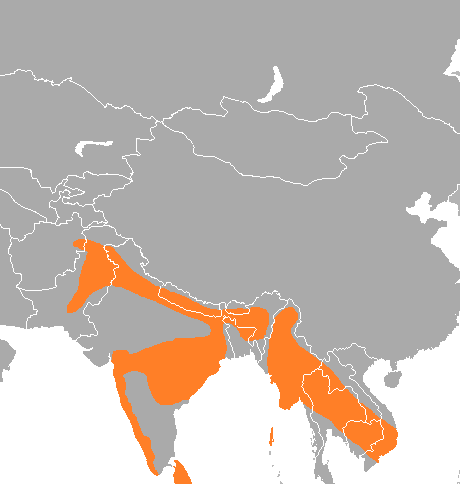


Range and habitat
In the wild, the species occurs across Afghanistan, Pakistan, India, Myanmar, Thailand, Laos, Cambodia, and Vietnam. It favors wooded country, river valleys, orchards, cultivated areas, and city parks where tall trees are available for feeding and roosting. Like many parrots, it adapts well to human-altered landscapes when enough tree cover remains.
Small introduced colonies have also been reported in parts of Europe, including Wiesbaden, Mainz, and Cologne. Such populations usually originate from escaped captive birds and may persist where winters are mild and nesting sites are available.
Appearance and behavior
The Alexandrine parakeet is typically bright green, with a long tail and a red upper bill. Adult males usually show a maroon patch on the shoulder and a darker neck ring, while females and younger birds are less conspicuously marked. It is often compared with the smaller rose-ringed parakeet, but it is larger and more robust.
- Diet: fruits, seeds, buds, flowers, and sometimes crops.
- Activity: diurnal and highly vocal, often seen in pairs or small flocks.
- Breeding: usually nests in tree cavities.
Importance and conservation
This parakeet is admired as a wild bird and is also kept in aviculture, where its size and personality make it popular. At the same time, trapping, habitat loss, and local pressure on nesting trees can affect populations in some regions. Its status is therefore best understood at the regional level rather than from a single global snapshot. As a member of the larger Psittacula group, it illustrates both the diversity of Asian parakeets and the way some species can adapt to changing landscapes.
Tags
Related articles
Author
AlegsaOnline.com Alexandrine parakeet Leandro Alegsa
URL: https://en.alegsaonline.com/art/2428