
Wiesbaden: capital, spa town, and regional center in Hesse, Germany
Overview of Wiesbaden: geography, history, spa heritage, cultural institutions, economy, climate and transport. Includes notable landmarks and distinctions within the Rhine-Main region.
Wiesbaden is a city in western central Germany that serves as the capital of the federal state of Hesse. Located on the right (northern) bank of the Rhine River, it sits opposite the city of Mainz and lies within the larger Rhine-Main metropolitan area, a short distance west of Frankfurt am Main. The city is widely known for its long-standing role as a spa town, its 19th‑century architecture, and its administrative and cultural institutions.

Image gallery
4 Images


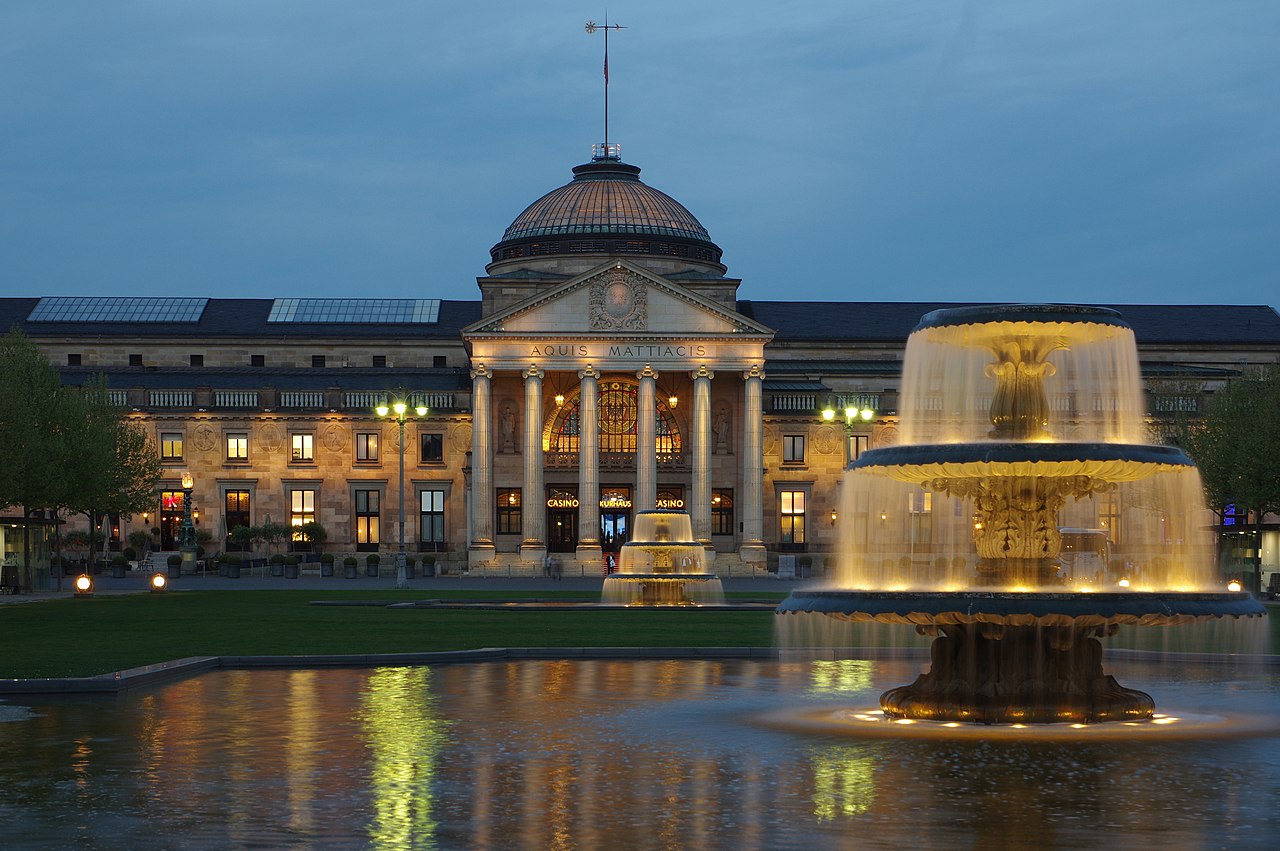
Geography and urban character
Wiesbaden occupies a position near several important transport and economic nodes: roughly 30 kilometres from Frankfurt and immediately across the Rhine from Mainz. The city combines a compact historic centre with residential districts that stretch into surrounding hills, vineyards and parkland. Its setting in the Rheingau region gives it links to wine‑producing traditions and a landscape of rolling slopes and river valleys. As the state capital, Wiesbaden concentrates regional government offices and public services while also hosting private firms in insurance, banking and professional services.
Historical background
The site has been recognized for its hot springs since antiquity. The Romans established a settlement here and named the place Aquae Mattiacae, reflecting the local thermal waters used for bathing and healing. Over the centuries the town evolved through medieval and early modern phases into a fashionable 19th‑century spa resort that attracted visitors for health and leisure. Wiesbaden later developed municipal institutions, theatres and promenades that reflect its role as both a regional capital and cultural centre.
Culture, landmarks and institutions
Wiesbaden’s architectural and cultural heritage includes late‑19th and early‑20th century public buildings, parks, and the Kurhaus with its casino and concert facilities. Notable sites and institutions include:
- grand spa complexes and thermal springs, preserved as civic attractions;
- neoclassical and historicist municipal buildings and boulevards;
- the Hessisches Staatstheater and several museums that host music, fine arts and regional history exhibitions;
- the nearby Neroberg hill, offering viewpoints and traditional transport links up the slope.
These elements contribute to Wiesbaden’s reputation as a centre for culture, conferences and tourism within Hesse and the greater Rhine-Main area.
Economy, administration and transport
As a state capital, Wiesbaden is a focal point for public administration and courts, which provide employment and attract related services. The local economy also includes financial and insurance firms, professional services and a hospitality sector oriented to business travellers and tourists. Transport connections are strong: regional rail and road links connect the city to Frankfurt, Mainz and other parts of the Rhine corridor, while major international air connections are available via nearby airports. The city is a node in both commuter and long‑distance transport networks.
Climate, demographics and contemporary role
Wiesbaden has a temperate oceanic climate (Köppen Cfb), with moderate seasonal variation and sufficient rainfall to support its parks and vineyards. The population has numbered in the low hundreds of thousands in recent decades, making it a mid‑sized German city: large enough to host state institutions and cultural venues, yet compact enough to retain distinct neighbourhoods and a visible historic centre. The city often appears in comparisons with neighboring Mainz and larger Frankfurt: while Frankfurt is the region’s financial hub, Wiesbaden is primarily known for governance, culture and its spa tradition.
Distinctive facts and links
Wiesbaden remains one of Germany’s better‑known spa towns because of its thermal springs and long history as a place of convalescence and leisure. Visitors and residents alike value its combination of riverside setting, historic architecture and access to the broader Rhine-Main economy. For further authoritative information, see municipal and regional resources on history, travel and administration: City overview, Mainz‑Wiesbaden relations, distance and transport, regional context, and climate classification.
Related articles
Author
AlegsaOnline.com Wiesbaden: capital, spa town, and regional center in Hesse, Germany Leandro Alegsa
URL: https://en.alegsaonline.com/art/107988
Sources
- destatis.de : "Alle politisch selbständigen Gemeinden mit ausgewählten Merkmalen am 31.12.2018 (4. Quartal)" · web.archive.org
- statistik.hessen.de : "Bevölkerung der hessischen Gemeinden"