
Croats of Bosnia and Herzegovina
An overview of the Croat community in Bosnia and Herzegovina: origins, demographics, language, religion, cultural contributions, and their constitutional and political role in the country.
Overview
The Croats of Bosnia and Herzegovina, commonly called Bosnian Croats, are one of the three constituent peoples of the country. They form the third-largest ethnic group in Bosnia and Herzegovina and are recognized in the state constitution as a native nation with historical roots in the region. Their presence is longstanding and they maintain distinct cultural, religious and linguistic traditions within the country.
Image gallery
10 Images



Population and distribution
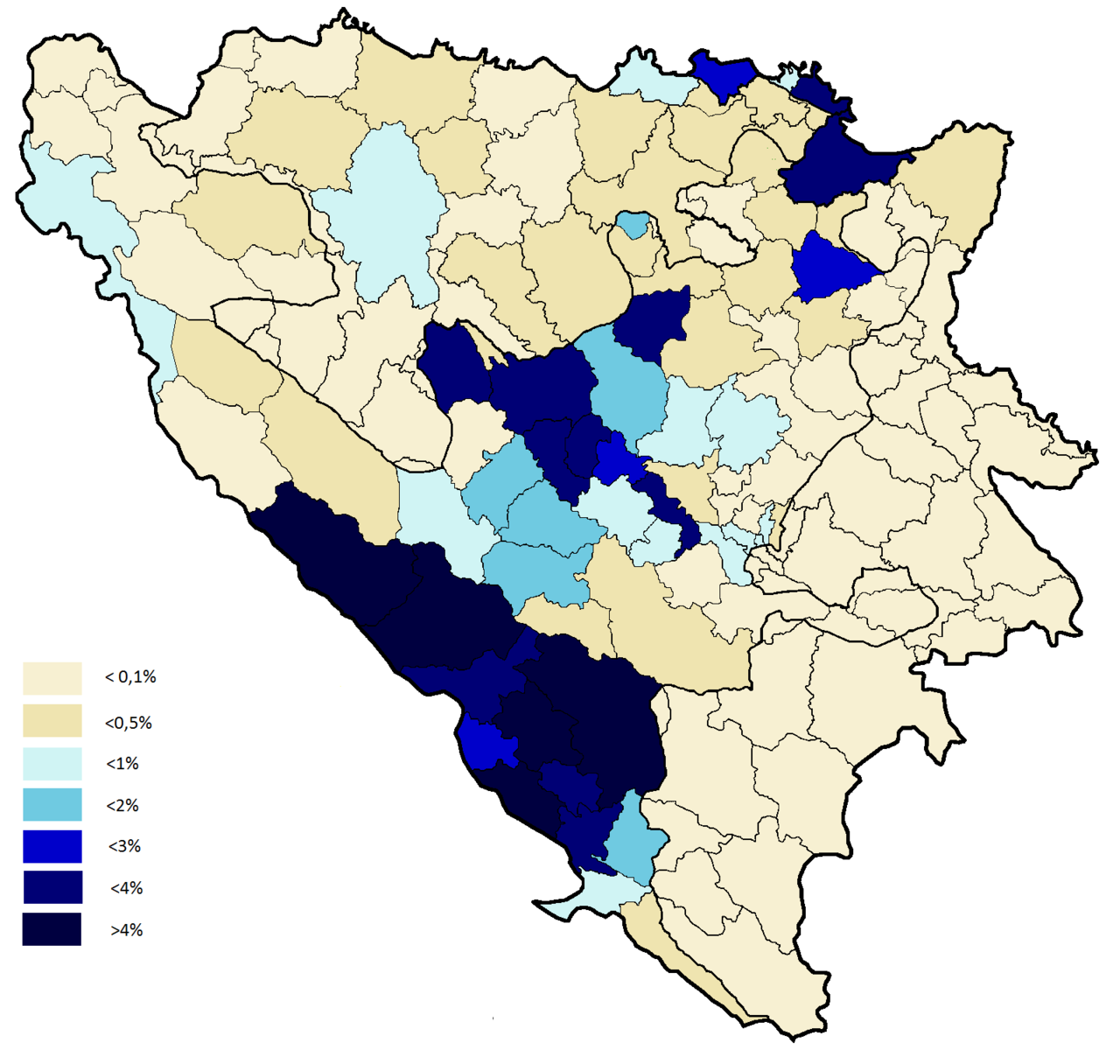
Bosnian Croats are concentrated mainly in the southwestern and central parts of the country, including much of the area known as Herzegovina and some parts of central Bosnia. Urban centers with significant Croat populations include Mostar and several towns in Herzegovina, as well as communities scattered across the country. Their demographic weight varies by canton and municipality, and migration since the late 20th century has affected local distributions.
Origins and history
The Croat presence in the western Balkans dates back to the early medieval period. Historically they emerged as a South Slavic people who settled in the area during the early Middle Ages; local identities and state affiliations evolved over centuries under various regional powers. Over time Bosnian Croats participated in the religious, cultural and economic life of the region and were shaped by Ottoman, Austro-Hungarian and later Yugoslav periods before Bosnia and Herzegovina became an independent state.
Language and religion
The community’s primary language is Croatian, a standard variety of the South Slavic language continuum. Religious practice is predominantly Roman Catholic: roughly three quarters of Bosnian Croats identify with the Catholic Church, which has played a central role in community life, education and cultural institutions.
Culture, institutions and contributions
Bosnian Croats have contributed to the country’s literature, music, architecture and folk traditions. Local dioceses, schools, media outlets and cultural societies preserve and promote Croatian language and heritage. Their cultural life includes both traditional rural customs and modern urban arts, shaping the broader cultural mosaic of Bosnia and Herzegovina.
Political status and notable facts
As a constitutionally recognized people, Croats participate in Bosnia and Herzegovina’s complex power-sharing system. Political representation, electoral arrangements and debates over territory and governance remain important themes in contemporary politics. Important points at a glance:
- Third most populous group in the country.
- One of the constituent peoples under the state framework.
- Presence in the region since the 7th century.
- Active role in the cultural life of the country.
- Native speakers of Croatian.
- Majority affiliation with the Roman Catholic Church.
For readers seeking more detail about demographics, history or contemporary politics, consult specialized histories and current statistical sources that track population change and institutional developments over time.
Related articles
Author
AlegsaOnline.com Croats of Bosnia and Herzegovina Leandro Alegsa
URL: https://en.alegsaonline.com/art/24255
Sources
- ccbh.ba : "Constitution of Bosnia and Herzegovina"