
Crinkle-collared manucode
A medium-sized bird-of-paradise from New Guinea and nearby islands, noted for glossy iridescent plumage, a textured neck 'collar', red eyes and a largely fruit-based diet.
Overview
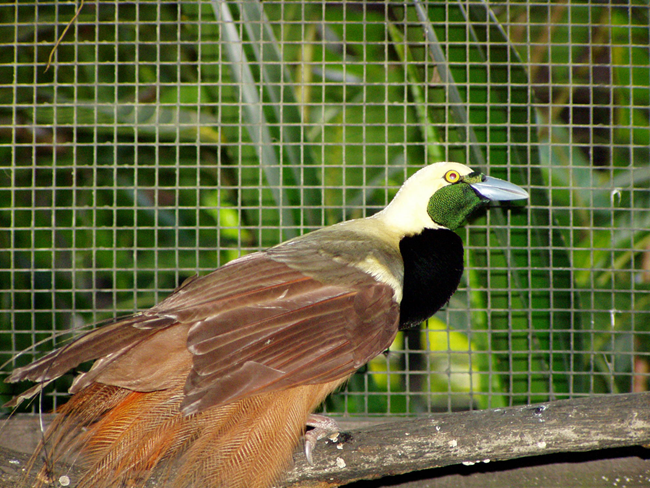
The crinkle-collared manucode (Manucodia chalybatus) is a medium-sized member of the birds-of-paradise family (Paradisaeidae). It reaches roughly 36 cm in length and is best known for its glossy, iridescent plumage, which shows combinations of greenish-blue, black and purple tones. The species' common name refers to the textured appearance of the neck feathers that form a loose collar.
Image gallery
3 Images

Identification and characteristics
Adults have a long tail and a striking red iris. The breast feathers can appear metallic or iridescent under certain light, giving a green sheen to the chest. For a closer look at the plumage and feather structure see plumage details. Key field marks include size, overall glossy coloration and the distinctive neck feathering.
Distribution and habitat
This species is native to parts of New Guinea and adjacent islands. It occurs in lowland and hill forest habitats on mainland New Guinea and has been recorded on Misool Island in West Papua. Its preferred environments are closed-canopy forests and forest edges where fruiting trees are available. For regional occurrence records consult resources such as regional checklists.
Diet and behavior
Crinkle-collared manucodes feed primarily on fruit, including figs, and are important seed dispersers in their ecosystems. Their foraging typically occurs in the mid-story of the forest, though they may move through various levels while searching for ripe fruit. Behavioral notes and dietary studies can be found via sources like dietary surveys.
Taxonomy and similar species
Belonging to the genus Manucodia, this species is part of a group of relatively less sexually dimorphic birds-of-paradise. It resembles the Jobi manucode in general appearance; observers comparing the two can consult identification guides and comparative plates at related species references. Subtle differences in size, feather texture and voice help distinguish them in the field.
Conservation and notable facts
Like many forest-dependent birds, crinkle-collared manucodes can be affected by habitat loss and fragmentation. Local population trends vary, and conservation assessments are carried out by regional and international organizations. Notable aspects of the species include its glossy, iridescent plumage and its ecological role as a frugivore and seed disperser.
- Scientific name: Manucodia chalybatus
- Length: about 36 cm
- Habitat: lowland and hill forests
- Diet: mainly fruit and figs
Related articles
Author
AlegsaOnline.com Crinkle-collared manucode Leandro Alegsa
URL: https://en.alegsaonline.com/art/24206
Sources
- iucnredlist.org : Manucodia chalybatus