
Crotalinae (pit vipers): overview, features, diversity and human interactions
Crotalinae, or pit vipers, are a subfamily of venomous vipers found across Asia and the Americas. They have heat‑sensing pits, hinged fangs and varied venom; members include rattlesnakes and lanceheads.
Overview
The Crotalinae, commonly called pit vipers or crotaline snakes, are a widespread subfamily of venomous vipers characterized by a conspicuous facial pit between each eye and nostril. These snakes occur throughout parts of Asia and across the Americas. Modern accounts list about 18 genera and roughly 151 species, distributed between the Old World and the New World. They include well known groups such as rattlesnakes and various lanceheads.
Image gallery
2 Images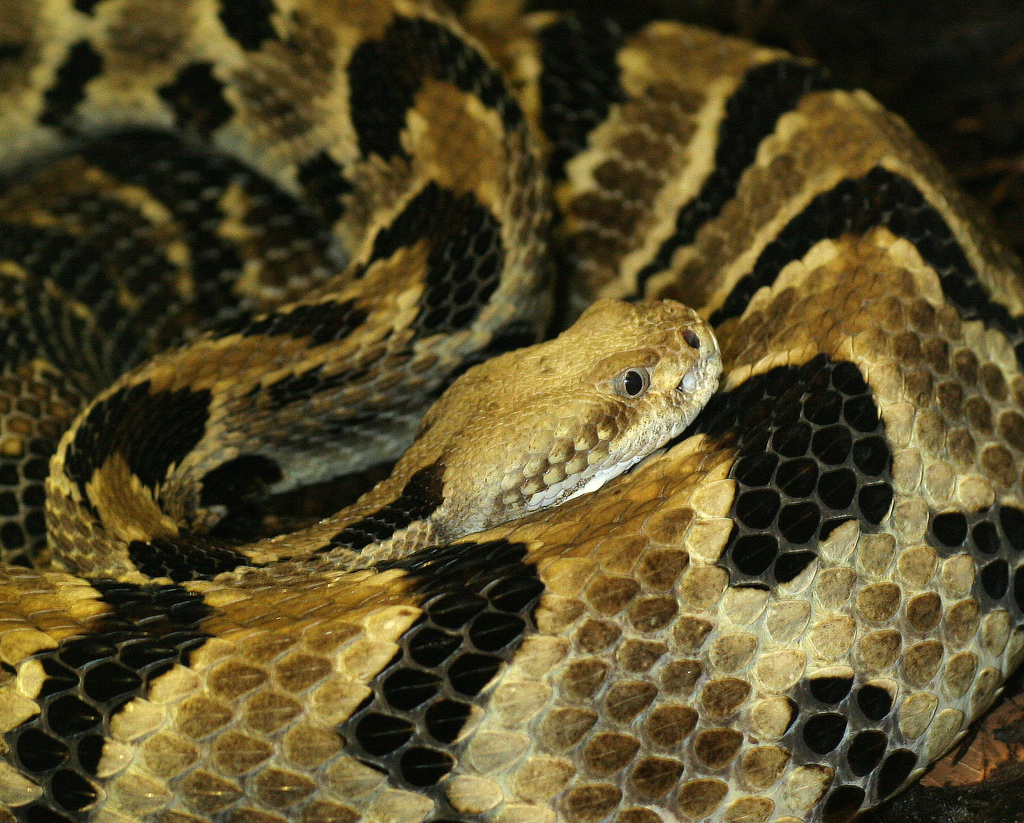

Distinctive characteristics
Pit vipers are best recognized by the loreal pit, an infrared‑sensitive cavity that detects small temperature differences and aids in locating warm prey at close range. They possess hollow, hinged fangs that fold against the roof of the mouth when not used. Venoms are complex mixtures of enzymes, peptides and proteins that often have proteolytic and haemotoxic effects, though composition and clinical effects vary considerably among species and populations.
Sensory biology and venom
The heat‑sensing pit is a specialized sensory organ linked to the trigeminal nerve and provides directional thermal information useful in low light. Venom functions both to immobilize prey and to initiate digestion; many pit vipers employ a strike‑and‑release strategy, tracking envenomed prey by scent. Study of crotaline venoms has produced compounds of pharmacological interest and improved clinical antivenom therapies.
Reproduction and life history
Many crotalines are viviparous, giving birth to live young, though reproductive modes may vary with species. Life histories also differ: some species are relatively sedentary ambush predators while others show active foraging and arboreal habits. Juveniles often occupy different microhabitats than adults, reducing competition.
Distribution, diversity and taxonomy
Crotalines are the only vipers native to much of the Americas and are represented by several genera in Asia and the Americas. Taxonomic treatments evolve with new molecular and morphological data; authoritative lists and databases maintain current counts of recognized genera and species. In general terms, about seven genera and some fifty or so species occur in the Old World, while the New World contains a greater number of genera and species, including the diverse rattlesnake clade (rattlesnakes).
Ecology, behavior and human interactions
As mid‑level predators, pit vipers consume small mammals, birds, amphibians and other reptiles. Their cryptic coloration and ambush tactics make them effective predators in forests, grasslands and rocky areas. Human encounters can result in bites that range from minor to medically significant; regional antivenoms and treatment protocols reduce mortality where available. Education, access to care and appropriate antivenom remain important in managing snakebite burden in affected regions.
Conservation and research
Some species are threatened by habitat loss, persecution and collection for the pet trade, while others are locally common or adaptable. Conservation status varies by species and region; assessments by conservation organizations and local authorities guide protection measures. Ongoing research in systematics, venom biology and ecology continues to refine understanding of the group and inform conservation and medical practice.
Key facts and examples
- Vipers possessing a heat‑sensitive loreal pit and long, folding fangs.
- Approximately 18 genera and 151 species in many recent lists, split between Old World and New World.
- Include familiar groups such as rattlesnakes, lanceheads and numerous Asian pit vipers.
- Venoms vary widely and are the subject of medical and pharmacological research.
Questions and answers
Q: What is the Crotalinae subfamily known as?
A: The Crotalinae subfamily is known as the "pit vipers" or "crotaline snakes".
Q: Where are the Crotalinae subfamily found?
A: The Crotalinae subfamily is found in Asia and the Americas.
Q: How many genera and species are currently found in the Crotalinae subfamily?
A: There are 18 genera and 151 species currently found in the Crotalinae subfamily.
Q: How many genera and species are found in the Old World?
A: There are 7 genera and 54 species found in the Old World.
Q: How many genera and species are found in the New World?
A: There are 11 genera and 97 species found in the New World.
Q: Are there any other vipers found in the Americas apart from the Crotalinae subfamily?
A: No, the Crotalinae subfamily are the only known vipers found in the Americas.
Q: What are some examples of snakes that belong to the Crotalinae subfamily?
A: Some examples of snakes that belong to the Crotalinae subfamily are rattlesnakes, lanceheads and Asian pitvipers.
Related articles
Author
AlegsaOnline.com Crotalinae (pit vipers): overview, features, diversity and human interactions Leandro Alegsa
URL: https://en.alegsaonline.com/art/24360