
Alexander Mackenzie (1764–1820): Scottish explorer of Canada’s northwest
Scottish-born fur trader and explorer who charted the Mackenzie River to the Arctic and completed the first recorded transcontinental crossing of North America north of Mexico (1793).

Sir Alexander Mackenzie (1764–1820) was a Scottish-born fur trader and explorer whose journeys in the late 18th century mapped large portions of what is now northern and western Canada. Employed by the North West Company, he is best known for following the river that now bears his name to the Arctic and for leading the first recorded overland crossing of North America north of Mexico to the Pacific coast.
Image gallery
4 Images

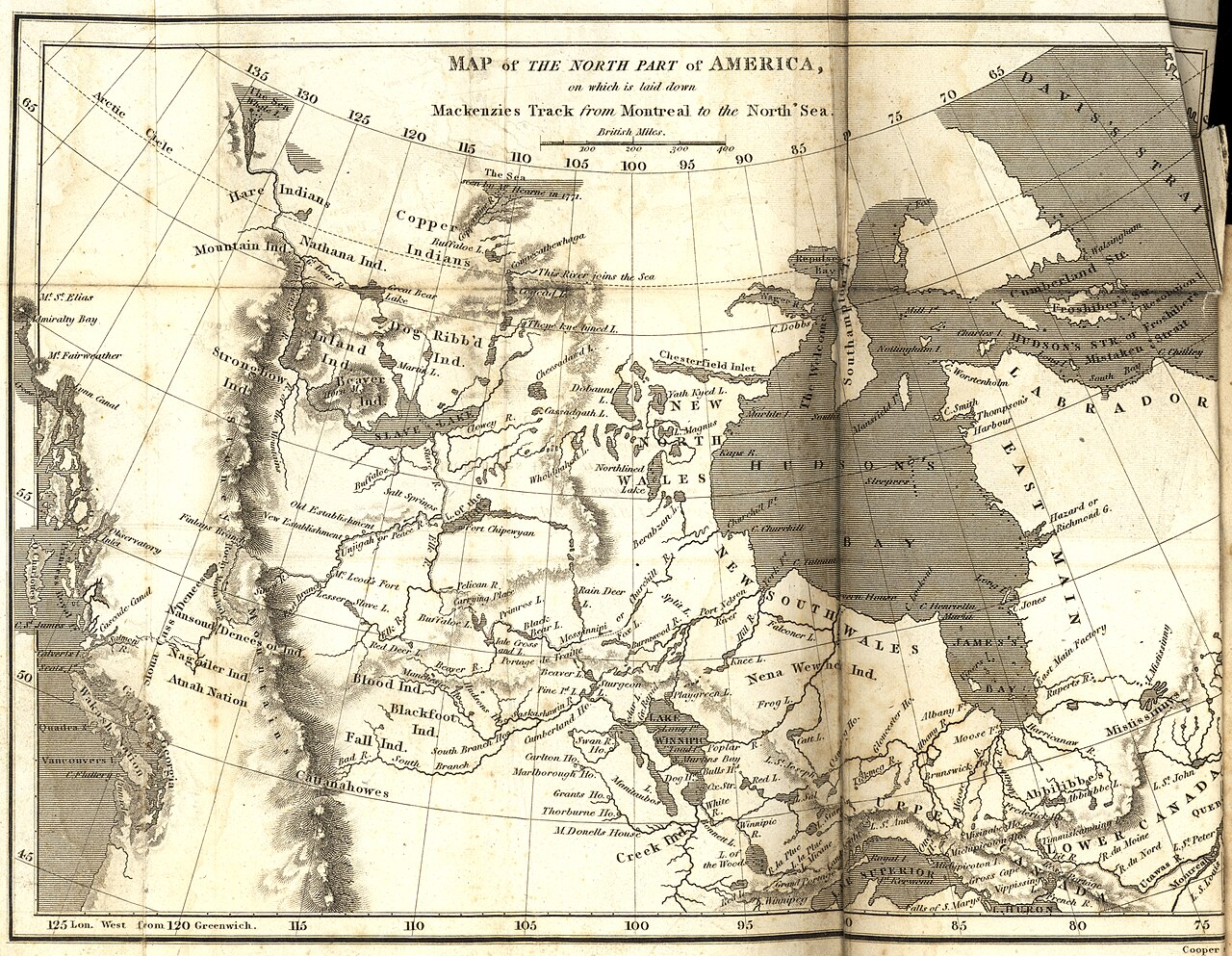

Early life and career
Mackenzie was born in Stornoway on the Isle of Lewis and Harris in 1764 and emigrated to Canada as a young man to enter the fur trade. He built a reputation as an able trader and voyageur, working out of posts in what later became the Northwest Territories and other parts of northwest Canada. His experience traveling waterways and relying on Indigenous guides prepared him for extended expeditions of exploration.
Major expeditions
In 1789 Mackenzie left Fort Chipewyan and traveled north to Great Slave Lake. From there he descended the river that came to be named the Mackenzie River, becoming the first European recorded to navigate it to its outlet on the Arctic Ocean. Although he had hoped this route might lead to the Pacific, it emptied into the Arctic.
Undeterred, Mackenzie organized a second major expedition that set out in the early 1790s and reached the coast of the Pacific Ocean in 1793. That journey was largely overland or by river canoe, relying on the knowledge and assistance of numerous Indigenous guides. The 1793 crossing is commonly cited as the first known transcontinental crossing of North America north of Mexico by an inland route.
Writings, honors and later life
Mackenzie documented his travels and observations of Indigenous peoples and frontier life in a published account that appeared in 1801. The book recorded geography, routes, and encounters and helped inform later explorers, traders and mapmakers. After his return to Britain he was later knighted for his achievements and spent his final years back in Scotland.
Legacy and significance
- Mackenzie’s name is commemorated across Canada: the Mackenzie River, the Mackenzie Delta region and various communities and geographical features bear his name.
- His expeditions improved European knowledge of interior routes and the limits of waterways linking the continent’s interior to different oceans.
- He relied extensively on Indigenous knowledge, and his journals provide period descriptions of the tribes, languages and lifeways he encountered—sources that modern historians use cautiously and critically.
While not the first European to reach either the Arctic or the Pacific coasts by sea, Mackenzie’s inland travels shaped early maps of northern North America and set a precedent for overland exploration in the region. His journeys remain a notable chapter in the history of exploration, commerce and the changing relationships between European traders and Indigenous peoples in the late 18th century.
Further reading and resources: Territorial histories, fur trade contexts, expedition timelines (1789 and 1801), and maps of Great Slave Lake, the Mackenzie River system and coasts on the Arctic and Pacific remain useful starting points for study. Biographical sources and archival material are available relating to his return to Scotland.
Related articles
Author
AlegsaOnline.com Alexander Mackenzie (1764–1820): Scottish explorer of Canada’s northwest Leandro Alegsa
URL: https://en.alegsaonline.com/art/2373