
Corn Belt (Midwestern United States)
Agricultural region of the U.S. Midwest where field corn predominates. Known for fertile prairie soils, mechanized grain farming, crop rotation with soybeans, and major economic and environmental roles.
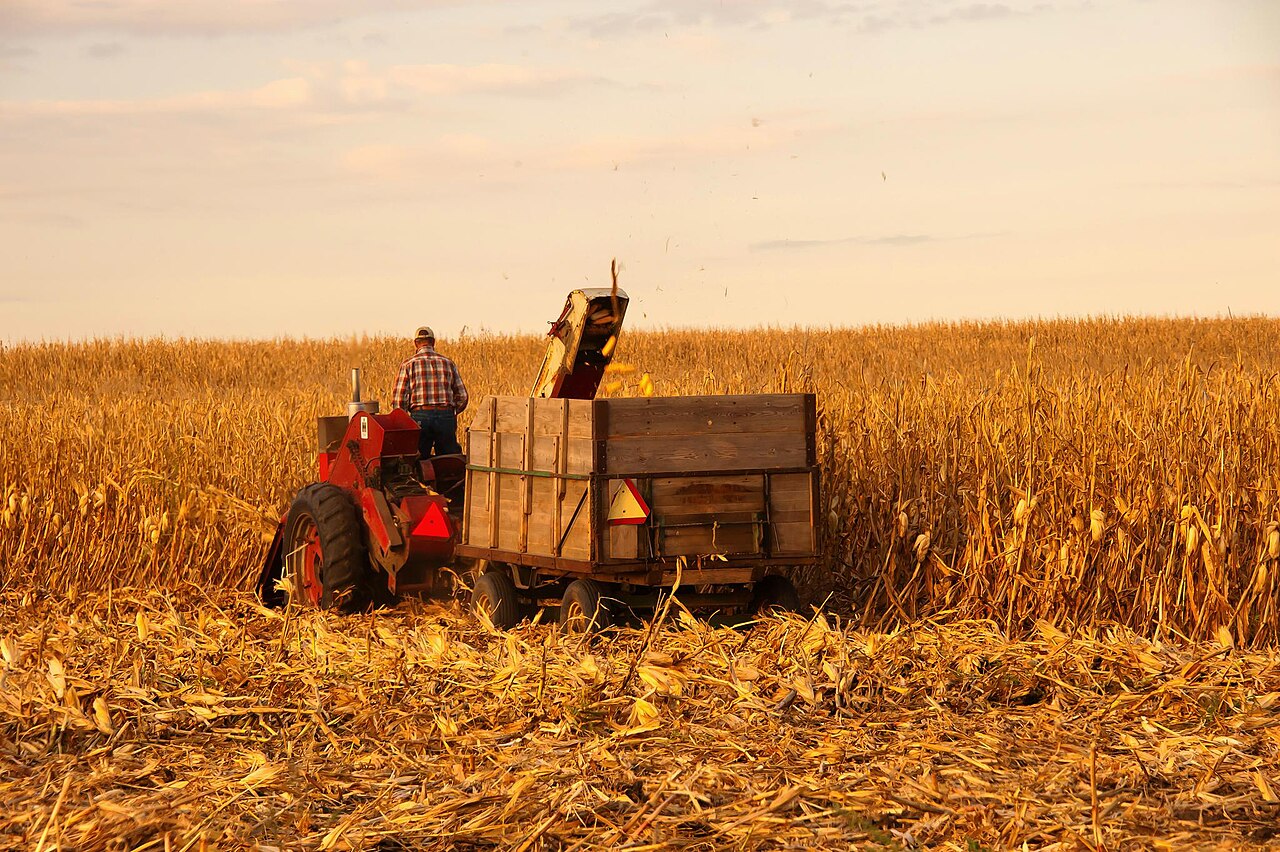
The Corn Belt is a broad agricultural region in the Midwestern United States where field corn (maize grown primarily for livestock feed, processing and industrial uses) has been the dominant crop since the mid‑19th century. The region is best known for relatively flat to gently rolling terrain, thick fertile prairie soils and a climate that supports high productivity for row crops.
Image gallery
6 Images




Geography and boundaries
Exact boundaries vary by definition and purpose. The Corn Belt commonly includes the whole of Iowa, Indiana and Illinois, along with extensive portions of southern Minnesota, eastern Nebraska and parts of Missouri and Kentucky. Its edges merge gradually into adjacent grain‑growing zones rather than forming a sharp line, reflecting gradients in soils, rainfall and farm systems.
Soils, climate and natural history
Much of the Corn Belt rests on deep mollisols—dark, organic‑rich soils that developed under native tallgrass prairie. These soils, together with a humid continental climate that brings warm summers and adequate growing‑season precipitation, create conditions favorable to intensive corn production. The modern landscape was shaped by glacial activity and long periods of prairie vegetation before conversion to cropland.
Agricultural practices
Farmers in the region often use modern hybrids, mechanized planting and harvesting equipment, and chemical crop protection. A common management pattern is a two‑crop rotation of corn followed by soybeans to interrupt pest cycles and help manage soil fertility. Practices such as tile drainage, irrigation where needed and nutrient management support large yields but also require careful stewardship.
History and development
The conversion of native prairie to farmland accelerated after European settlement; improvements in seed breeding, farm machinery and fertilizers during the late 19th and 20th centuries dramatically increased productivity. While corn has long been central, the region’s agriculture has diversified into related processing industries and integrated livestock systems.
Uses and economic role
- Corn supports livestock production, food processing (including sweeteners and starches) and industrial uses such as ethanol and bioproducts.
- The Corn Belt underpins important rural economies, commodity markets and transportation networks that move grain to domestic and export markets.
- Local businesses and research institutions often focus on crop improvement, agronomy and value‑added processing.
Environmental issues and responses
Intensive row‑crop agriculture raises concerns about soil erosion, loss of prairie biodiversity and nutrient runoff that can affect downstream water bodies. Conservation responses include cover cropping, reduced or no‑tillage methods, buffer strips, precision nutrient management and restored wetlands. Such measures aim to balance productivity with long‑term soil and water health.
Research, policy and institutions
State land‑grant universities, extension services and federal programs contribute to research and outreach on crop genetics, pest management and conservation. Policy decisions about subsidies, renewable fuels and water quality influence farming choices and regional land use patterns.
Cultural and landscape significance
The Corn Belt has shaped regional identities, settlement patterns and rural communities. Its patchwork of fields and farmsteads is a familiar American agricultural landscape and a focus for cultural representations of farming life.
For broader context and official resources, see regional and state pages: Midwest overview, state agricultural information for Iowa, Indiana, Illinois and neighboring states (Minnesota, Nebraska, Missouri, Kentucky).
Related articles
Author
AlegsaOnline.com Corn Belt (Midwestern United States) Leandro Alegsa
URL: https://en.alegsaonline.com/art/23113