
Coropuna — glaciated volcano massif in the Peruvian Andes
Coropuna is a high, multi-summit volcanic massif in southern Peru (6,425 m). Noted for its historic ice cover, cultural importance and ongoing glacial retreat, it ranks among the Andes' tallest peaks.
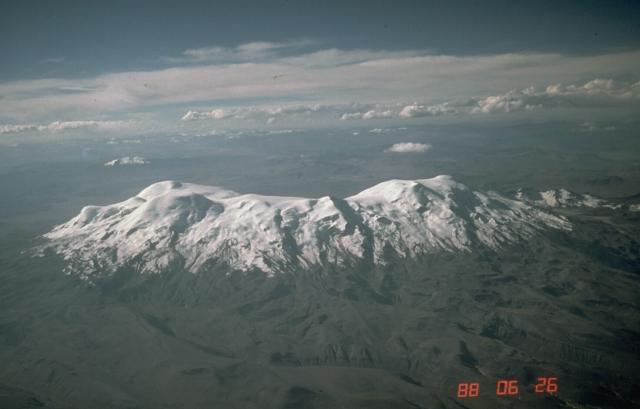
Coropuna is a prominent volcanic massif reaching about 6,425 metres above sea level in the Andes. Located in southern Peru, it is often listed among the highest Andean summits and has been cited as the 21st highest mountain in the mountain chain (ranking source). The massif dominates the surrounding landscape and historically carried extensive glaciers.
Image gallery
10 Images


Physical characteristics
Coropuna comprises several overlapping volcanic cones and summit domes produced by long-lived eruptions. Its highest peaks are capped by permanent ice fields at least until recent decades. The volcano is part of the Central Volcanic Zone of the Andes range, and its stratified layers of lava, ash and pyroclastics record repeated episodes of growth and quiescence.
Geological history
The massif grew through successive eruptions in the late Cenozoic, with major construction during Pleistocene and Holocene intervals. Although there are no widely accepted records of large historical eruptions, Coropuna shows signs of past volcanic activity and is considered a long-lived volcanic center rather than a recently active cone.
Human communities have long regarded Coropuna as an important source of water and a sacred mountain. Archaeological surveys have found high-altitude ceremonial sites on and around many Andean volcanoes, and Coropuna figures in local traditional belief as an apu (mountain spirit). Today it attracts climbers, glaciologists and hydrologists studying ice retreat and water resources.
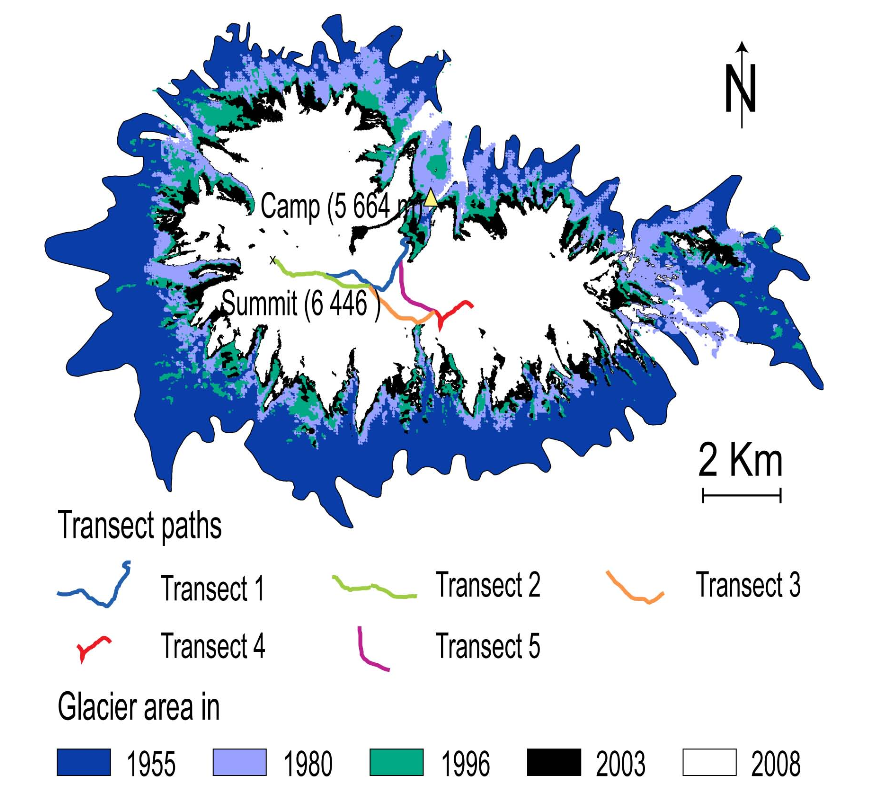
Notable modern concerns include the rapid shrinkage of Coropuna's glaciers due to climate change, implications for downstream water supplies, and the need to balance mountaineering access with conservation. For general orientation and maps consult regional resources (Coropuna overview, Peru mountain guides). Researchers and visitors also refer to broader Andean volcano and glaciation studies (Andes geology, regional volcanic zone, Andes peak lists).
Related articles
Author
AlegsaOnline.com Coropuna — glaciated volcano massif in the Peruvian Andes Leandro Alegsa
URL: https://en.alegsaonline.com/art/23199