
Cork (material): properties, harvesting, uses and sustainability
Cork is the light, elastic bark material of the cork oak used for wine stoppers, insulation, flooring and many composites. It is renewable, hydrophobic and recyclable, with distinctive mechanical properties.
Overview
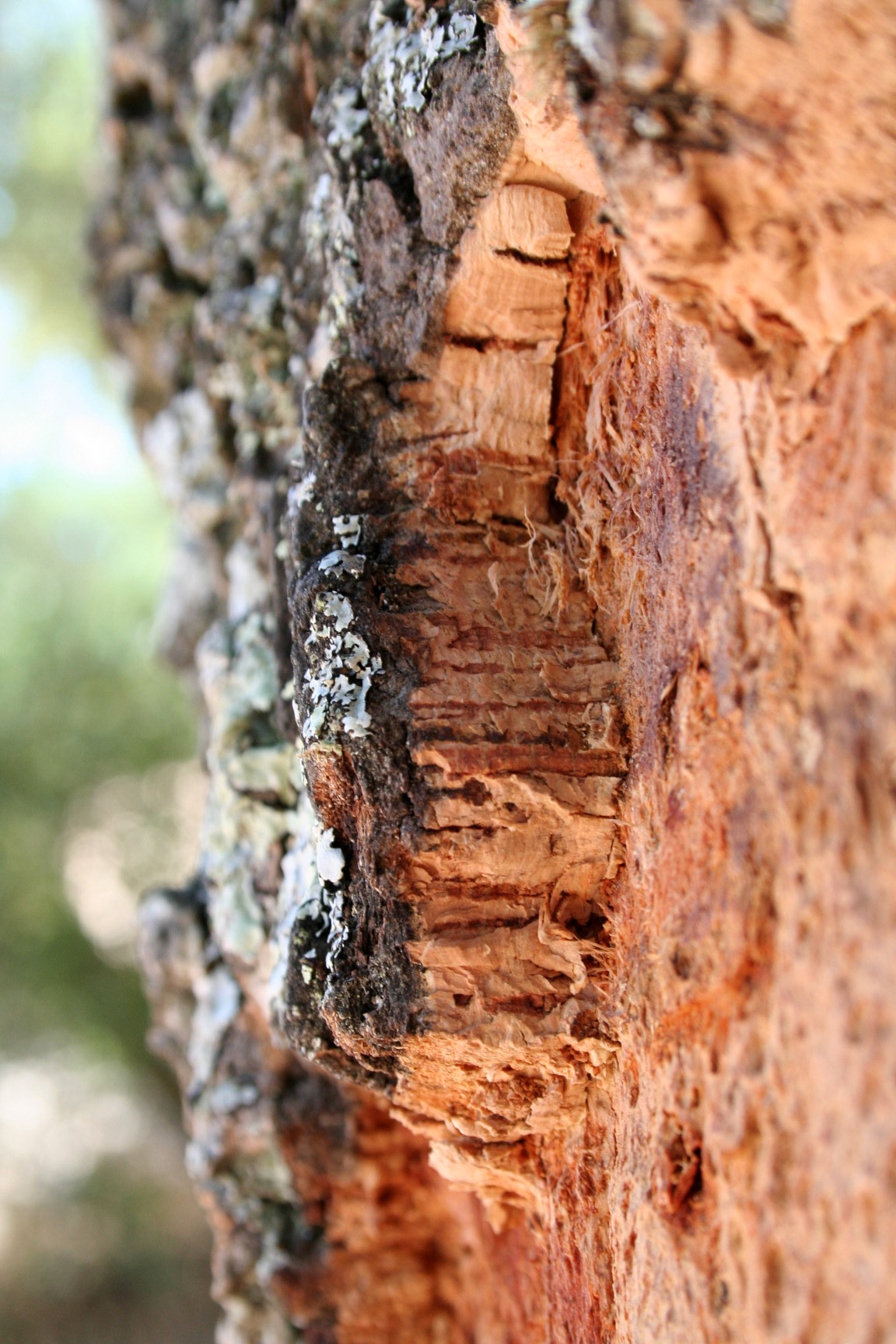
Cork is the porous, resilient material obtained from the outer bark of the cork oak (Quercus suber). It is prized for a combination of lightness, elasticity and impermeability that makes it suitable for sealing, insulating and cushioning applications. The cork industry is centred in Mediterranean countries; notably, Portugal supplies about half of global production.
Image gallery
10 Images




Structure and properties
At the microscopic level cork is composed mainly of suberin, a waxy, hydrophobic biopolymer that helps block moisture and gases. Typical composition values include roughly 40% suberin, about 22% lignin, 18% polysaccharides (including cellulose and hemicellulose), and a fraction of extractable compounds.
These constituents give cork several useful traits:
- Low density and buoyancy.
- Compressibility and recovery — cork can be compressed and expand back.
- Thermal and acoustic insulation due to trapped air inside cells.
- Resistance to moisture and rot because of suberin.
- Fire-retardant behaviour relative to many woods and plastics.
Harvesting and production
Cork is removed from the living tree by stripping the outer bark in a process that does not kill the tree. After an initial longer growth period, subsequent harvests typically occur at multi-year intervals (commonly every 9–12 years), allowing the bark to regrow. The material is then sorted: high-quality planks are used for natural bottle stoppers, while imperfect pieces are ground and reconstituted into agglomerated cork products.
Uses and examples
Cork has a wide range of applications. Principal uses include wine and spirit stoppers, floor and wall coverings, bulletin boards, vibration-damping pads, gaskets and seals, and thermal or acoustic insulation. Fashion and design sectors also use cork leather and textiles for bags, shoes and accessories. In recent decades engineered cork composites have expanded its role into sports equipment and niche industrial parts.
Sustainability and industry notes
Cork woodlands support biodiversity and provide ecosystem services; harvesting preserves standing trees that continue sequestering carbon. Cork is renewable and recyclable — reclaimed or ground cork can be reincorporated into insulation, flooring and agglomerates. The cork sector faces market shifts as synthetic stoppers and screw caps compete with natural cork, prompting diversification into value-added products and improved harvesting practices.
Related articles
Author
AlegsaOnline.com Cork (material): properties, harvesting, uses and sustainability Leandro Alegsa
URL: https://en.alegsaonline.com/art/23094
Sources
- pressedforwine.com : pressedforwine.com/equipment/corks.shtml