
Company (military unit)
A company is a mid-level military formation, typically three to six platoons and 80–250 soldiers, led by a captain or major; it is a principal tactical and administrative building block in many armed forces.
Overview
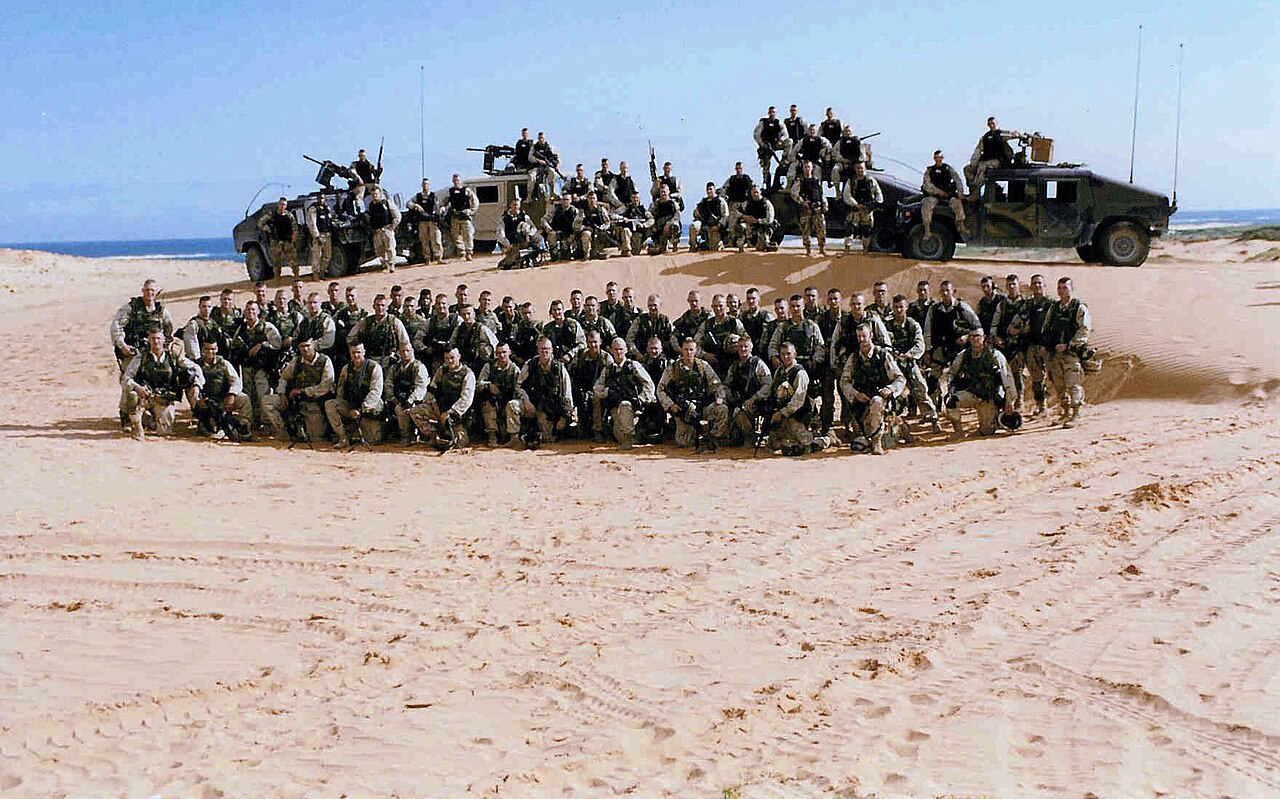
A company is a common tactical and administrative military unit that normally sits between a platoon and a battalion. It commonly numbers from roughly 80 to 250 personnel and is intended to be a self-contained element capable of limited independent action. A company can be task-organized for a range of missions and is a primary building block of ground forces. Role and size references
Image gallery
6 Images


Organization and command
A company is normally commanded by a company commander, frequently a captain and, in some armies or larger companies, by a major. The commander is assisted by an executive officer and senior non-commissioned officers who manage discipline, training and logistics within the unit. Captain rank Major rank
Most companies are composed of three to six platoons, although the exact number varies by doctrine and type of unit. Each platoon is usually led by a lieutenant and supported by senior non-commissioned officers, creating a clear chain of command from company down to small teams and squads. Platoon organization National variations
Internal components and equipment
Typical internal components include a company headquarters element responsible for communications, planning and supply; three or more line platoons that perform the unit’s primary function; and a weapons or support platoon that provides heavier firepower, anti-armor capability, or specialized support. Medical, transport and maintenance personnel may be attached as required to sustain operations. Equipment and exact composition vary by role: an infantry company differs from an armored company or an engineer squadron. Company to battalion relationship Regimental structures
Roles, tasks and employment
Companies are often tasked with seizing and holding terrain, conducting local patrols, defending positions, or securing key facilities. In many modern armed forces the mission set has broadened substantially: companies prepare for conventional combat as well as irregular warfare, stability operations and nation assistance tasks. In the United States military, for example, company-level units trained historically for conventional offensive and defensive operations but since the early 21st century have been required to train for a wider variety of tasks. United States example Historical context Conventional operations
Contemporary company tasks may include humanitarian assistance, disaster relief, convoy protection, population security and support to civil authorities. This demands additional cross-training in logistics, language and cultural awareness for many units. Humanitarian missions Security tasks Stability operations
Variations in name and role
The name and precise function of a company-sized unit vary by service and nation. Engineer and cavalry traditions commonly call the equivalent formation a "squadron," while artillery uses the term "battery" for a roughly comparable level. Other differences include how companies are designated (letters, numbers or special titles) and whether they include permanent attachments such as mortars, anti-tank teams or signal sections. Artillery battery
Historical development and importance
The company developed as armies standardized formations in the early modern period and has adapted over centuries to changes in weapons, transport and command systems. It remains a versatile unit: small enough to be maneuverable, large enough to sustain operations for a limited period, and flexible enough to incorporate specialists and support elements. Companies also serve as key administrative nodes for personnel management and career progression of junior officers and non-commissioned officers.
Related articles
Author
AlegsaOnline.com Company (military unit) Leandro Alegsa
URL: https://en.alegsaonline.com/art/22210
Sources
- whodareswins.com : "British Army Formation & Structure"