
Confederate States Navy
Naval service of the Confederate States of America (1861–1865); limited by industrial capacity but notable for ironclads, commerce raiders, blockade running, mines and the submarine H. L. Hunley.
The Confederate States Navy was the maritime service established by the Confederate States of America after secession in 1861. Formed to defend ports, harbors and waterways and to challenge Union maritime operations, the service operated with far fewer resources than its northern opponent. Early leadership and organization reflected the Confederacy's need to improvise naval power using limited shipyards, converted civilian vessels and foreign procurement.
Image gallery
10 Images




Organization and leadership
The new government under the presidency of Jefferson Davis appointed a Secretary of the Navy and established administrative structures to manage enlistment, ship construction and procurement. The department faced immediate shortages of purpose-built ships, trained sailors and secure dock facilities. Much early effort went into acquiring vessels from abroad, converting merchant steamers for military use, and organizing coastal defenses.
Industrial limits and shipbuilding
The industrial capacity of the South was limited compared with the North. Confederate shipyards attempted to produce warships and support craft, but were constrained by a lack of heavy industry, spare parts and certain essential raw materials. Domestic shipbuilding projects were often small-scale or focused on river, bay and harbor craft rather than oceangoing fleets. Blockade conditions further restricted imports and complicated construction schedules, forcing reliance on converted vessels and on fast civilian craft used as blockade runners to sustain coastal operations.
Technologies, ship types and tactics
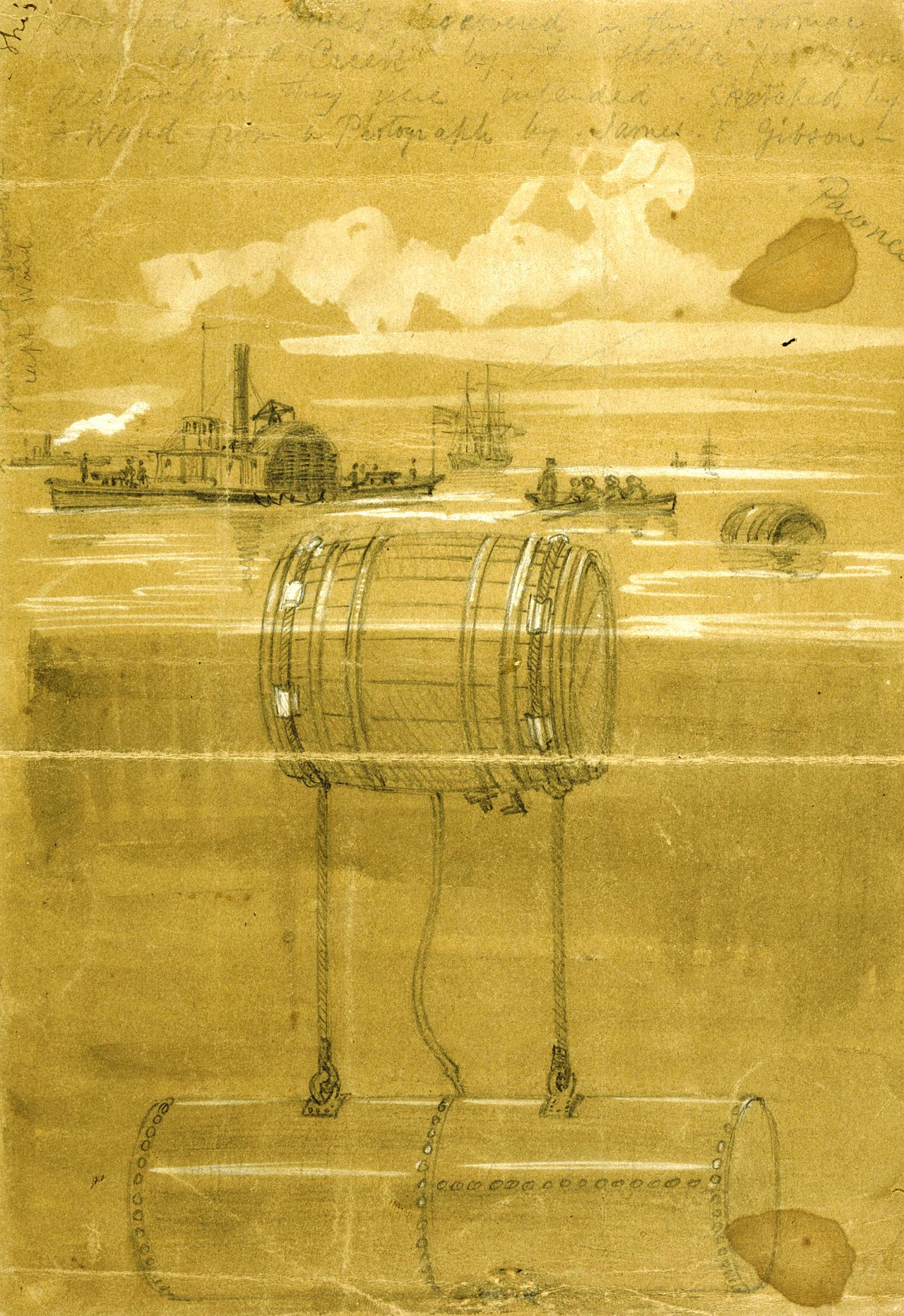
To offset quantitative disadvantages the Confederacy emphasized technological and tactical approaches that could exploit asymmetry. Naval innovations that saw prominent Confederate use included defensive contact and moored mines (often then termed torpedoes), armored ironclad warships designed for harbor defense and river control, and early experiments with submersible craft. These approaches aimed to deny Union forces easy access to ports and to make blockade operations more costly.
- Ironclads: Armored vessels intended to resist shot from traditional wooden warships and shore batteries; the clash between the ironclad CSS Virginia and the Union ironclad USS Monitor highlighted this shift in naval design.
- Commerce raiders: Cruisers built or acquired abroad that targeted Union merchant shipping and sought to disrupt trade and insurance rates across the Atlantic.
- Blockade runners: Fast, low-profile steamers that attempted to slip through Union blockades to bring supplies, arms and luxury goods to Confederate ports.
- Mines and torpedoes: Defensive underwater explosives placed in approaches to harbors and rivers to deter or damage enemy ships.
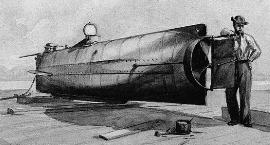
- Submersibles: Limited experimental submarines were developed to attack enemy vessels beneath the surface.
Notable vessels and actions
Although never numerically dominant, several Confederate vessels and actions achieved lasting historical significance. The conversion of the scuttled frigate Merrimack into the ironclad CSS Virginia and its battle with the USS Monitor in 1862 marked a turning point in naval warfare and diminished the dominance of wooden frigates. Confederate commerce raiders, among them the well known cruiser CSS Alabama, disrupted Union shipping worldwide and required neutral ports and governments to respond diplomatically. The submarine H. L. Hunley became the first submarine to sink an enemy vessel in combat when it attacked a Union warship, demonstrating the emergent potential of undersea warfare; that craft was one example of broader experimentation with submarine technology.
Operations, limits and legacy
Operationally the Confederate navy obtained localized successes but could not break the strategic maritime superiority of the Union, which used its larger industrial base and merchant fleet to maintain an effective blockade. Confederate naval strategy relied on a combination of coastal defense, commerce raiding and blockade running; while effective in individual instances, these measures were insufficient to secure sustained maritime control. The service's difficulties—rooted in limited industry, restricted access to materials and the impact of the Union blockade—illustrate how logistics and manufacturing capacity constrain naval power.
Despite those limits, Confederate efforts influenced postwar naval thought. The use of iron armor, steam propulsion, explosive mines and experiments with submersibles signaled technologies that navies worldwide would develop in the following decades. Historians and maritime scholars continue to study Confederate naval procurement, ship design and operations to understand how a weaker seafaring power sought to innovate and exploit asymmetric tactics at sea.
Research and sources
Further information on specific ships, campaigns and procurement can be found in archival collections, naval registries and focused studies on Confederate maritime operations. For introductory overviews and specialized topics consult descriptions of the the South in naval history, biographies of key leaders and technical studies of ironclads, mines and early submarines. Additional entry points include materials on the Confederate navy, the national government and its executive direction under Jefferson Davis, as well as analyses of shipbuilding efforts, reliance on raw materials, and the operational impact of the United States Navy blockade. For technical themes consult works addressing innovations, mines, ironclads and legacy assessments of early submarine experiments as well as studies of famed raiders and their international effects.
Readers seeking ship lists, battle accounts and primary documents will find curated collections in maritime museums and historical societies, and may consult specialized bibliographies that examine the Confederate approach to naval warfare during the American Civil War.
Questions and answers
Q: What was the Navy of the Confederate States?
A: The Navy of the Confederate States (CSN) was the Navy of the Confederate States of America.
Q: Who appointed Stephen Mallory as Secretary of the Confederate Navy?
A: Jefferson Davis, who had been elected president, appointed Stephen Mallory as his Secretary of the Confederate Navy.
Q: What resources did the South have to challenge the United States Navy's frigates?
A: The South had no ships capable of challenging the United States Navy's frigates and did not have shipbuilding capability or raw materials necessary to build a navy.
Q: What technologies did they develop despite their limited resources?
A: Despite their limited resources, they developed naval mines, ironclad techniques and managed to sink a Union warship with a working submarine.
Q: How powerful was their navy compared to that of Union's?
A: Their navy did not have the firepower of that of Union's.
Q: What type of vessel were they able to sink with a working submarine?
A: They were able to sink a Union warship with a working submarine.
Q: What other naval developments were made by Confederates during this time period? A: In addition to sinking a Union warship with a working submarine, Confederates also developed naval mines and ironclad techniques.
Related articles
Author
AlegsaOnline.com Confederate States Navy Leandro Alegsa
URL: https://en.alegsaonline.com/art/22465
Sources
- americancivilwar.com : "The Confederate Naval Buildup; Could More Have Been Accomplished?"
- abrahamlincolnsclassroom.org : "Abraham Lincoln and Slavery"
- history1800s.about.com : "President James Buchanan and the Secession Crisis"
- civilwaronthewesternborder.org : "Lincoln Calls for 75,000 Volunteers"
- civilwar.org : "The Navies of the Civil War"
- marinersmuseum.org : "Gosport Burning!"
- civilwar.org : "Commerce Raiders; Confederate Privateers and Cruisers in the Civil War"
- northagainstsouth.com : "Confederate Commerce Raiders"
- hampton.lib.nh.us : "The U.S.S. Kearsarge vs. the C.S.S. Alabama"
- militaryhistorynow.com : ""Avast, Y'all!" — Confederate Pirates of the Civil War"
- dictionary.com : "torpedo"
- opinionator.blogs.nytimes.com : "The Confederate Torpedo"
- history.com : "8 Unusual Civil War Weapons"
- washingtonpost.com : "The sinking of the Sultana: A disaster lost in the lingering fog of the Civil War"