
Conscientious objector
A conscientious objector refuses armed military service on moral, religious or ethical grounds; recognition and treatment vary by country and history, with alternatives like civilian service offered in many places.
A conscientious objector is a person who declines to serve as a combatant in armed forces when required to do so by law or conscription. The term most commonly applies to those who refuse to bear arms because of deeply held beliefs. Refusal may cover all forms of military service or be limited to active combat roles, and the legal and social responses to objection differ widely between states and across historical periods.
Image gallery
7 Images


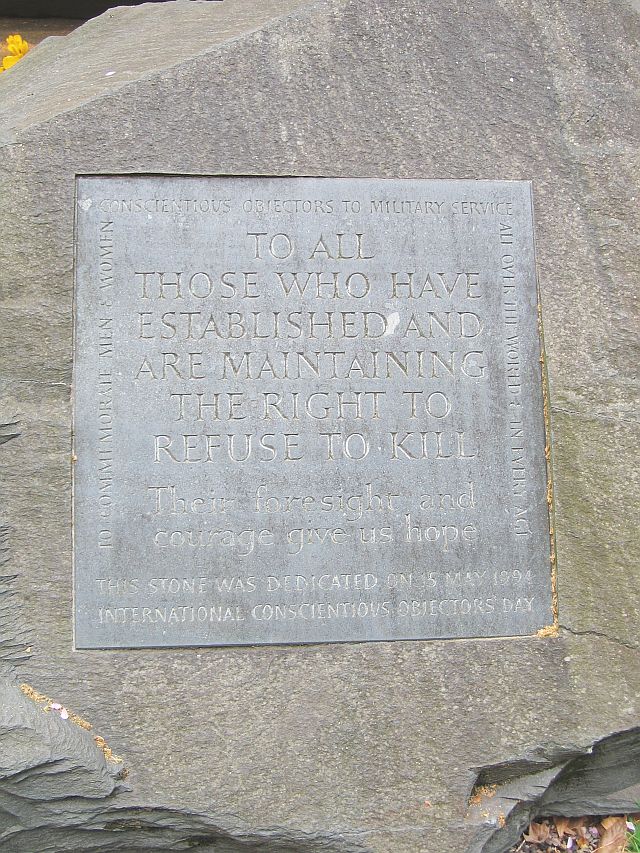
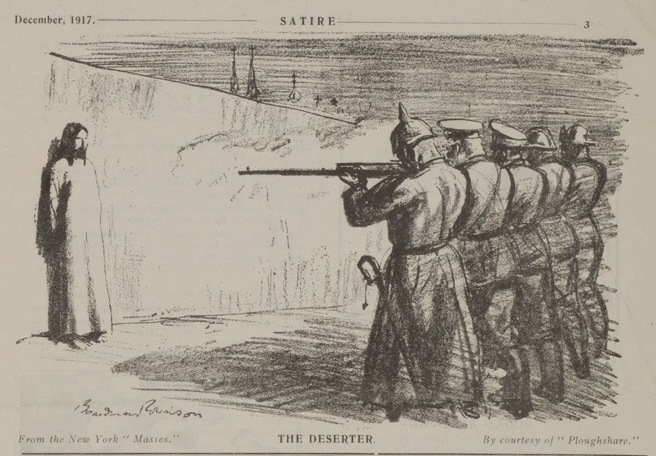

Reasons and classifications
People object to military service for several broadly recognized reasons. These include religious convictions (religious beliefs), ethical or moral objections to killing (ethical beliefs), commitment to nonviolent methods (nonviolent approaches) and philosophical pacifism (pacifism). Some objectors refuse only certain wars or particular weapons, while others are absolute objectors who reject all forms of participation in war. The choice not to participate is commonly described in relation to conscription systems (conscription) or compulsory military service.
Legal recognition and state responses
States have treated conscientious objection in many ways: from formal recognition to criminal penalties. Responses can include imprisonment, fines, or administrative punishment; historically, objectors in some contexts faced very severe penalties. Following major conflicts of the 20th century, many countries began to create alternatives to armed service, such as civil or community service programs (civil service). Evaluations of sincerity are often carried out by tribunals or commissions to determine whether a claim is genuine.
- Acceptance and alternative civilian assignments.
- Recognition with noncombatant roles within the military.
- Denial of status and criminal prosecution.
- Conscientious refusal acknowledged for selective or absolute cases.
Conscientious objection has gained legal protection in some international and regional human-rights decisions. Notably, courts and human-rights bodies have ruled that denying recognition can violate rights related to freedom of religion and conscience (European Court, freedom of religion). The political and legal status of the right to object has evolved since major 20th-century wars, including debates and reforms after World War II (World War II).
Distinctions and contemporary relevance
There are several useful distinctions: absolute objectors refuse any military role; noncombatant objectors accept support roles that do not involve bearing arms; selective objectors refuse particular conflicts on moral or legal grounds. The rise of professional volunteer armed forces in many countries has changed the scale and context of objection, but compulsory service and the possibility of conscription remain in some places, keeping conscientious objection a current legal and ethical issue (combatant, military, human).
International and regional institutions continue to address conscientious objection. In some jurisdictions, recognition of objection is framed as a fundamental right (European Union) or protected under broader human-rights law (fundamental rights). Practical arrangements and safeguards vary: some systems provide short-term review boards, others offer long-term civilian placement, and a few maintain restrictive standards for accepting claims.
Because conscientious objection touches on personal conscience, public safety, and national policy, it remains a recurring subject in legal reform, civic discourse, and advocacy. Debates typically balance an individual's moral integrity against collective defense needs, making the regulation of objection a reflection of broader social values and priorities.
Questions and answers
Q: What is a conscientious objector?
A: A conscientious objector is a person who chooses not to be a combatant in military forces under conscription due to their nonviolent or religious beliefs, ethical and moral beliefs against killing human beings or pacifism.
Q: Why do some people become conscientious objectors?
A: Some people become conscientious objectors due to their nonviolent or religious beliefs, ethical and moral beliefs against killing human beings, or pacifism.
Q: How have countries treated conscientious objectors throughout history?
A: Countries have treated conscientious objectors differently throughout history, with some being arrested or fined, and others being punished with death.
Q: What alternative non-military services were created after World War II for pacifists?
A: After World War II, many Western countries created alternative non-military services (civil service) as an alternative form for pacifists.
Q: Did some countries have commissions to decide on conscientious objectors?
A: Yes, some countries had commissions to decide whether someone truly refused to do armed service out of their beliefs or because of fear of war.
Q: Has the denial of conscientious objectors been recognized as a violation of freedom of religion and thought?
A: Yes, the European Court of Human Rights has recognized the denial of conscientious objectors as a violation of freedom of religion and thought in 2013, and the European Union has recognized the right of conscientious objectors as one of the fundamental rights.
Q: Are there specific reasons why people become conscientious objectors?
A: Yes, people may become conscientious objectors due to nonviolent or religious beliefs, ethical and moral beliefs against killing human beings, or pacifism.
Related articles
Author
AlegsaOnline.com Conscientious objector Leandro Alegsa
URL: https://en.alegsaonline.com/art/22589