
Common wood pigeon (Columba palumbus)
Large, grey pigeon with distinctive white neck and wing patches. Widespread in woodlands, farmland and towns across Europe and western Asia; feeds on seeds, fruit and crops and nests in trees.
Overview
The common wood pigeon (Columba palumbus) is a large, widespread pigeon species native to much of Europe and parts of western Asia. It is one of the most familiar woodland and parkland birds in its range, notable for its steady, powerful flight and conspicuous white markings.
Image gallery
9 Images



Identification
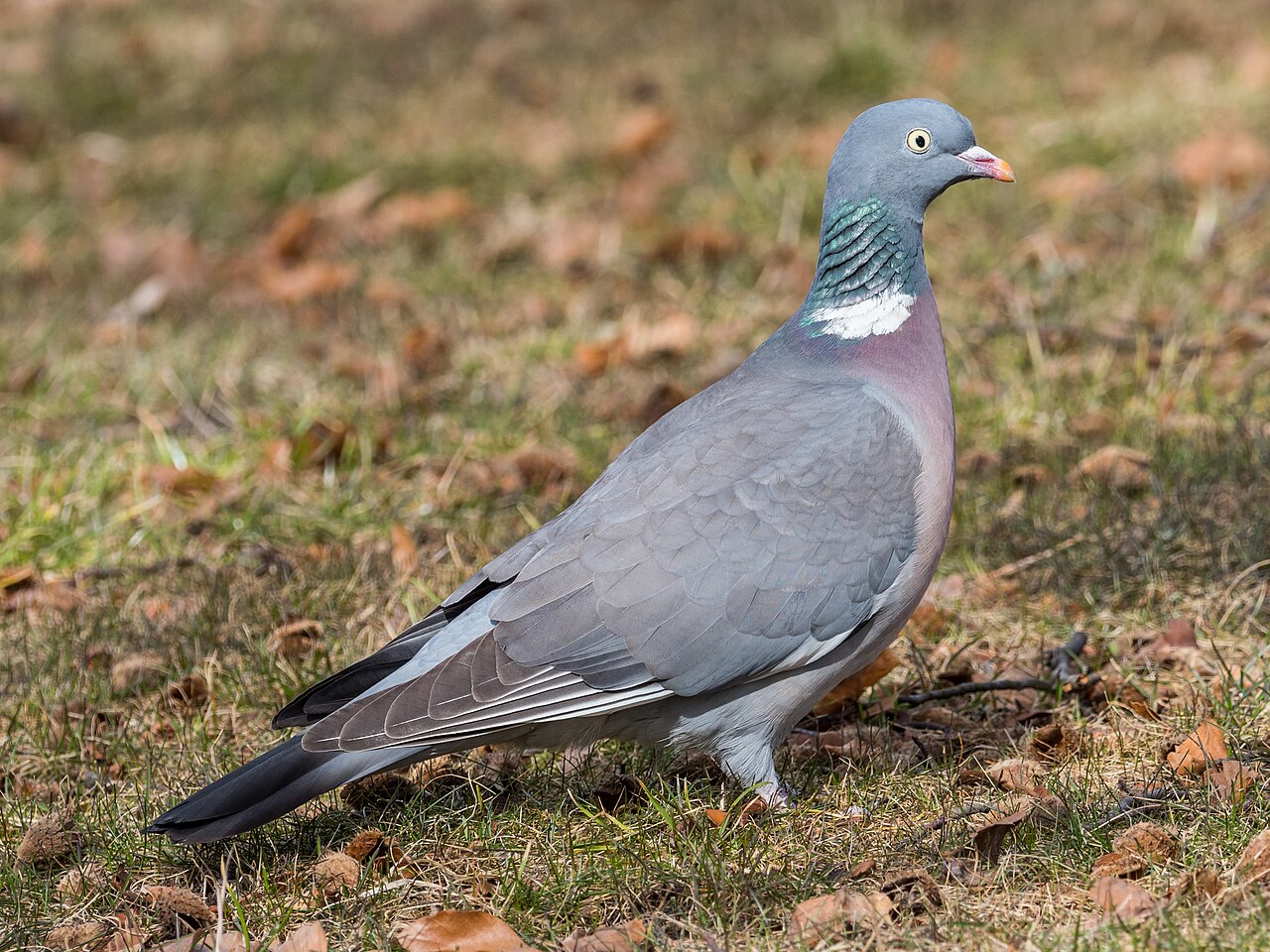
Adults are mainly slate-grey with a pinkish breast tone and show white patches on either side of the neck and distinct white flashes on the wings that are visible in flight. Key field features include:
- Size: noticeably larger and more rounded than many urban pigeons.
- Plumage: uniform grey body, white neck patches and wing flashes when flying.
- Call: a deep, rolling sequence of coos heard from trees and open sites.
Habitat and distribution
Wood pigeons occupy a wide range of habitats: mature woodland, hedgerows, farmland, suburban parks and gardens. They adapt well to human-altered landscapes and may be resident or locally migratory depending on climate and food availability.
Behaviour and diet
These birds forage on the ground and in trees for seeds, shoots, berries and fruit; they also take grain and newly sown crops, which can bring them into conflict with agriculture. Outside the breeding season they may form loose flocks and gather at rich food sources.
Breeding and interactions with people
Wood pigeons build a simple stick platform nest, usually in a tree, and typically lay two white eggs. Both parents participate in incubation and feeding of the young. Because of their numbers and habit of feeding on cereal crops, they are sometimes regarded as pests, and hunting or control occurs in some regions. Overall the species is common and easily observed.
Related articles
Author
AlegsaOnline.com Common wood pigeon (Columba palumbus) Leandro Alegsa
URL: https://en.alegsaonline.com/art/22024