
Condor (New World vulture)
A profile of condors — the two New World vulture species, their appearance, ecology, taxonomy, cultural significance, and conservation challenges.
Overview
Condor is the common name for the two extant species of large New World vultures: the Andean condor and the California condor. These birds are the heaviest flying land birds in the Americas and are renowned for their broad wings and soaring flight. The group is best known for being scavengers that feed primarily on carrion. The two living taxa are often described collectively as two species of New World vultures, each representing a single species within its own genus.
Image gallery
10 Images


Species and range
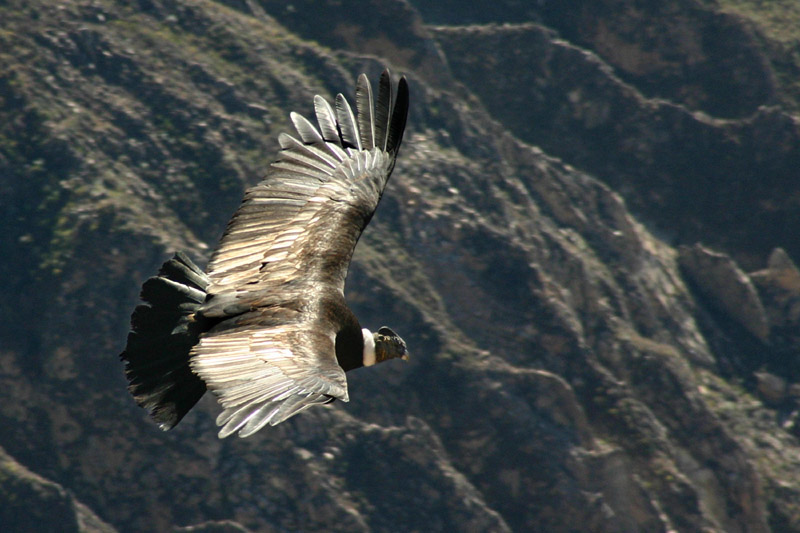
The Andean condor (Vultur gryphus) inhabits the high mountains and adjacent lowlands of South America, especially along the Andes. The California condor (Gymnogyps californianus) historically ranged along the western coast of North America and is now found in reintroduced populations in parts of the western United States and northern Mexico. The California condor is smaller than the Andean condor but remains one of the largest flying birds in the world.
Physical characteristics
Condors have long, broad wings and an upright posture when perched. Adult birds display a largely black plumage with white patches on the wings; males and females differ slightly in size and facial features. The bare head and neck — often brightly colored in life — are a notable adaptation for scavenging that helps reduce feather fouling when the birds feed inside carcasses. The Andean condor is particularly notable for its very large wingspan and substantial body mass.
Behavior, diet and reproduction
Both condor species are obligate scavengers, feeding almost exclusively on the carcasses of large mammals and, occasionally, marine animals. They locate food by sight and by following other scavengers and use rising thermals to travel long distances with minimal energy expenditure. Condors nest on cliffs or in large trees; they have slow reproductive rates, typically producing a single egg at long intervals, and both species invest substantial parental care in each chick.
Conservation, threats and human interactions
Condors have experienced severe population declines due to habitat loss, deliberate persecution, and toxic contaminants in carrion. The California condor reached the brink of extinction in the late 20th century; intensive captive-breeding and reintroduction efforts have increased numbers but threats remain, notably lead poisoning from bullet fragments in animal carcasses and collisions with power lines. Conservation programs combine captive breeding, habitat protection, and public outreach to reduce threats and support recovery.
Taxonomy and distinctions
Condors belong to the family Cathartidae and are distinct from the Old World vultures (family Accipitridae) despite similarities in ecology and appearance — an example of convergent evolution. Their evolutionary relationships were once debated, but they are now treated as New World scavenging birds with unique anatomical and genetic traits. Their scavenging lifestyle centers on consuming carrion, and their bare heads are an adaptation linked to that diet.
Notable facts
- Condors are powerful soarers that can cover great distances while expending little energy.
- The Andean condor is an important cultural symbol in Andean societies and features in art and mythology across the region.
- Modern recovery of the California condor is a prominent example of intensive species conservation and reintroduction work.
Questions and answers
Q: What is a Condor?
A: A Condor is a type of New World vulture.
Q: How many species of Condors are there?
A: There are two species of Condors, the Andean Condor and the California Condor.
Q: Which genus are Condors a part of?
A: Condors are each the only species in their genus and are part of the family Cathartidae.
Q: What is the difference between New World and Old World vultures?
A: New World and Old World vultures evolved from different ancestors and are in different families. New World vultures are in the family Cathartidae, whereas Old World vultures are in the family Accipitridae.
Q: What do Condors feed on and how do they adapt to their feeding method?
A: Condors are scavengers and feed on carrion (dead animals). Their distinctive bare heads are an adaptation to their feeding method as it helps to keep them clean while they feed inside a carcass.
Q: How big is the Andean Condor's wingspan?
A: The Andean Condor's wingspan is between 274 and 310 cm.
Q: What is the difference in size between the Andean Condor and the California Condor?
A: The Andean Condor is bigger than the California Condor. The Andean Condor weighs around 11-15 kg and has a larger wingspan than the California Condor.
Related articles
Author
AlegsaOnline.com Condor (New World vulture) Leandro Alegsa
URL: https://en.alegsaonline.com/art/22445