
Common crane (Grus grus) — Eurasian crane
The common crane (Grus grus) is a widespread Eurasian species of the family Gruidae, noted for long migrations, elaborate courtship displays, and cultural importance across Europe and Asia.
Overview
The common crane (Grus grus), often called the Eurasian crane, is a large, long-legged and long-necked bird in the family Gruidae. It breeds across northern and eastern Europe and Asia and winters in milder regions farther south. Globally it is considered of least concern, reflecting relatively stable populations in many parts of its range, although local declines and habitat pressures occur.
Image gallery
10 Images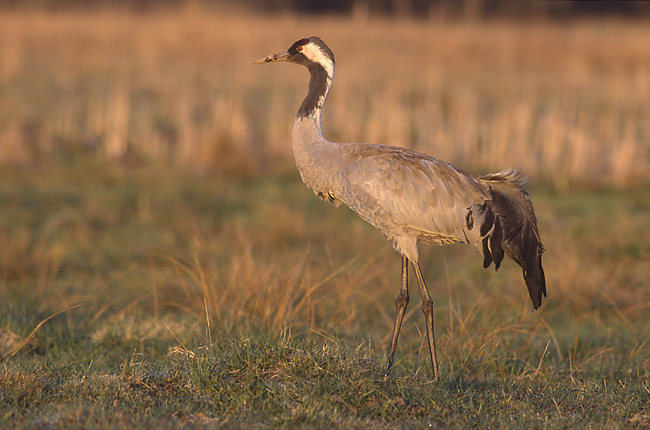




Identification and key characteristics
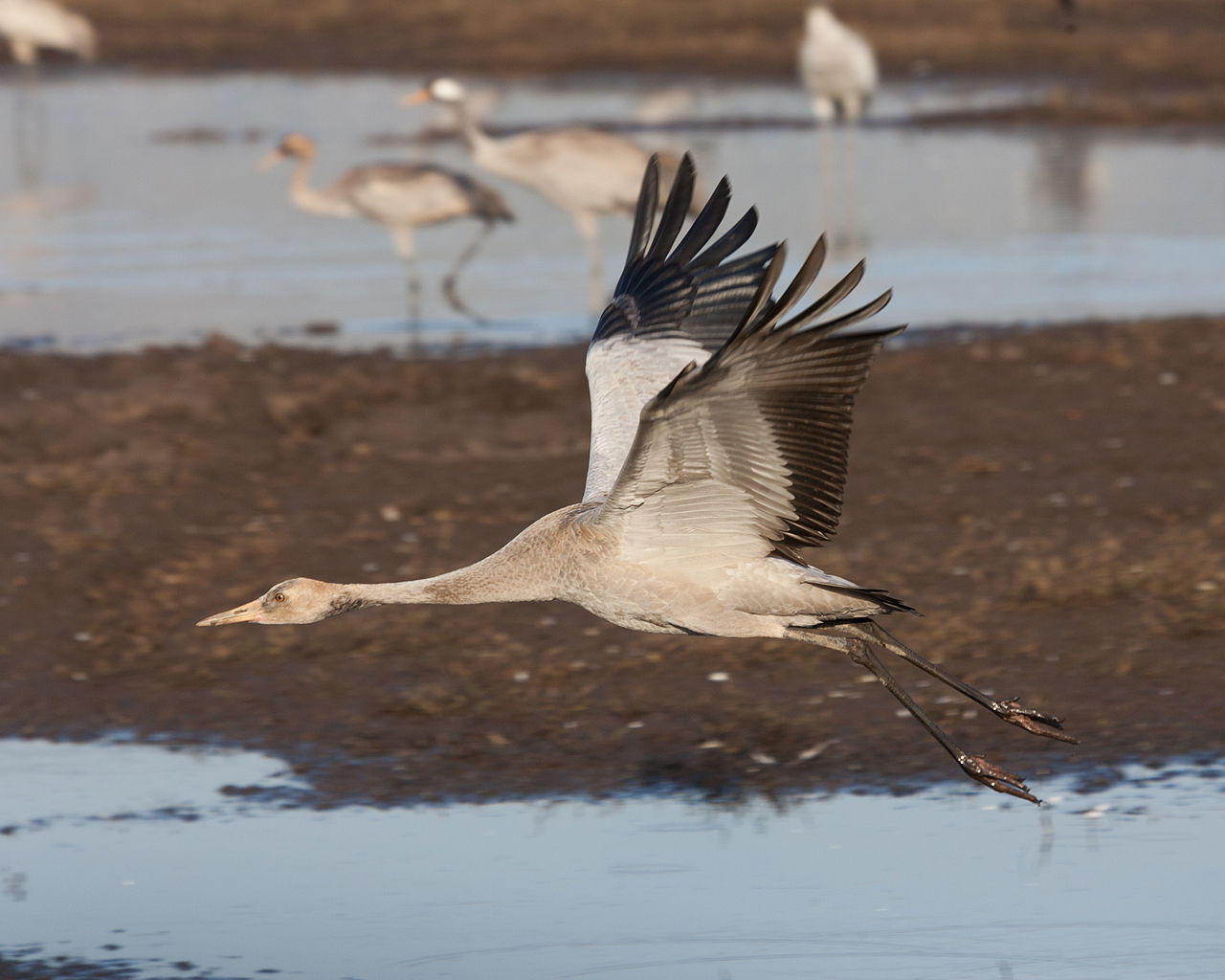
Adults are notable for a mainly grey plumage with contrasting black and white markings on the head and neck, and a patch of red bare skin on the crown. They have a tall, upright posture in the field, long pointed wings in flight, and a resonant trumpeting call often heard during migration. Juveniles show browner plumage and lack the full adult head pattern.
Distribution, habitat and migration
Common cranes breed in wetlands, marshes, bogs and adjacent grasslands where they nest and raise young. Outside the breeding season they gather on open farmland, floodplains and estuaries. The species is migratory over much of its range, forming large, sometimes spectacular flocks that follow traditional routes between breeding and wintering areas.
Behavior, diet and breeding
These cranes are omnivorous and flexible feeders: their diet can include plant material, seeds, tubers, insects, small vertebrates and agricultural leftovers. Breeding pairs are territorial and build a large nest platform among emergent vegetation. The pair bond is strong and courtship involves elaborate dances—bowing, jumping and calling—that reinforce the pair and are a well-known sight where cranes gather.
Conservation, management and cultural significance
Conservation efforts focus on maintaining wetland habitats, protecting stopover sites and reducing disturbance at nesting areas. In some regions, reintroduction and habitat restoration programs have helped populations recover. The common crane also features prominently in folklore, art and migration-scale ecotourism, symbolizing longevity and seasonal change in many cultures.
Similar species and notable facts
- The common crane is the primary crane species across much of Europe, with the smaller demoiselle crane appearing only in parts of southeastern Europe and Asia.
- They are known for long-distance flight in V-formation or loose lines and for congregating in large communal roosts during migration.
- Because of their conspicuous habits and striking displays, they are often used as flagship species for wetland conservation.
Related articles
Author
AlegsaOnline.com Common crane (Grus grus) — Eurasian crane Leandro Alegsa
URL: https://en.alegsaonline.com/art/21999
Sources
- iucnredlist.org : "Grus grus"
- bbc.co.uk : Crane comeback (video clip). BBC Nature
- commons.wikimedia.org : Grus grus
- wikidata.org : Q4764
- species.wikimedia.org : Grus grus
- animaldiversity.org : Grus_grus · web.archive.org
- avibase.bsc-eoc.org : 99B8841E764117B1
- biolib.cz : 8573
- datazone.birdlife.org : 22692146
- cms.int : grus-grus
- ebird.org : comcra
- gd.eppo.int : GRUSGR
- eunis.eea.europa.eu : 1068
- eu-nomen.eu : 96753