
Common eider (Somateria mollissima)
A large northern sea duck known for colonial coastal nesting, down-lined nests, diving for shellfish, and wide wintering flocks across Europe, North America and Siberia.
The common eider (Somateria mollissima) is a large sea duck found around cold northern coasts. It is one of the best-known members of the group of sea ducks and is notable for its bulk, strong flight and for the soft insulating down that females pluck to line their nests. Adults show clear sexual differences in plumage and behavior that are linked to their coastal, diving lifestyle.
Image gallery
10 Images


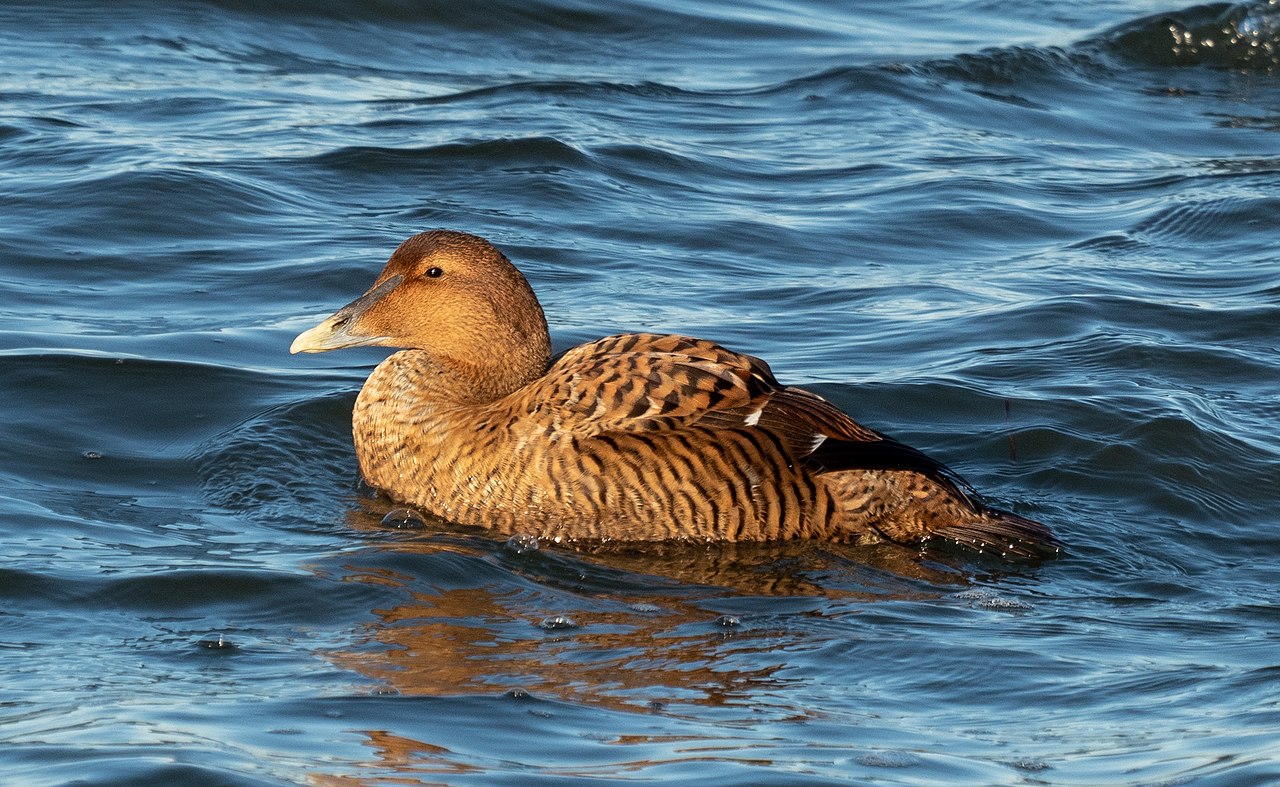

Description and characteristics
Common eiders are robust, heavy-bodied ducks with relatively short wings and a thick bill. Males in breeding plumage are mostly white with contrasting black markings, while females are mottled brown and well camouflaged. Both sexes have dense, waterproof feathers and a layer of down beneath the contour feathers that provides insulation in cold water. They dive from the surface to forage, commonly pursuing clams, mussels, crustaceans and other benthic invertebrates.
Distribution, habitat and movements
Breeding populations occur along the northern coasts of Europe, across Arctic and subarctic parts of North America, and in eastern Siberia. During winter they move to more temperate coastal waters where they may form large, often conspicuous flocks over sheltered bays and estuaries. For general information about sea ducks see sea ducks; regional overviews include Europe, North America, and eastern Siberia, with breeding concentrated in the Arctic and nearby zones.
Breeding and human use
Eiders nest colonially on islands and sheltered coasts. Females build shallow bowls lined with their own down, which they pluck from their breast to insulate eggs and chicks. Because eiderdown is exceptionally warm and lightweight, people in a number of coastal communities have historically collected down from wild nests or from managed nesting sites; such harvesting, when carefully regulated, can be sustainable and forms part of local tradition.
Behavior, ecology and conservation
- Feeding: mainly benthic; eiders dive repeatedly to gather shellfish and crustaceans.
- Social life: often gregarious outside the breeding season, forming flocks on the sea.
- Flight: capable of rapid flight over open water (recorded top speeds are high for ducks).
Global assessments list the common eider as of relatively low extinction risk, but regional trends vary. Local declines have been linked to oil pollution, disturbance at colonies, increased predation and changes to marine food supplies associated with warming and human activities. Conservation measures focus on protecting key nesting areas, reducing pollution, and maintaining traditional, sustainable harvest practices where they exist.
Questions and answers
Q: What is a common eider?
A: A common eider is a large sea-duck that lives on the northern coasts of Europe, North America, and eastern Siberia.
Q: Where does the common eider breed?
A: The common eider breeds in Arctic and some northern temperate regions.
Q: Where do common eiders winter?
A: Common eiders winter farther south in temperate zones.
Q: What can common eiders form in temperate zones?
A: Common eiders can form large flocks on coastal waters in temperate zones.
Q: What is the maximum speed at which a common eider can fly?
A: The maximum speed at which a common eider can fly is 113 km/h (70 mph).
Q: Are common eiders restricted to one region?
A: No, common eiders are not restricted to one region. They can be found on the northern coasts of Europe, North America, and eastern Siberia.
Q: Is the common eider a small or large bird?
A: The common eider is a large bird.
Related articles
Author
AlegsaOnline.com Common eider (Somateria mollissima) Leandro Alegsa
URL: https://en.alegsaonline.com/art/22002
Sources
- iucnredlist.org : Somateria mollissima
- thetravelalmanac.com : "World's Fastest Birds"
- allaboutbirds.org : allaboutbirds.org/guide/Common_Eider/lifehistory
- commons.wikimedia.org : Somateria mollissima
- wikidata.org : Q26696
- species.wikimedia.org : Somateria mollissima
- animaldiversity.org : Somateria_mollissima · web.archive.org
- avibase.bsc-eoc.org : B77377EEB852D0AF
- biolib.cz : 8474
- datazone.birdlife.org : 22680405
- cms.int : somateria-mollissima
- ebird.org : comeid
- eunis.eea.europa.eu : 1273
- eu-nomen.eu : 96523