
Common krait (Bungarus caeruleus)
A nocturnal, highly venomous elapid snake of South Asia, known for potent neurotoxic venom, secretive behaviour, and significance in human-snake conflict and medical management of bites.
Overview
The common krait (Bungarus caeruleus) is a slender, highly venomous snake in the family Elapidae. Native to much of the Indian subcontinent, it is one of the medically significant "big four" species historically associated with severe snakebite in the region. The species is usually secretive and primarily active at night, and it has long been recognised for the clinical importance of its neurotoxic venom in human health.
Image gallery
6 Images


Identification and characteristics
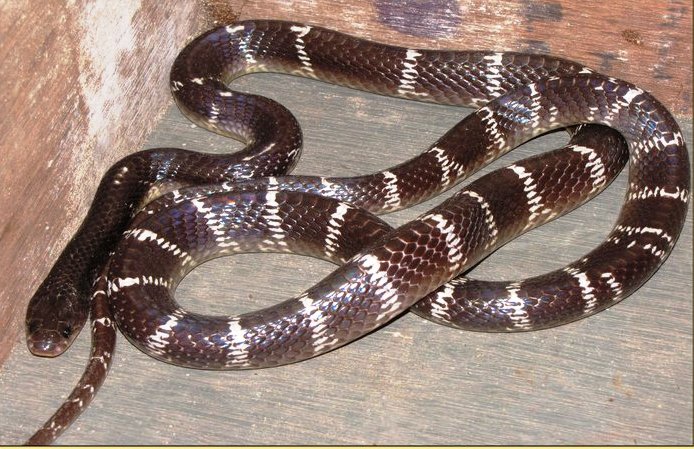
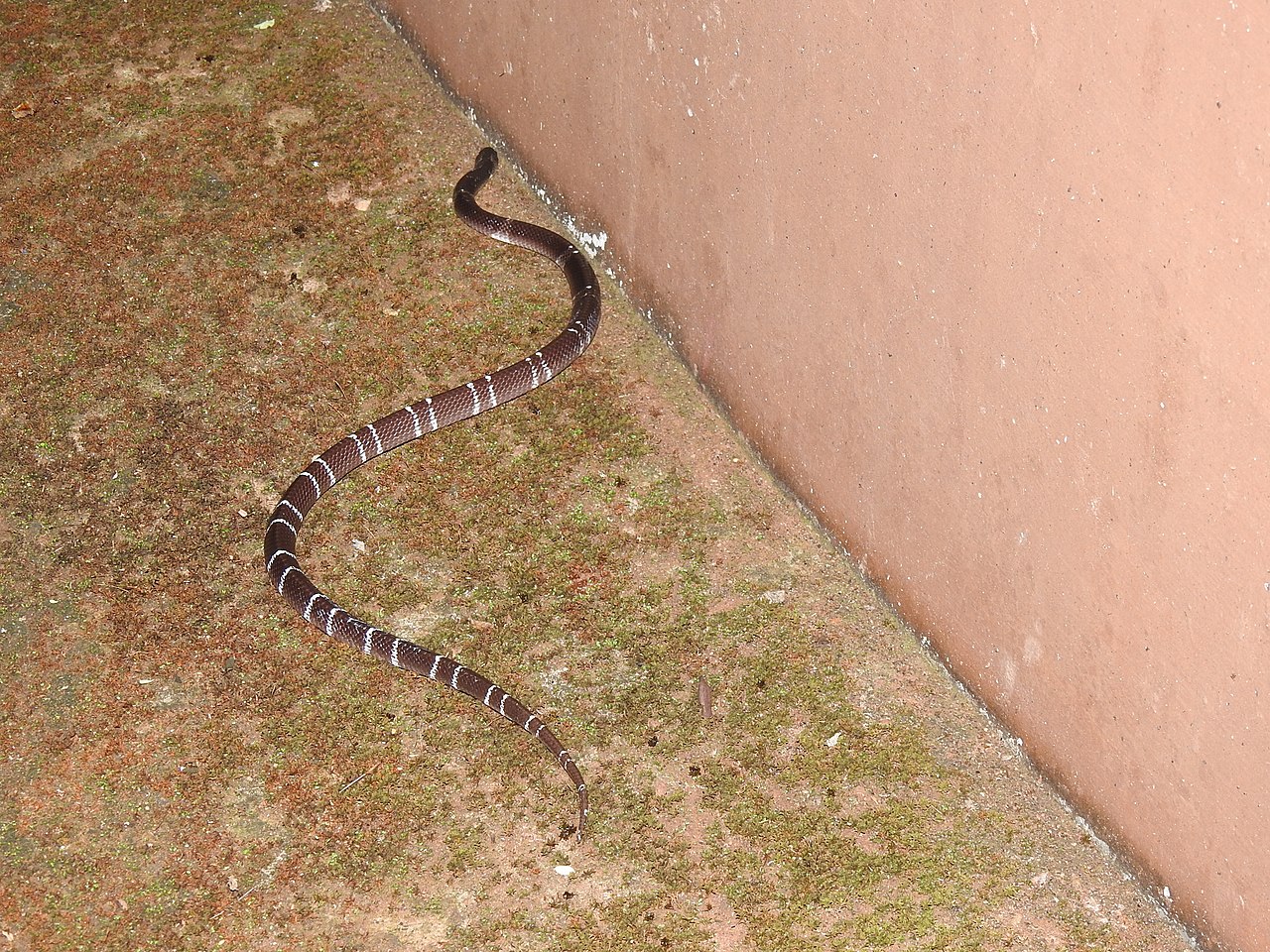
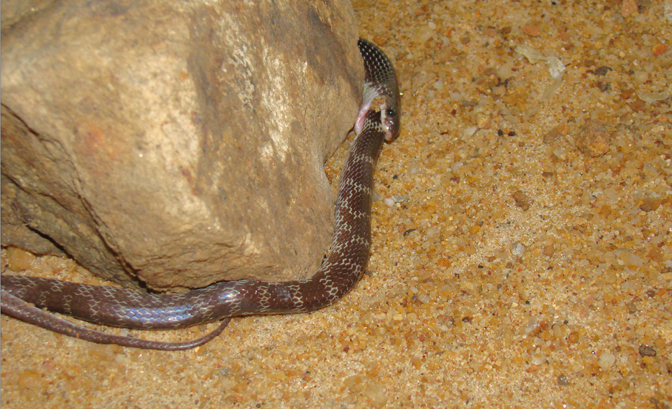
Common kraits typically have smooth, glossy scales and a pattern of alternating dark and lighter bands that may give a bluish or black appearance. The head is small and not greatly wider than the neck, and the body is cylindrical with a relatively short tail. Juveniles resemble adults but at times show slightly stronger contrasts in banding. When encountered during daylight they are often sluggish and reluctant to strike.
Range and habitat
The species occurs across a wide range of habitats in South Asia, including dry scrub, agricultural land, forest edges and human settlements. It commonly shelters in rodent burrows, beneath debris, inside hutches and houses, and other secluded sites. For regional distribution details consult a local distribution map.
Behavior and diet
Kraits are mainly nocturnal predators that feed on other snakes, small mammals, lizards and amphibians. They are generally secretive and avoid confrontation; many human bites happen at night when people inadvertently disturb a resting snake, for example by reaching into dark spaces or sleeping on the ground.
Venom and medical importance
The common krait produces potent neurotoxic venom that can disrupt neuromuscular transmission, potentially causing progressive paralysis and respiratory failure if not treated promptly. Early symptoms may be mild or painless, which can delay seeking care. Management relies on rapid medical assessment, supportive care (notably respiratory support when needed) and administration of appropriate antivenom. For clinical resources and treatment guidance see antivenom information.
Reproduction and lifecycle
Like many elapids, kraits are oviparous, laying eggs that hatch into fully formed young. Details of breeding season and clutch size vary across its range and with local conditions. Young snakes resemble adults and begin hunting small prey soon after hatching.
Interactions with people and conservation
Because the common krait frequently occurs near human habitation, it figures prominently in public health initiatives aimed at reducing snakebite. Preventive measures include improving housing, using raised or well-screened sleeping arrangements, educating people about night-time risks, and ensuring rapid access to medical care. The species plays an ecological role as predator and prey; local attitudes, habitat change and direct killing can affect populations. For general species resources consult Common krait species accounts.
Related articles
Author
AlegsaOnline.com Common krait (Bungarus caeruleus) Leandro Alegsa
URL: https://en.alegsaonline.com/art/22011