
Common marmoset (Callithrix jacchus)
Small New World primate native to Brazil, known for tree‑gum feeding, claw‑like nails, cooperative social groups, vocal communication and adaptability to disturbed habitats.
Overview
The common marmoset (Callithrix jacchus) is a small arboreal primate native to Brazil that belongs to the New World monkeys. It is one of the most frequently studied members of the genus Callithrix because of its adaptability, conspicuous behavior and use in laboratory and field research. Despite its common name, the species shows a variety of local color patterns and is often easy to spot by its distinctive ear tufts and diminutive size.
Image gallery
7 Images


Physical characteristics
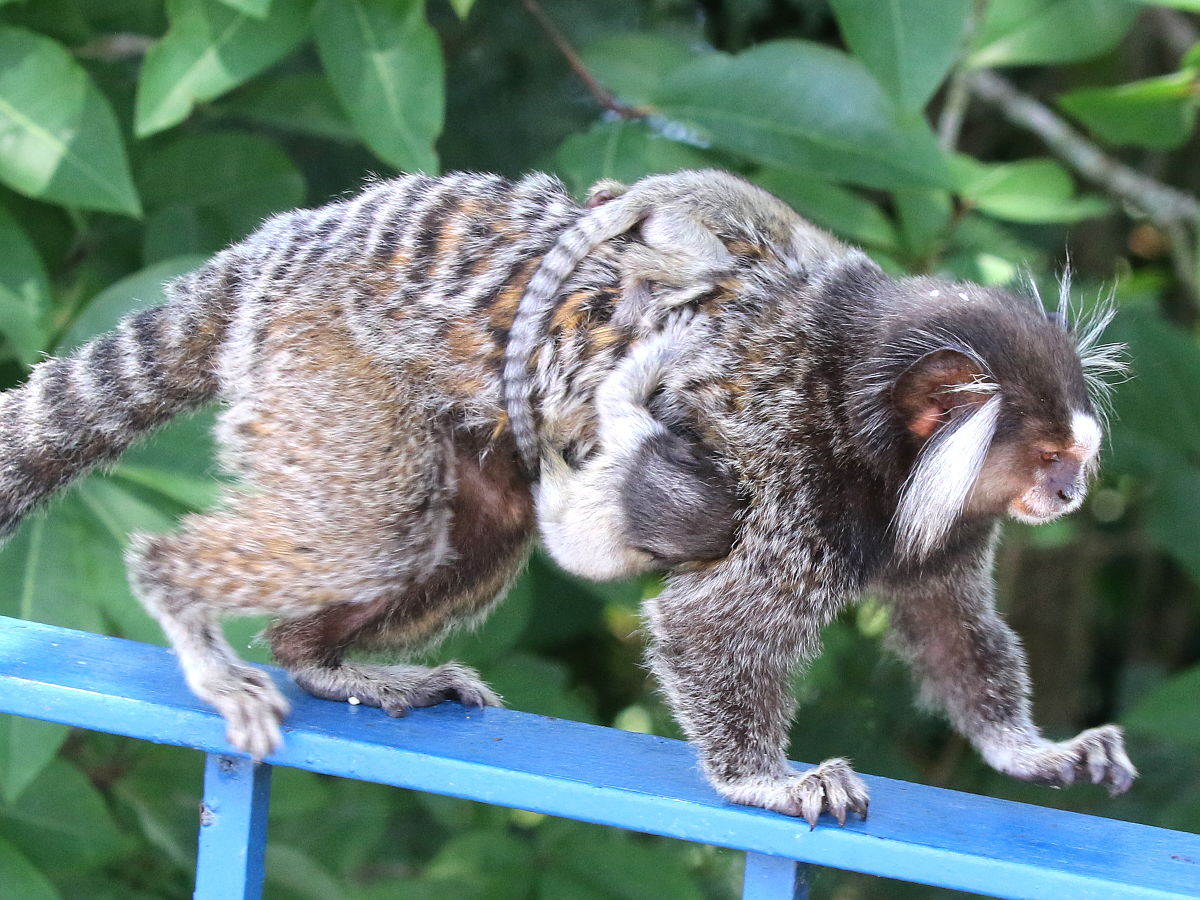
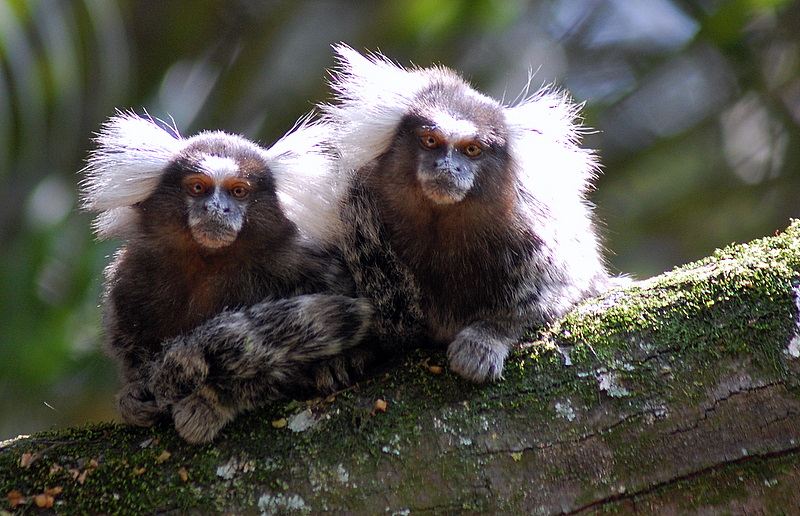
Common marmosets have several features suited to a life in the trees. They possess claw‑like nails on most digits rather than flattened fingernails, which aid in clinging to vertical surfaces. Their dentition includes specialized incisors adapted for gouging bark to access tree exudates. Typical markings include pale facial patches and tufts of hair around the ears. Their limbs are slender and the tail is long and nonprehensile, used for balance rather than grasping.
Habitat and diet
These primates occupy a range of forested habitats, including secondary growth and fragmented woodlands, and can persist in human‑altered landscapes. Their diet is opportunistic but unusual among primates in its heavy reliance on tree exudates: gum, sap, latex and resin are important energy sources. They obtain these by making small incisions in bark and then harvesting the sap. In addition, they consume fruits, nectar, plant exudates and small animals such as insects and spiders.
Social structure and reproduction
Common marmosets live in social groups that typically contain several adults and immature individuals. Groups often include one or more breeding females and additional adult helpers that participate in caring for offspring. Cooperative breeding is common: older siblings and other group members assist with carrying, feeding and protecting infants. Twin births are frequent in this genus, and parental effort is shared among multiple group members.
Behavior and communication
These marmosets rely on a range of vocalizations and visual signals to coordinate group life. Alarm calls tend to be short and high‑pitched, while contact calls such as trills help group members maintain cohesion and locate one another in dense foliage. Ear tufts may be flattened to indicate fear or submission. Scent marking and olfactory cues are also used to define territories and social relationships.
Conservation and human interactions
The common marmoset is adaptable and can be locally abundant, but it faces threats from habitat loss, the pet trade and competition with nonnative species in areas where it has been introduced. Because of their ease of breeding and sociability, they are kept in captivity for research and by private owners, which raises concerns about welfare and disease transmission. Conservation measures emphasize habitat protection, regulation of trade and public education about keeping primates.
Further reading and resources
- General primate information: New World monkey resources
- Species accounts and research summaries: Callithrix studies
- Distribution and natural history in Brazil: Brazilian habitats
- Forest ecology and management: Forest habitat information
- Family and taxonomic context: Callithrix family overview
Questions and answers
Q: Where do common marmosets live?
A: Common marmosets live in Brazil.
Q: What do common marmosets mostly eat?
A: Common marmosets mostly eat gum, sap, latex, and resin from trees.
Q: How many members are usually in a common group of marmosets?
A: A common group of marmosets usually has nine members, but can be made up of 15 members.
Q: What is the mating system like in a group of marmosets?
A: In a group of marmosets, one or two females will have babies and one male will be the father. The females are usually closely related, while the male is distantly related.
Q: What happens to a group of marmosets if the male dies?
A: If the male dies, the group will break up and form new groups.
Q: Why do marmosets leave the group they were raised with when they get older?
A: It is not known why marmosets leave the group they were raised with when they get older.
Q: What do marmosets do to show fear or submission?
A: To show fear or submission, marmosets flatten their ear-tufts close to their heads.
Related articles
Author
AlegsaOnline.com Common marmoset (Callithrix jacchus) Leandro Alegsa
URL: https://en.alegsaonline.com/art/22013
Sources
- bucknell.edu : Mammal Species of the World
- iucnredlist.org : "Callithrix jacchus"