
Collaboration: Definition, Types, Roles, and Best Practices
Collaboration is people working together toward shared goals. This article outlines definitions, common forms, roles, history, benefits, challenges, and practical guidelines for effective collaboration.
Overview
Collaboration is the process in which two or more people coordinate their efforts to achieve a common objective. It typically involves co-operation, mutual exchange of ideas, transfer of knowledge, and the pooling of skills to produce something that the participants cannot easily produce alone. Many collaborative efforts emphasize creativity or problem solving, but collaboration also applies to routine tasks, policy-making, and technical development; in these contexts the creative component is a means rather than an end (creative).
Image gallery
6 Images



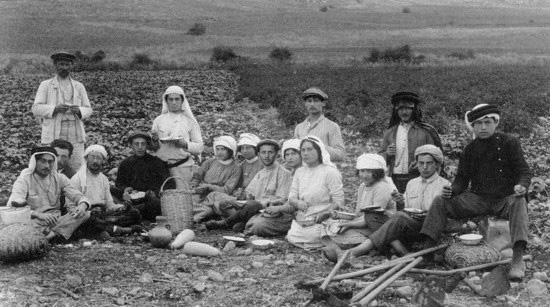
Characteristics and Structure
Collaborative work can range from highly structured teams to informal, egalitarian groups. Some projects require a clear leader or coordinator to set priorities and resolve conflicts, while others distribute responsibility across members. Leadership and coordination are often complementary: formal leadership can coexist with shared decision-making in more egalitarian arrangements. Each participant usually assumes a role—tightly or loosely defined—to contribute effectively (roles).
Typical Roles and an Example
Roles differ by domain. In a film production the division of labor is illustrative: a writer develops the script, a director shapes performance and visual storytelling, a producer manages resources, and actors bring characters to life. Depending on scale, additional specialists such as a cameraman, an audio engineer, or an editor join the team; the overall project (for example a movie) succeeds when these roles are coordinated and complementary.
Types, Processes, and Tools
Collaboration takes many forms: small-team collaboration, interdisciplinary projects, co-creation with users or stakeholders, and distributed or virtual collaboration supported by digital platforms. Group processes often move through stages such as orientation, conflict and negotiation, norming, and performance. Modern collaboration relies on tools for communication, file sharing, version control, scheduling, and real-time editing; careful use of these tools reduces friction but does not eliminate the need for clear goals and human facilitation.
Benefits and Challenges
- Benefits: shared expertise, broader creativity, risk distribution, faster problem solving, and greater buy-in from stakeholders.
- Challenges: communication breakdowns, misaligned goals, power imbalances, coordination costs, and the need to manage differing expectations.
Effective collaboration balances structure and flexibility: clear purpose and agreed norms reduce misunderstandings, while diverse perspectives and psychological safety encourage innovation.
History, Importance, and Best Practices
As a social practice, collaboration predates formal institutions: people have long pooled labour and knowledge to hunt, build, and share resources. In modern times collaboration has become central to scientific research, business development, open-source software, and arts production. Notable practical guidelines include defining shared goals, clarifying roles and decision rules, establishing feedback and conflict-resolution mechanisms, valuing diverse expertise, and using appropriate coordination tools. These principles help teams convert individual contributions into coherent collective results and make collaboration productive rather than merely busy.
For further reading on specific methods and tools, consult introductory materials on teamwork, project management, and participatory design. Practical examples and case studies are available at many educational and professional resources (co-operation overview, idea exchange, and technical guides at knowledge platforms).
Additional resources: skill development, creativity techniques, leadership approaches, egalitarian models, role design, project examples, writers, directors, producers, performers, technical crew, engineering roles.
Related articles
Author
AlegsaOnline.com Collaboration: Definition, Types, Roles, and Best Practices Leandro Alegsa
URL: https://en.alegsaonline.com/art/21554
Sources
- collinsdictionary.com : "collaboration"
- culture-of-collaboration.com : Creating a Culture of Collaboration
- britannica.com : Collaboration, Encyclopædia Britannica Online, 2007