
Civilian Conservation Corps (CCC): Purpose, Work, and Legacy
The Civilian Conservation Corps (CCC) was a New Deal program started by Franklin D. Roosevelt in 1933 to employ young men in conservation and public-works projects during the Great Depression.
The Civilian Conservation Corps (CCC) was a federal work relief program launched in 1933 as part of President Franklin D. Roosevelt’s New Deal response to the Great Depression. Its primary goals were to provide jobs for unemployed young men and to carry out large-scale conservation and public-works projects across the United States. The program combined economic relief with environmental stewardship and became one of the best-known New Deal agencies.
Image gallery
10 Images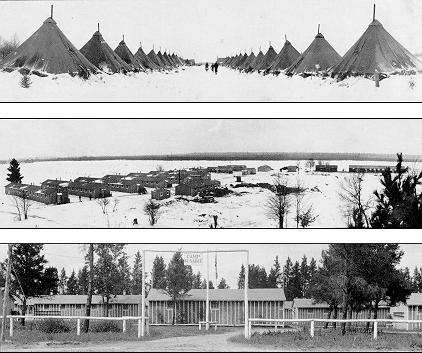


Who served and how it operated
The CCC enrolled primarily young, unmarried men, typically in their late teens and early twenties. Enrollees lived in supervised camps, received food, clothing and shelter, and were paid a monthly stipend — commonly reported as about thirty dollars a month — much of which was sent home to support families. The camps were administered in cooperation with the U.S. Army and several federal agencies that provided technical direction and project planning. For basic information on enrollee benefits and conditions see enrollment and pay and accounts of camp life.
Typical projects and activities
- Reforestation and tree planting: large-scale planting to restore forests and reduce erosion (tree planting).
- Soil conservation and erosion control: building terraces, check dams, and contour trenches.
- Park and trail construction: building roads, campgrounds, trails, and visitor facilities that survive in many parks today (national and state parks).
- Firefighting and watershed work: fire suppression, watershed protection and small-scale flood control (forest fires).
- Infrastructure tasks: digging ditches, constructing bridges and other public-works projects (public-works).
Many camps were located on federal, state, or municipal lands and cooperated with agencies such as the Forest Service, National Park Service and state conservation departments. The work provided practical training and skills that some enrollees used after leaving the CCC; for more on program organization see administration.
Impact, duration, and legacy
Over its years of operation the CCC mobilized millions of men and carried out projects that reshaped landscapes, reduced erosion, improved forest health, and expanded recreational infrastructure. The program is credited with creating lasting improvements to public lands and with demonstrating a large-scale, publicly funded response to unemployment. The corps was reduced and ultimately disbanded as the nation shifted priorities in the early 1940s; discussions of its end and continuing influence can be found under program closure and modern conservation initiatives.
Notable aspects of the CCC include its emphasis on combining relief with conservation, the distinctive camp system, and the extensive body of built and planted work that remains visible in many parks and forests. For examples of surviving CCC projects and further reading see biographical resources and curated collections of photographs and reports (historical context).
Related articles
Author
AlegsaOnline.com Civilian Conservation Corps (CCC): Purpose, Work, and Legacy Leandro Alegsa
URL: https://en.alegsaonline.com/art/20609