
Club des Hashischins: Parisian hashish salon and literary experiments (c.1844–1849)
Mid‑19th‑century Paris salon where writers, artists and physicians experimented with hashish to investigate creativity and altered states; linked to figures such as Moreau, Gautier and Baudelaire.
The Club des Hashischins was an informal Parisian circle active in the mid‑1840s that conducted group experiments with hashish and related preparations to study their effects on imagination, mood and mental experience. The gatherings, often described as a salon or club, combined curiosity about exotic substances with contemporary medical, aesthetic and literary interests. They have been remembered both for the personalities involved and for sparking debates about the relation between intoxicants and creative work.
Image gallery
1 Image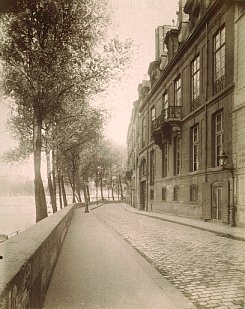
Membership and meetings
Meetings took place on the Île Saint‑Louis at the Hôtel de Lauzun (then called the Hôtel Pimodan) and were occasional rather than strictly institutional. Attendees came from the broader Parisian literary and intellectual circles: physicians, poets, novelists and painters who wanted to observe or share altered states. Accounts from the period name several well‑known figures among visitors and associates, including Théophile Gautier, Charles Baudelaire, Victor Hugo, Honoré de Balzac, Eugène Delacroix and Alexandre Dumas, père. The physician most closely linked with organizing and documenting the group's experiments was Dr. Jacques‑Joseph Moreau.
Rituals, preparation and effects
Sessions were theatrical and deliberately exoticized: some participants wore North African or "Oriental" dress, and coffee or other drinks were used as vehicles for the drug. The core substance was hashish, which was incorporated into a thick, spiced paste intended to moderate taste and potency. Contemporary descriptions list ingredients such as:
- cinnamon, nutmeg and sugar
- orange juice, butter and pistachio
- aromatic spices and, in a few accounts, controversial additives used in minute quantities
Participants reported a range of responses: vivid visions, altered perceptions, and changes in discourse and mood. While some praised the stimulus to imagination, others warned that reliance on drug‑induced states could distort temperament and habitually alter creative habits.
Publications and contemporary reaction
Two kinds of texts helped crystallize the club's reputation. Dr. Moreau published a systematic study in 1846 examining hashish and its psychological effects, framing his observations in clinical and philosophical terms. Around the same time Théophile Gautier recounted a session in an essay published in the Revue des Deux Mondes, a piece that both popularized the club and contributed to its myth. Poets such as Baudelaire wrote more ambivalently, acknowledging the intense impressions produced while cautioning that such states could affect character and the capacity for sustained creativity.
Historical importance and distinctions
The Club des Hashischins occupies a distinctive place at the intersection of Romantic and early modern ideas about the imagination, medicine and cultural exoticism. It reflected 19th‑century fascinations with "Oriental" substances as well as emerging psychiatric interests in altered consciousness. Unlike many later countercultural movements, the club was small, elite and conversational rather than political; its legacy is primarily literary and intellectual, influencing how later writers thought about intoxication, sensation and artistic inspiration.
Notable facts
- The gatherings were episodic rather than a formal institution, and accounts vary about who was a regular member versus an occasional guest.
- Descriptions often emphasize costuming and theatricality as part of the experiment, a practice intended to shape expectations and response.
- For further contextual reading see contemporary reports and modern studies of 19th‑century drug culture in Paris: Parisian histories and collections of primary texts are useful entry points.
Questions and answers
Q: What was the Club des Hashischins?
A: The Club des Hashischins, also known as the Hashish Club, was a Parisian group that explored using drugs, mainly hashish, to get creative ideas. It was active from 1844-1849.
Q: Who were some of the members of the club?
A: Some of the most important literary and intellectual people in Paris were members of the Club des Hashischins, including Dr. Jacques-Joseph Moreau, Théophile Gautier, Charles Baudelaire, Victor Hugo, Honoré de Balzac Gérard de Nerval, Eugène Delacroix and Alexandre Dumas père.
Q: Where did they hold their monthly séances?
A: The monthly séances were held at the Hôtel de Lauzun (at that time called Hôtel Pimodan) on Île Saint-Louis.
Q: What ingredients went into their drug mixture?
A: The drug mixture consisted of coffee mixed with hashish and spices such as cinnamon, cloves nutmeg pistachio sugar orange juice butter and cantharides. It had a thick green consistency like jam.
Q: Did any member write about their experiences in the club?
A: Yes - Théophile Gautier wrote an article titled "Le Club des Hachichin" which was published in Revue des Deux Mondes in February 1846. Additionally Dr. Moreau wrote a book in 1846 about cannabis and drug taking experiments conducted by members of the club called "Hashish and Mental Illness - Psychological Studies".
Q: How did Baudelaire feel about taking drugs for creativity?
A: Baudelaire believed that while taking drugs could give people ideas it quickly affected their personality so much that they felt they could only create while under its influence.
Related articles
Author
AlegsaOnline.com Club des Hashischins: Parisian hashish salon and literary experiments (c.1844–1849) Leandro Alegsa
URL: https://en.alegsaonline.com/art/21134
Sources
- credoreference.com : "Drug Use from Encyclopedia of Medical Anthropology: Health and Illness in the World's Cultures"
- guardian.co.uk : "Baudelaire, Dumas and cannabis | Books | The Guardian"
- worldcat.org : 0261-3077
- worldcat.org : 60623878