
Coligny calendar: the Gallic lunisolar bronze calendar
A fragmentary bronze lunisolar calendar of Roman‑era Gaul discovered near Lyon in 1897. Records a five‑year cycle of lunar months in Gaulish script and informs study of ancient Celtic timekeeping.
The Coligny calendar is a fragmentary bronze tablet that preserves a rare example of Celtic timekeeping from the Roman period. Discovered near Lyon in 1897, the inscription is written in the Gaulish language using Latin inscriptional capitals and records a structured system for aligning the solar year with lunar months. Scholars describe it as a lunisolar calendar because it marks both the solar year and the phases of the moon; it therefore belongs to the broader class of timekeeping systems that reconcile solar and lunar cycles. Overview and the original findspot are discussed in archaeological reports from the region around Lyon.
Image gallery
10 Images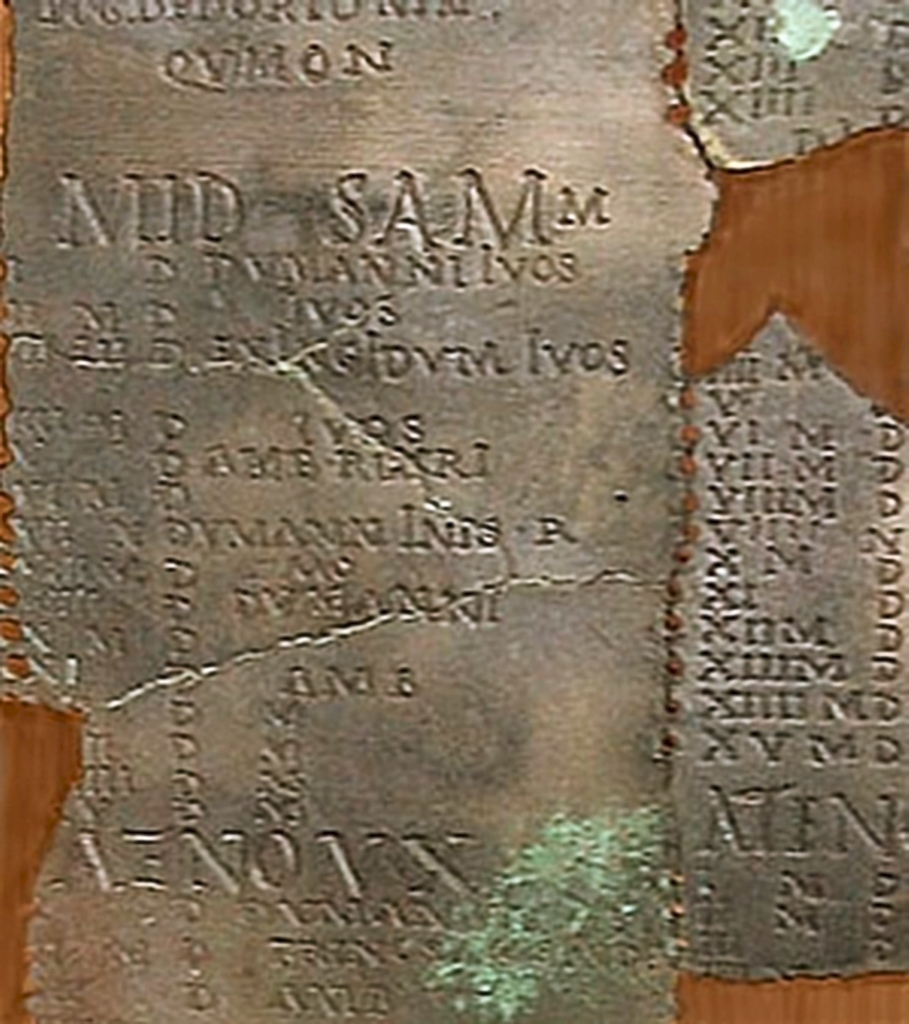



Physical form and main features
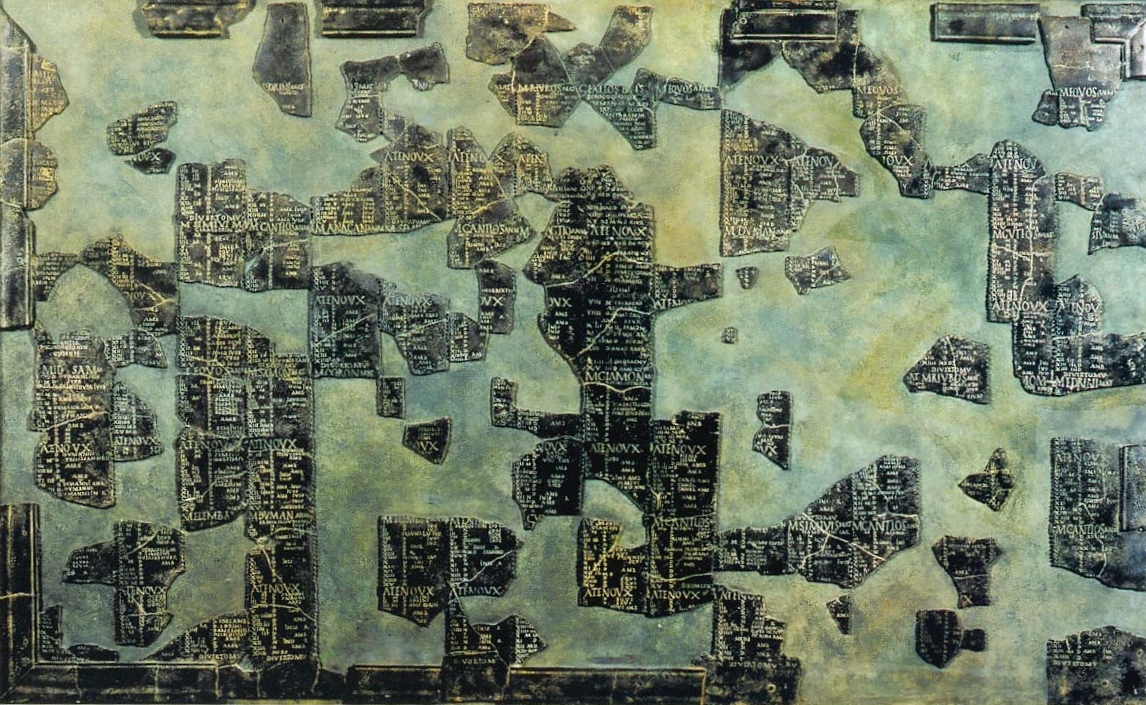
Originally engraved on a large bronze sheet, the Coligny tablet survives in numerous fragments. About seventy‑three pieces were recovered; reconstructions estimate the original plate measured roughly 1.48 m by 0.9 m. The restored layout shows sixteen vertical columns and the notation of sixty‑two named months arranged across a five‑year cycle. The inscriptions combine month names and notations of whether specific days were lucky or unlucky, and include marks that appear to track lunar phases and intercalary adjustments needed to keep months aligned with the seasons.
Structure and content
- Language and script: Gaulish language carved in Latin capital letters, indicating bilingual cultural contact and literacy practices in Roman Gaul. Material and script choices have been the subject of epigraphic study.
- Calendrical system: A lunisolar arrangement that uses named months and intercalations to reconcile lunar months with the solar year, comparable in principle with other ancient parapegmata. See discussions of lunisolar practice and related terminology. Gallic traditions and the tablet's relation to lunar notation are often noted by specialists. Moon and lunisolar concepts appear in explanatory literature.
- Civic or ritual use: The tablet records communal month names and markers (sometimes read as festivals, market days, or ritual observances), suggesting it was intended for public reference rather than private use.
Discovery, dating and hypotheses
The tablet was found in the late 19th century near the modern city of Lyon. Paleographic evidence and associated artifacts place its manufacture toward the end of the 2nd century AD. Some early commentators proposed that the tablet represented an effort by druids or local elites to preserve native calendrical knowledge as the Roman Julian calendar became dominant; this hypothesis links the find to broader cultural responses to Roman administration. Other scholars emphasize formal similarities to Greek and Roman peg calendars (parapegmata), suggesting a degree of technical borrowing or parallel development rather than solely inward‑looking resistance. For discussion of cultural context and the druid hypothesis, see Druidic theories and comparisons with the Julian calendar in Roman territories. The wider Roman setting is treated in many surveys of provincial life in the Roman Empire.
Importance, scholarship and interpretation
Because the Coligny calendar is both linguistically and technically informative, it has been central to reconstruction of the Gaulish language, Celtic ritual calendars, and ancient methods for intercalation. The tablet's fragmentary state requires careful reconstruction and has produced several published restorations that differ in details of month names, day counts, and the precise algorithm for intercalating months. It therefore remains a locus of active scholarly debate and a touchstone for interdisciplinary work in archaeology, epigraphy, and comparative chronology.
Comparable finds and legacy
Smaller, related calendrical fragments have been found elsewhere in eastern France. A similar, though much more fragmentary, inscription was recovered at Villards‑d'Héria and is conserved in the regional museum at Lons‑le‑Saunier; that object is often cited alongside the Coligny tablet as evidence for local calendrical practice. For the nearby comparative find and its museum context see Villards‑d'Héria. Modern editions and commentaries document the tablet's text, its archaeological context, and its continuing importance for understanding how ancient communities measured and organized time.
Further reading typically covers epigraphy, Celtic studies and ancient calendars; introductory resources and specialist monographs each help situate the Coligny calendar within wider debates about cultural contact, scientific knowledge in antiquity, and the variety of calendar systems used across Europe in antiquity. For accessible summaries and bibliographic pointers see general guides and museum catalogs. More on the Coligny calendar, material studies of the bronze, and regional archaeological reports may be consulted for technical detail.
Related articles
Author
AlegsaOnline.com Coligny calendar: the Gallic lunisolar bronze calendar Leandro Alegsa
URL: https://en.alegsaonline.com/art/21533
Sources
- roman-britain.org : Coligny Calendar