
Chromic acid: properties, preparation, uses and hazards
Chromic acid refers to several related chromium(VI) oxidizing species produced from chromates or chromium(VI) oxide. It is a powerful oxidant with important laboratory uses and significant health and environmental hazards.
Overview
Chromic acid denotes a group of related compounds and solutions containing chromium in the +6 oxidation state. These species are strong oxidizing agents and are typically encountered as red-orange solutions or crystalline flakes. The term is used both for mixtures obtained by acidifying chromate or dichromate salts and for formulations derived from chromium(VI) oxide combined with sulfuric acid.
Image gallery
2 Images
Preparation and common forms
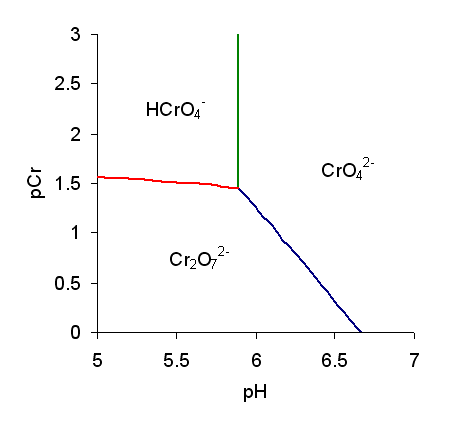
In practice, chromic acid solutions are prepared by adding an acid to a soluble chromate or dichromate salt; the equilibrium among chromate, dichromate and the protonated species depends on pH. Another route is the reaction of solid chromium(VI) oxide with sulfuric acid, which produces strongly acidic chromium(VI) mixtures. References to "chromic acid" in older chemical literature often mean mixtures rather than a single, well defined molecular compound.
Chemical behavior and reactions
Chromic acid acts as a powerful oxidizing agent. It converts many organic functional groups: for example, primary alcohols can be oxidized to aldehydes and further to carboxylic acids, while secondary alcohols are commonly oxidized to ketones. During reduction the orange chromium(VI) species is converted to green chromium(III) compounds; in other words, when the reagent is reduced the solution changes color. Typical laboratory uses include oxidative cleaning of glassware and specific organic oxidations of alcohols and other substrates.
Uses and examples
Chromic acid solutions have historically been used for metal finishing, cleaning and etching, and for selective oxidation in organic synthesis. They are also intermediates in the production of reagents such as chromyl chloride. In industrial and academic settings their selectivity and strength make them useful, but many applications have declined because safer alternatives exist.
Hazards and environmental impact
Chromic acid contains hexavalent chromium species closely related to the chromate and dichromate anions, and therefore carries significant health risks. The toxic effects are associated with the chromate ion and other Cr(VI) forms: they are corrosive, can cause severe skin and respiratory irritation, and are recognized as carcinogenic in many exposure scenarios. Disposal and emissions are tightly regulated in most jurisdictions to limit environmental contamination and human exposure.
Precautions and distinctions
- Handle chromic acid in a fume hood with appropriate personal protective equipment and spill controls.
- Distinguish between chromium(VI) reagents (strong oxidants, hazardous) and chromium(III) compounds (less oxidizing, generally less toxic).
- Because of the risks, many common laboratory oxidations formerly performed with chromic acid are now done with milder or more environmentally benign oxidants.
For further technical details, safety data and regulatory guidance consult specialized chemical safety sources and supplier documentation. See also general entries on chromate, chromium(VI) oxide, and oxidizing reagents represented by oxidizing agent discussions.
Related articles
Author
AlegsaOnline.com Chromic acid: properties, preparation, uses and hazards Leandro Alegsa
URL: https://en.alegsaonline.com/art/20206