
Chloralkali process
Industrial electrochemical method that converts sodium chloride brine into chlorine, sodium hydroxide and hydrogen; covers cell types, chemistry, uses, history and environmental considerations.
The chloralkali process is an industrial electrochemical route for producing chlorine, a strong alkali and hydrogen gas by electrolysing aqueous salts. In its most common form the feed is sodium chloride brine and the principal products are sodium hydroxide, chlorine and hydrogen. Water (H2O) participates in the cell reactions. The process is driven by electrical energy and is one of the largest consumers of industrial electricity worldwide; it can also be demonstrated at laboratory scale.
Image gallery
3 Images

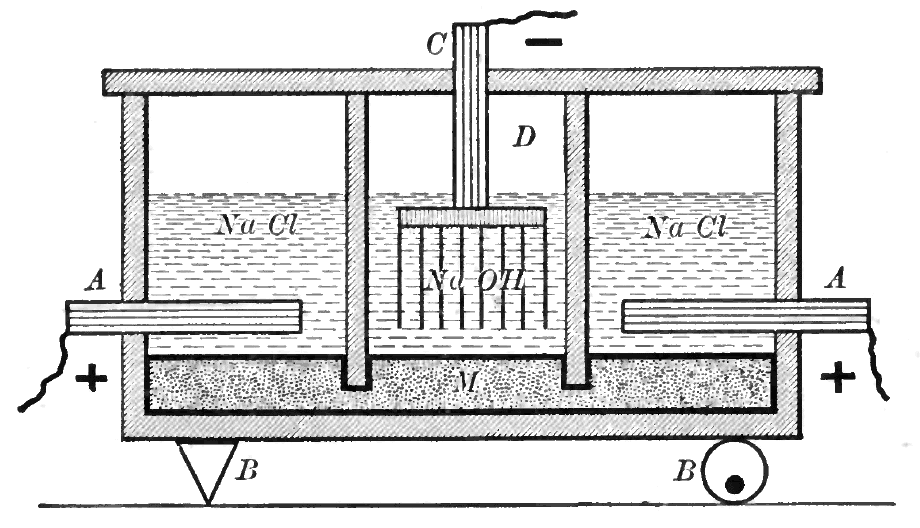
Chemistry and principal reactions
Electrolysis of a concentrated saline solution oxidizes chloride ions at the anode to produce molecular chlorine while the cathode reaction reduces water to produce hydroxide and hydrogen. When alternative salts are used the corresponding hydroxides form: for example, electrolysis of potassium chloride yields potassium hydroxide and electrolysis of calcium chloride can lead to calcium hydroxide under appropriate process conditions. If the cell design allows anodic and cathodic effluents to mix, secondary chlorine-derived oxidants such as hypochlorites may form; heating or prolonged electrolysis can produce higher oxidation-state products such as chlorates. The underlying electrochemical technique is generically called electrolysis.
Cell types and process configurations
Modern industry uses several cell designs to keep product streams separated and to maximize yield. Representative types include:
- Membrane cells: use ion-exchange membranes to allow selective transport of cations (e.g., Na+) while keeping chlorine and hydroxide streams apart.
- Diaphragm cells: employ a porous barrier to limit mixing and are historically common where product purity requirements are lower.
- Mercury (amalgam) cells: an older design in which mercury forms an amalgam with sodium; effective but phased out in many regions because of environmental and health concerns.
Uses, importance and examples
The three primary products have wide industrial significance. Chlorine is a feedstock for PVC, solvents and many organic intermediates; sodium hydroxide is used in paper, alumina production, soap and chemical synthesis; hydrogen is often consumed onsite as a reducing agent or fuel. The ability to produce these three commodities simultaneously makes the chloralkali process central to chemical manufacturing and commodity markets.
History and environmental considerations
The technology evolved from early electrolytic experiments to large continuous plants. Mercury-based cells once dominated because of operational advantages, but environmental regulation and awareness have driven conversion to membrane technology in many countries to reduce mercury emissions and lower energy consumption. Modern attention focuses on cell efficiency, membrane development, corrosion control and the carbon intensity of electricity used.
Practical notes and distinctions
Operational parameters — brine quality, cell design, temperature and current density — determine product purity and by-product formation. The process can be run at laboratory scale for demonstration, but industrial production requires specialized equipment, safety systems for handling chlorine and hydrogen, and waste management. Key distinctions to remember are the different hydroxide products when alternate salts are used and the tendency to form hypochlorites or chlorates under conditions that permit mixing or extended oxidation.
For further technical data and process descriptions consult industry references and standards; introductory sources and supplier materials often summarize cell options and environmental compliance pathways. Sodium hydroxide, chlorine, hydrogen and the related salt and by-product links above provide entry points to more detailed topics.
Related articles
Author
AlegsaOnline.com Chloralkali process Leandro Alegsa
URL: https://en.alegsaonline.com/art/19882