
Chlorine monofluoride (ClF)
Chlorine monofluoride (ClF) is the simplest interhalogen compound of chlorine and fluorine. A reactive, polar diatomic species used as a fluorinating and oxidizing reagent; highly corrosive and hazardous.
Overview: Chlorine monofluoride, chemical formula ClF, is an interhalogen—one of the binary compounds formed between different halogen elements. It consists of a single chlorine atom bonded to a single fluorine atom. In this molecule chlorine adopts a formal +1 oxidation state while fluorine is −1, giving the bond a marked polarity.
Image gallery
3 Images

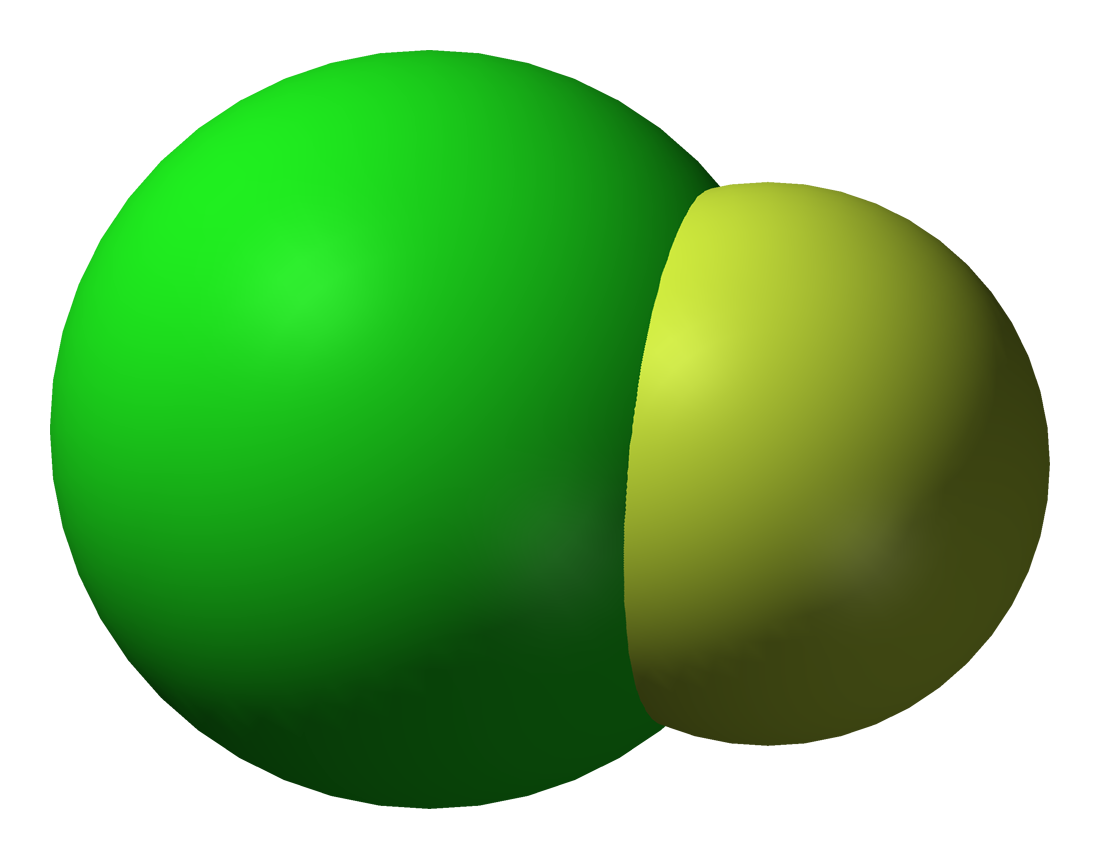
Characteristics and bonding
ClF is a diatomic, covalently bonded species with a strongly polarized Cl–F bond because fluorine is significantly more electronegative than chlorine. The compound is typically encountered as a reactive gas or volatile liquid under pressure and is strongly corrosive and an effective oxidizing and fluorinating agent. It hydrolyzes on contact with water and can produce corrosive acids.
Synthesis and chemical behavior
Laboratory preparation commonly involves controlled reaction between elemental chlorine and fluorine under conditions that limit side reactions. ClF reacts readily with many substrates: it can transfer fluorine atoms to organic and inorganic targets, oxidize lower oxidation-state species, and convert some metals to fluorides. Hydrolysis yields hydrogen fluoride (HF) and hypochlorous-type species, so contact with moisture must be avoided.
Uses and significance
- Used as a specialized fluorinating reagent in inorganic and organic chemistry.
- Serves in research on interhalogen chemistry and in synthesis of some metal fluorides or organofluorine intermediates.
- Less commonly used industrially than other fluorinating agents owing to handling hazards and the availability of more convenient reagents.
Safety and handling: ClF is toxic, corrosive, and an aggressive oxidizer. It should be handled only in dry, well-ventilated, inert-system conditions with appropriate materials and personal protective equipment; inadvertent contact with moisture can generate HF, which poses additional severe health risks.
Context and references: As the simplest interhalogen, ClF is often discussed alongside other interhalogens (for example ClF3, BrF, ICl) when comparing reactivity and bonding. For further technical summaries and safety data see compound overview, physical properties, preparation methods, reactivity and uses, and health and safety guidance.
Related articles
Author
AlegsaOnline.com Chlorine monofluoride (ClF) Leandro Alegsa
URL: https://en.alegsaonline.com/art/19890