
Chondrophore (Porpitidae): colonial, surface‑dwelling hydrozoans
Chondrophores (family Porpitidae) are small colonial hydrozoans that float at the ocean surface. Known members include Porpita porpita and Velella velella; they resemble jellyfish but are colonies of specialized polyps.
Overview
Chondrophores, commonly referred to as porpitids, are a distinctive group of surface‑floating hydrozoans in the family Porpitidae. Although they may look like single animals, each specimen is a colony of interconnected polyps that cooperate to feed, defend and reproduce. They live at the open ocean surface and are often seen carried by winds and currents.
Image gallery
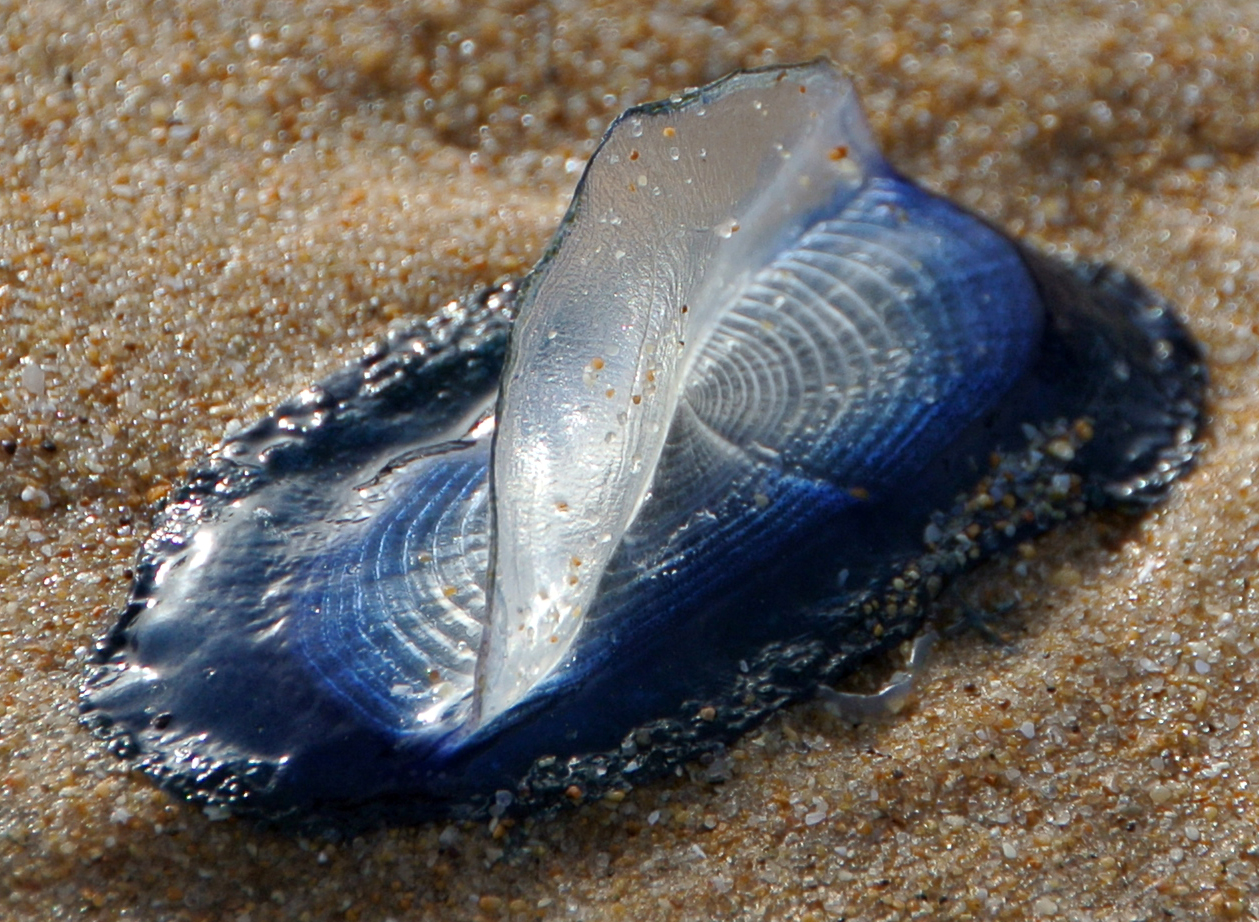
2 Images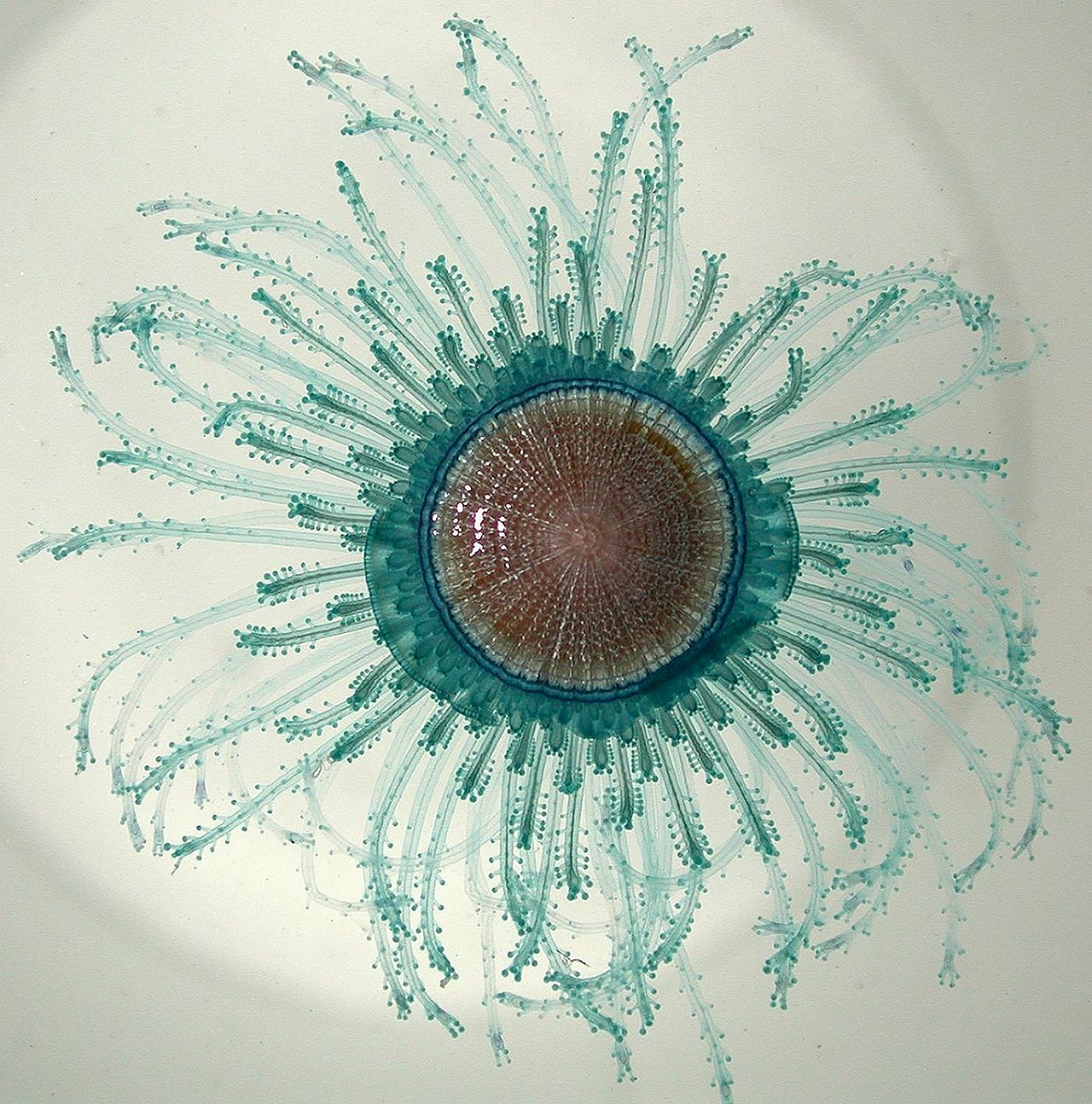
Biology and structure
Individual chondrophores consist of multiple specialized zooids attached to a common float. The visible float may be a disk (as in the blue button, Porpita porpita) or a sail‑equipped raft (as in the by‑the‑wind sailor, Velella velella). Zooids include feeding polyps with tentacles and stinging cells (cnidocytes), reproductive polyps, and defensive forms. These functional divisions are similar to other colonial hydrozoans and are discussed within the broader context of Hydrozoa.
Ecology and behavior
Chondrophores occupy the neustonic zone—the thin surface layer of the open sea—and feed on tiny planktonic animals. Their floats and sails allow them to remain at the surface and be moved by wind; this can produce large beach strandings after onshore winds. They are part of a surface food web and have predators such as nudibranchs and certain fish that tolerate or remove their stinging cells.
History, classification and distinctions
Historically the group has caused taxonomic confusion because colonial hydrozoans can resemble true jellyfish or siphonophores. Chondrophores are placed in Porpitidae and are distinct from larger siphonophores like the Portuguese man‑o'‑war. Their colony organization and small, persistent surface floats set them apart. For further taxonomic context see resources on colonial polyps and pelagic cnidarians.
Importance and human interactions
Chondrophores are harmless or only mildly irritating to most people, though contact can cause localized stings. They are of interest to beachgoers and scientists studying surface ecosystems and planktonic life. Reports of mass strandings and sail orientation have made species like Velella velella well known, while the disk‑shaped Porpita porpita is familiar in warm seas.
- Key features: colonial organization, surface float, cnidarian stinging cells.
- Common names: blue button (Porpita), by‑the‑wind sailor (Velella).
- Ecological role: plankton predator and prey within the neuston.
Questions and answers
Q: What are chondrophores?
A: Chondrophores are a small and unusual group of hydrozoans that are the family Porpitidae.
Q: Where do chondrophores live?
A: Chondrophores live at the surface of the open ocean.
Q: What is the diet of chondrophores?
A: Chondrophores are carnivorous and they feed by capturing prey in the water.
Q: Are chondrophores single organisms?
A: No, chondrophores look like a single organism but they are cooperatives of polyps.
Q: Which is the most familiar member of the family Porpitidae?
A: The most familiar members of the family Porpitidae are the blue button (Porpita porpita) and the by-the-wind sailor (Velella velella).
Q: What is the lifestyle of chondrophores in the plankton like?
A: The lifestyle of chondrophores in the plankton is similar to that of pelagic jellyfish.
Q: Are chondrophores dependent on any particular habitat?
A: Yes, chondrophores are dependent on the surface waters of the open ocean for their habitat.
Tags
Related articles
Author
AlegsaOnline.com Chondrophore (Porpitidae): colonial, surface‑dwelling hydrozoans Leandro Alegsa
URL: https://en.alegsaonline.com/art/19961
Sources
- ville-ge.ch : Schuchert, Peter 2012. The hydrozoa directory. Muséum Geneve
- jstor.org : jstor.org/stable/1305181