
Chondrostei — primitive ray-finned fishes
Chondrostei are an ancient group of primarily cartilaginous ray-finned fishes, including sturgeons, paddlefishes, bichirs and reedfishes. They retain many ancestral traits and are important ecologically and economically.
Overview
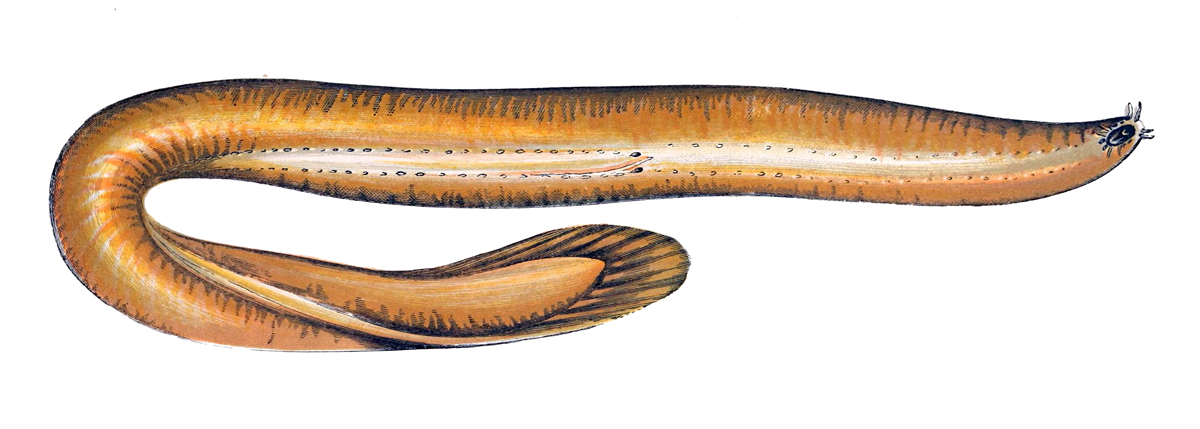
The name Chondrostei traditionally denotes a small, ancient assemblage of ray-finned fishes within the larger class Actinopterygii. Members of this group display a mixture of primitive and derived characters: much of their internal skeleton remains cartilaginous while some bones are present by ossification. Familiar representatives are the large, long-lived sturgeons and paddlefishes, which have been exploited for their roe, known commercially as caviar, and the African bichirs and reedfishes with distinctive elongated bodies.
Image gallery
10 Images




Key characteristics
Chondrosteans share several anatomical features that distinguish them from most modern bony fishes. Their skeletons are largely cartilaginous, though not entirely devoid of bone; the pattern of ossification is reduced compared with teleosts. Many show external and cranial traits reminiscent of cartilaginous fishes: simplified dermal covering rather than typical cycloid or ctenoid scales, and paired breathing or sensory openings called spiracles. In sturgeons the tail is heterocercal, with the vertebral column extending into the larger lobe of the caudal fin — a condition tied to the position of the vertebrae. Some of these traits historically prompted comparisons with sharks, though functional similarity does not equate to close relationship.
Classification and evolutionary context
Today the traditional Chondrostei concept usually includes two living orders: Acipenseriformes (sturgeons and paddlefishes) and Polypteriformes (bichirs and reedfishes). Altogether these groups represent only around fifty species, but they are phylogenetically important because they occupy basal positions within ray-finned fishes. Fossil relatives extend back well into the Palaeozoic and Mesozoic eras, and modern molecular and morphological studies place chondrosteans closer to the early radiation of actinopterygians than to true cartilaginous fishes. Their combination of ancient traits helps researchers reconstruct early stages of bony fish evolution.
Ecological roles and human uses
Chondrosteans inhabit a range of freshwater and some coastal habitats. Sturgeons are largely benthic and migratory, important as predators and nutrient transporters in riverine and estuarine systems. Paddlefishes are filter feeders in large rivers and reservoirs. Bichirs are primarily freshwater predators that can breathe air to survive low-oxygen conditions. Humans have long utilized these fishes: sturgeon roe is a high-value food product, paddlefish and sturgeon have been targeted by fisheries, and bichirs are popular in the aquarium trade. At the same time these uses have put pressure on wild populations.
Distinctive features and conservation concerns
- Skeleton: primarily cartilaginous with limited ossification.
- Skin and scales: many sturgeons lack true scales and instead bear bony scutes; polypteriforms retain ganoid-like scales rather than typical teleost scales (scales).
- Respiration and anatomy: spiracles and other ancestral features are present (spiracles).
- Tail structure: heterocercal tail in some forms, reflecting the extension of the vertebrae into the upper lobe.
Many acipenseriform species are now threatened by habitat loss, damming of rivers, pollution and overfishing for roe. Conservation programs include captive breeding, fishing restrictions and habitat restoration. Scientific interest in chondrosteans is high because they illuminate early stages of bony fish anatomy and evolution while also presenting urgent conservation challenges.
Notable facts and distinctions
Although chondrosteans sometimes superficially resemble sharks because of their cartilaginous elements and certain external traits, they are members of the bony-fish lineage and share deeper anatomical and genetic affinities with other actinopterygians. For reliable overviews and taxonomic details consult specialist literature and faunal databases; for introductory context many readers begin with resources focused on Actinopterygii or groups such as sturgeons and paddlefishes. Further information on commercial and regulatory aspects of products like caviar or the biology of bichirs and reedfishes can be found through fisheries and conservation organizations and museum collections (cartilaginous versus bony fish summaries provide comparative context).
Questions and answers
Q: What are Chondrostei?
A: Chondrostei are a sub-class of ray-finned fish.
Q: What groups of fish are under Chondrostei?
A: Chondrostei include two orders: Acipenseriformes (sturgeons and paddlefishes) and Polypteriformes (reedfishes and bichirs).
Q: What kind of fish are sturgeons?
A: Sturgeons are huge fish that provide caviar.
Q: What are the similarities between Chondrostei and sharks?
A: The Chondrostei and sharks both have a similar structure of the jaw and mostly lack bone; both lack scales (except the Polypteriforms) and share features such as spiracles and a heterocercal tail.
Q: How are Chondrostei different from other bony fish?
A: Chondrostei have more in common with the Teleostei than their external appearance might suggest.
Q: How many species are there in Chondrostei?
A: There are 52 species in Chondrostei.
Q: What is the fossil record's suggestion about Chondrostei?
A: The fossil record suggests that Chondrostei have more in common with the Teleostei than their external appearance might suggest.
Related articles
Author
AlegsaOnline.com Chondrostei — primitive ray-finned fishes Leandro Alegsa
URL: https://en.alegsaonline.com/art/19962
Sources
- palaeos.com : "Chondrosteans: Sturgeon Relatives"