
Chicago Pride Parade
Annual LGBTQ+ pride parade held each June in Chicago’s Lake View neighborhood, one of the world’s largest pride events with a long history beginning in 1970.
Overview
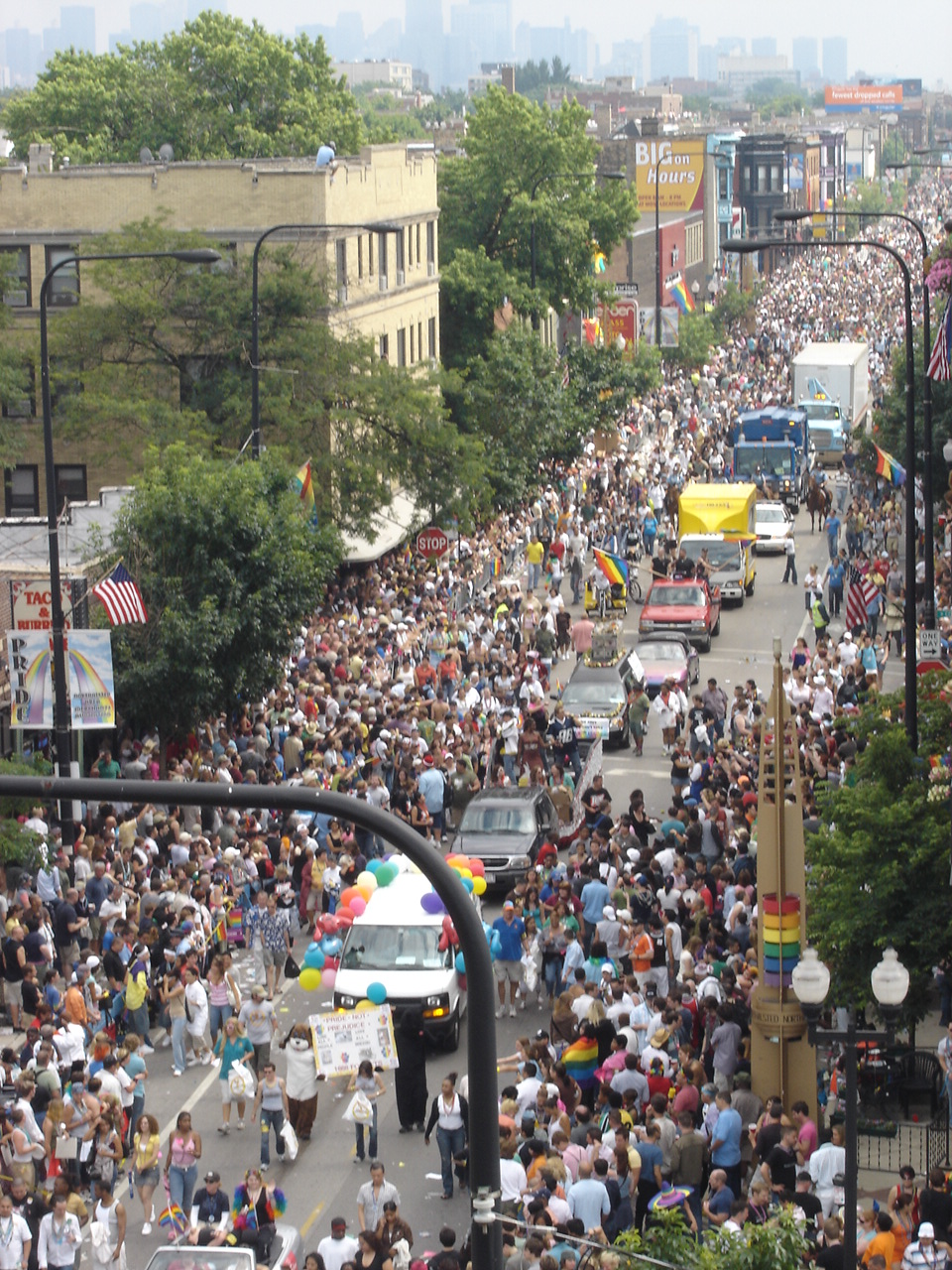
The Chicago Pride Parade is an annual celebration and demonstration for lesbian, gay, bisexual, transgender and allied communities held on the last Sunday of June in the Lake View neighborhood of Lake View, Chicago, United States. It combines festive floats, marching contingents, political statements and community outreach. The event is organized through city permits and partnerships involving the Chicago City Council and the office of the Mayor of Chicago, together with numerous local nonprofits and volunteer groups.
Image gallery
5 Images


History and origins
The parade traces its roots to a march held on June 27, 1970, when activists and supporters gathered to commemorate the uprising at Stonewall in 1969 and to press for civil rights. That first demonstration moved from Washington Square Park (often called Bughouse Square) toward the historic Water Tower area and continued on to the Civic Center, now Richard J. Daley Plaza. Over subsequent decades the event expanded in scale, organization and visibility as Pride became a national and global observance each June.
Route, participants and character
For many years the parade has been centered in the Lake View East neighborhood. In recent years route adjustments have sometimes extended the procession north into Uptown and south toward Lincoln Park, passing major streets such as Broadway, Halsted and Belmont. The march typically includes a wide range of participants: community groups, advocacy organizations, elected officials, corporations, cultural performers and family contingents. Notable figures have served as grand marshals; for example, comedian and actor Lea DeLaria was a recent marshal, drawing broad attention to the event.
Significance and impact
The parade serves multiple purposes: it is a public festival honoring LGBTQ+ identity and culture, a visible demonstration for equal rights, and a major tourism and economic event for the city. Attendance has grown to make Chicago’s parade one of the largest pride gatherings in the world. Beyond spectacle, the parade is an important moment for visibility, fundraising for community services, and outreach to younger and marginalized constituents within the LGBTQ+ population.
Recent developments and notable facts
The parade is held annually with occasional interruptions. For example, the in-person event did not take place in 2020 because of the COVID-19 pandemic; organizers adapted by planning virtual activities and resuming a large-scale parade in 2021. Route logistics, crowd management and public-safety planning have evolved in response to growing attendance and changing city regulations.
Practical information for visitors
- Timing: traditionally the last Sunday in June; schedule and staging areas are published by local organizers each year.
- Access: public transportation and road closures affect central neighborhoods—plan ahead and allow time for crowds.
- Etiquette and safety: the parade is family-friendly but also a political demonstration—respect participants, follow directions from marshals and authorities, and use designated viewing areas.
Related articles
Author
AlegsaOnline.com Chicago Pride Parade Leandro Alegsa
URL: https://en.alegsaonline.com/art/19521
Sources
- newberry.org : "Outspoken: Chicago's Free Speech Tradition"
- abc7chicago.com : 48th annual Chicago Pride Parade held on North Side