
Charles XII of Sweden (Karl XII)
Charles XII (1682–1718) was king of Sweden (1697–1718), a soldier-king whose leadership in the Great Northern War ended Sweden's era as a major Baltic power and reshaped northern Europe.
Overview
Charles XII, often styled Karl XII, was king of Sweden from 1697 until his death in 1718. He was born on 27 June 1682 in Stockholm and came to the throne as a teenager. His reign was dominated by continuous warfare and by his personal determination to preserve and, where possible, expand Swedish influence in the Baltic region. He is remembered as a highly energetic and martial monarch whose choices had long-term consequences for his kingdom.
Image gallery
10 Images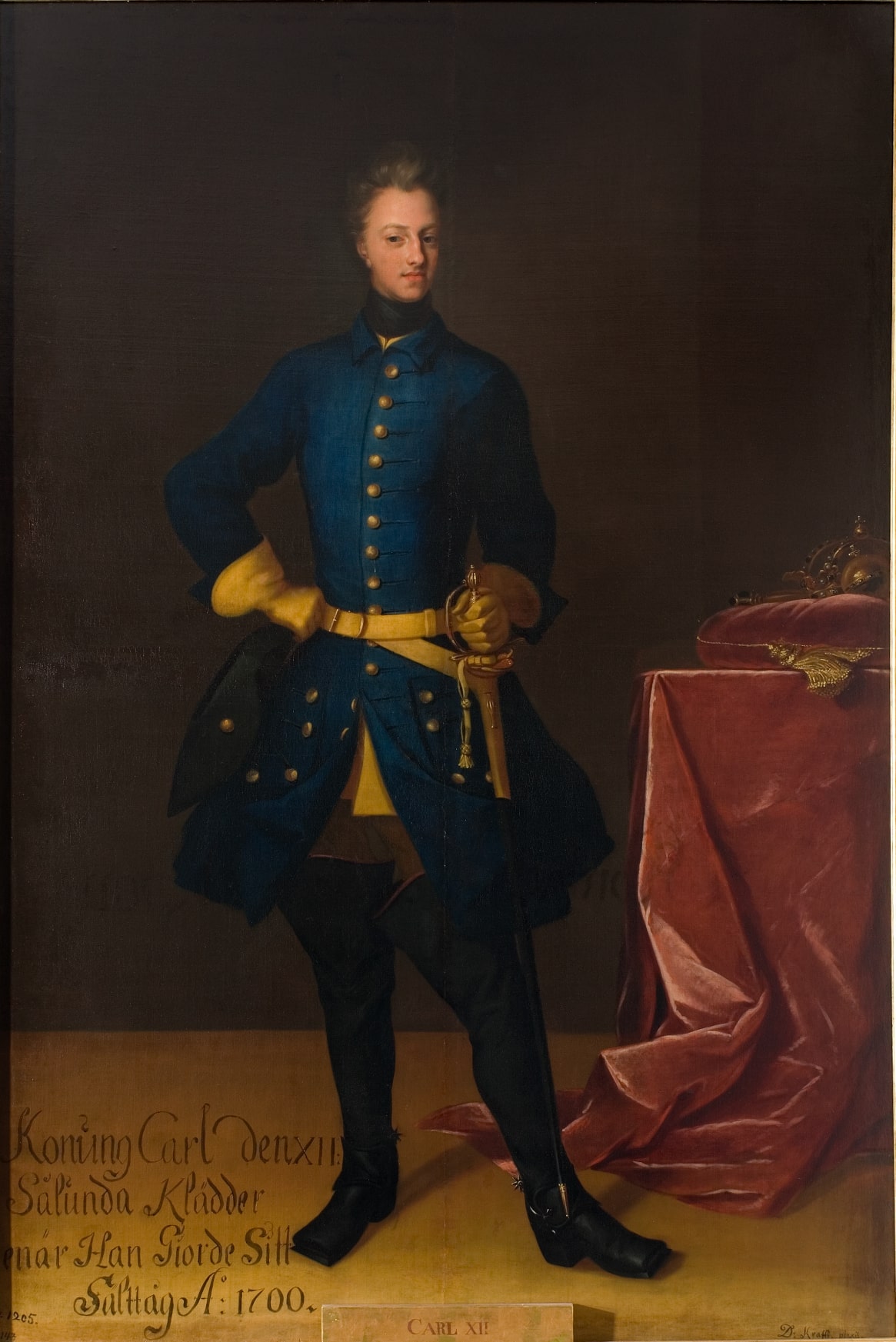


Early life and character
Charles grew up during a regency and assumed control as a young ruler. Contemporary and later accounts emphasize his ascetic habits, military zeal and reluctance to yield in diplomatic negotiations. He remained unmarried and left no direct heir; his long absences on campaign concentrated political power in the person of the king and limited the role of other estates in foreign policy decisions.
Great Northern War and principal opponents
Almost immediately after his accession Sweden became involved in the Great Northern War (1700–1721). The principal coalition opposing Swedish power included Denmark-Norway (Denmark), the Polish–Lithuanian Commonwealth influenced by Saxony (Poland), and Imperial Russia under Peter the Great (Russia). At various times Charles received diplomatic or naval support from maritime powers concerned about Russian expansion, notably England and the Netherlands.
Early victories and the Narva campaign
In the opening years of the war Charles achieved remarkable tactical successes that burnished his reputation. His victory against a larger Russian force at Narva in 1700 demonstrated Swedish discipline and leadership. Those early successes encouraged a strategy of aggressive campaigning that aimed to defeat each adversary in turn rather than negotiate a collective settlement.
Poland, Russia and the turning point
After operations against the Danish and Polish-Saxon forces, Charles directed attention eastward. He intervened in Polish affairs and temporarily drove Augustus II from power, negotiating settlements such as the treaty that followed the occupation of parts of Poland. The campaign against Russia then became central. Charles allied with the Ukrainian Cossack leader Ivan Mazepa (Mazeppa) in an effort to undermine Russian authority. That effort culminated in the decisive Russian victory at Poltava in 1709, where the Swedish army was routed by forces under Peter I. The defeat at Poltava marked a major turning point in the war and in northern European power relations.
Exile in the Ottoman Empire and return
Following Poltava Charles fled to the Ottoman frontier and spent several years in exile in the Ottoman realm (Turkey), seeking allies and opportunities to rebuild his forces. Negotiations and military politics in this period complicated his prospects. He eventually returned to Sweden in the mid-1710s and resumed command in an effort to salvage Sweden's position.
Final campaigns and death in Norway
In the last phase of his reign Charles launched an offensive against Norway (Norway), then united with Denmark, hoping to force a favorable settlement by seizing key fortresses. During the 1718 campaign he was struck by a projectile that wounded him in the head and led to his death. The exact circumstances of the shot—whether from enemy fire or other causes—have been debated by historians.
Aftermath and legacy
- Charles XII's lengthy wars exhausted Sweden's manpower and treasury and precipitated the end of the country's era as a dominant Baltic power.
- Following his death Sweden moved toward a less autocratic, more parliamentary system in the decades that followed; this period is often called the Age of Liberty.
- The balance of power in northern Europe shifted decisively: Russia under Peter the Great emerged as the principal regional power.
- Charles's personal example and his campaigns have remained subjects of intense historical interest and debate, seen variously as the work of a brilliant soldier, a reckless strategist, or both.
Study and sources
Charles XII's career is examined in military histories of the Great Northern War, in diplomatic studies of early 18th-century Europe, and in biographies that weigh his military talents against the costs borne by Sweden. For accessible general accounts consult modern histories that place the conflict in the wider European context and specialist studies of campaigns such as Narva and Poltava. Further reading and primary documents are available through national archives and collections that focus on Swedish, Polish, Russian and Ottoman sources.
Tags
Related articles
Author
AlegsaOnline.com Charles XII of Sweden (Karl XII) Leandro Alegsa
URL: https://en.alegsaonline.com/art/18783
Sources
- kungkarl.se : Charles XII