
Carl von Clausewitz: Prussian General and Theorist of War
Biography and ideas of Carl von Clausewitz, Prussian soldier and author of On War, summarizing his life, major concepts such as 'friction' and 'center of gravity', and his enduring influence on military thought.
Carl Philipp Gottlieb von Clausewitz was a Prussian soldier and military thinker whose life spanned the late 18th and early 19th centuries. He was born on 1 July 1782 and died on 16 November 1831. As an officer in the Prussian military establishment he served during the upheavals of the Napoleonic Wars, and at one point joined forces with the Russian Army to resist the French campaigns. Clausewitz combined practical experience with reflective study to produce writings that shaped later discussions of war and statecraft.
Image gallery
3 Images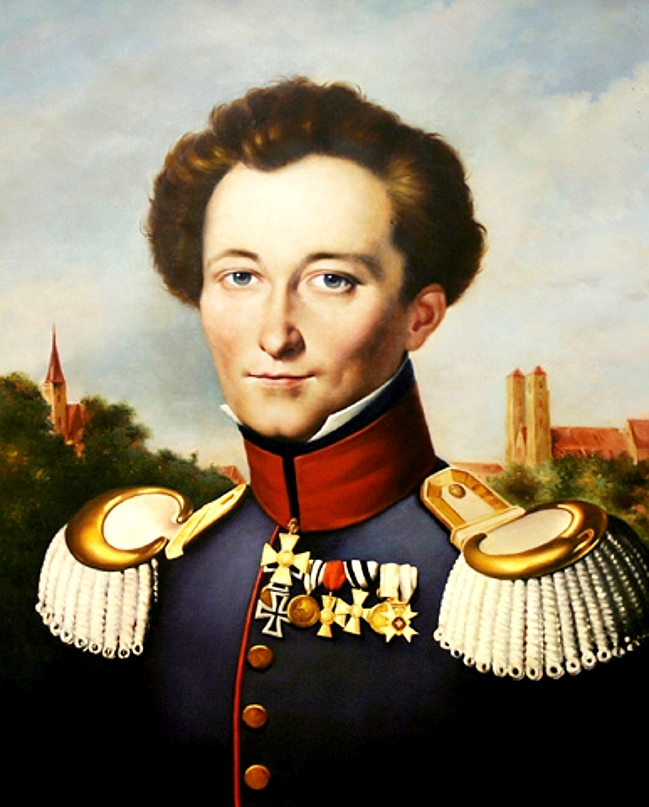


Life and military career
Clausewitz's career was rooted in the tradition of the professional European officer. He saw action in several campaigns and spent periods of his life both in active service and in scholarly retirement. His observations came from frontline experience, staff work, and analysis of contemporary campaigns. After the Napoleonic era he devoted himself increasingly to writing and teaching, seeking to synthesize the lessons of recent wars for future professional officers.
Major work: On War
Clausewitz's principal work is commonly known as On War, an extended study of the nature, theory and practice of armed conflict. Its famous formulation that "war is a continuation of politics by other means" stresses the political purpose behind military action. Rather than treating war as purely an art or a closed science, he emphasized its contingent, human, and material dimensions — the influence of morale, chance, and limited resources on outcomes.
Key concepts and characteristics
- Friction: the idea that even simple actions encounter unforeseen difficulties in war.
- Fog of war: uncertainty about the enemy and the environment that complicates decision-making.
- Center of gravity: the source of an opponent's strength whose defeat can bring about collapse.
- Absolute vs. real war: a distinction between theoretical extremes and the concrete, limited wars states actually wage.
Clausewitz also discussed practical matters such as organizing an army, the role of chance and moral forces, and the economic and territorial stakes — including the interplay of money and land — that shape strategic choices. His work is often read both as a study in military science and as a source of philosophical reflection about violence and policy.
Influence, use, and criticism
Clausewitz became a foundational figure for later military theorists, staff colleges, and strategists; his terminology and concepts appear in doctrine, academic studies, and popular analyses of war. Practitioners and scholars have adapted his insights to very different eras and technologies, from 19th‑century campaigns to modern conflict and nonmilitary fields such as business strategy and political analysis. Critics have argued that some of his ideas are ambiguous, that emphasis on state-centered politics overlooks other actors, or that particular concepts are too abstract when applied to irregular or ideological warfare.
Despite debate, Clausewitz's combination of practical experience and systematic thought remains central to understanding how military means relate to political ends. For further introductions and primary-source editions see works and translations linked in scholarly and military libraries (primary dates, biographical summaries, death records, posthumous publications, and topical overviews on the Prussian military context or the Napoleonic Wars). Additional reading can consult materials about his service with allied forces like the Russian Army and comprehensive discussions of On War, the nature of military science, and the practicalities of leading an army.
Notable aspects often highlighted by historians and instructors include the central quote linking war to politics, his rejection of simplistic labels such as art or science for war, and his attention to the material constraints of conflict — for example, the roles of money and land in strategic calculations. Clausewitz's legacy endures because he framed military action as a complex social and political phenomenon rather than a purely technical exercise.
Related articles
Author
AlegsaOnline.com Carl von Clausewitz: Prussian General and Theorist of War Leandro Alegsa
URL: https://en.alegsaonline.com/art/17016
Sources
- clausewitz.com : Clausewitz and his Works.