
Carl Orff: Composer, Educator and the Orff Schulwerk
Overview of German composer Carl Orff, his major works such as Carmina Burana, the Orff Schulwerk approach to music education, and the historical context and controversies of his career.
Overview
Carl Orff (1895–1982) was a German composer and pedagogue whose music and teaching ideas have had a lasting international reach. He is best known for the dramatic choral work Carmina Burana and for a child-centered approach to music education commonly called the Orff Schulwerk. Orff's compositions often emphasize rhythm and percussive sonorities, and his methods aim to integrate movement, speech, and improvisation into musical learning. For general biographical context see biographical resources.
Image gallery
6 Images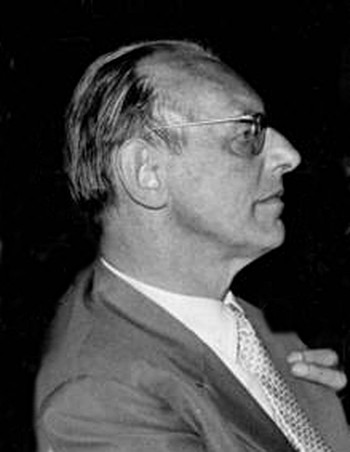


Major works and characteristics
Carmina Burana is a scenic cantata based on a medieval collection of poems and songs; Orff set many of these texts to music in the mid-1930s, and the opening chorus "O Fortuna" has become particularly famous. For more on that collection and its medieval origin, see Carmina Burana and the medieval texts that inspired it. The original poems come from diverse manuscripts compiled in the Middle Ages, a context discussed in several historical overviews here.
Orff Schulwerk: education and practice
Beyond composition, Orff developed a practical approach to teaching music to children, later refined with collaborators such as Gunild Keetman. The Orff Schulwerk emphasizes elemental music-making: simple melodic patterns, ostinato rhythms, call-and-response, and the use of accessible percussion instruments. This method treats speech, movement, and play as central to musical learning and remains influential in schools and early childhood programs worldwide; see educational summaries at Orff Schulwerk resources.
Selected works and performances
- Carmina Burana (scenic cantata, 1930s) — internationally performed and recorded.
- Reigen der Kinder — a stage work that was presented during notable public ceremonies, including the 1936 Summer Olympics references to that performance.
- Incidental music and arrangements — at times Orff produced music for theatrical productions; in one instance he composed new music for a staging of A Midsummer Night's Dream when earlier settings were judged unsuitable by contemporary authorities on the production and on the original Mendelssohn setting background on Mendelssohn.
Historical context and controversies
Orff's career unfolded during a turbulent period in German history, and his activities during the 1930s and 1940s have been subject to study and debate. He maintained personal and professional relationships with a range of figures; one acquaintance was Kurt Huber, later a member of the resistance group White Rose more on the White Rose. Huber was tried and executed in 1943 details of that episode. Scholars continue to discuss how Orff navigated cultural politics of the time and how his reputation was reassessed after World War II.
Legacy and influence
Today Orff is remembered both for the popular appeal of works like Carmina Burana and for a pedagogical legacy that transformed music education practice in many countries. The Orff approach remains widely taught in teacher-training programs and used in classrooms, community music-making, and therapy. At the same time, historians and musicians examine his life and choices within the historical circumstances in which he worked, resulting in a nuanced view that balances artistic achievement with careful attention to context.
Related articles
Author
AlegsaOnline.com Carl Orff: Composer, Educator and the Orff Schulwerk Leandro Alegsa
URL: https://en.alegsaonline.com/art/17009