
Carmina Burana: the medieval manuscript and its modern musical fame
Carmina Burana is a medieval manuscript of over 240 mostly Latin poems—on spring, love, satire and drinking—copied c.1230; a selection was famously set to music by Carl Orff in the 20th century.
Overview
Carmina Burana is the modern name for a single medieval manuscript that contains a large collection of texts from the high Middle Ages. The poems and songs were composed in the vernacular and learned languages of northern Europe and were gathered into a codex that dates from around 1230. Editors and scholars usually note that the items themselves originate from roughly the 11th century through the 12th century and shortly thereafter. The surviving book preserves more than two hundred and forty pieces, making it one of the most extensive single survivals of medieval lyric poetry.
Image gallery
4 Images
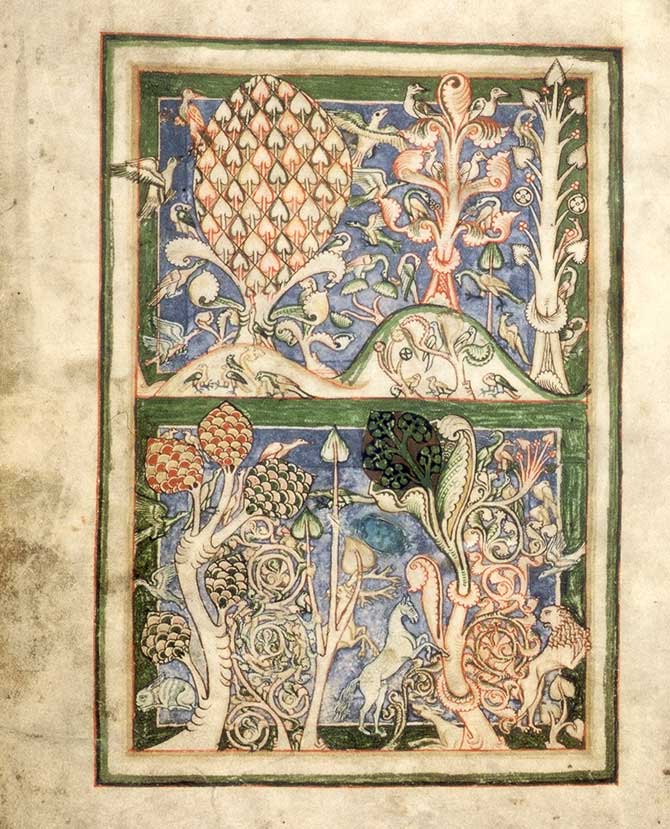


Contents and characteristics
The material in the manuscript is diverse in language, subject and style. Most texts are written in medieval Latin; a smaller number are in Middle High German. Themes range widely but commonly include:
- celebrations of spring and seasonal change;
- courtly and physical love poems, both playful and serious;
- moralising or satirical verses that target clerical or secular abuses;
- drinking songs and convivial pieces meant for performance.
Some poems carry short melodic notation or performance cues, and musicologists have attempted reconstructions where possible. Others survive only as poetic texts, but their lively meter and refrain patterns suggest they were regularly sung or recited.
Manuscript history and origin
The book was copied for a monastic or clerical milieu in the early 13th century, probably in an Alpine region. Proposed places of production include an abbey in Styria or a scriptorium near Brixen; the precise origin remains uncertain. The codex itself is usually referred to as the Codex Buranus (sometimes catalogued clm 4660/4660a) and has been the basis for modern editions and scholarly study.
Discovery, editions and location
The manuscript came to wider attention in the modern period when it was discovered in a Bavarian monastery library. Today the codex is held by the Bavarian State Library in Munich and has been edited and published by nineteenth- and twentieth-century scholars. One of the early critical publications presented a collected text and commentary that made the poems accessible to students of medieval literature and music.
Modern musical settings and cultural impact
The most famous modern engagement with the manuscript is the large-scale musical setting by the German composer Carl Orff. In the 1930s Orff selected 24 of the medieval texts and composed music to accompany them, creating a dramatic cantata that emphasizes strong rhythms and vivid choral writing. The work was first staged at the Frankfurt opera house and quickly became widely known; the opening and closing chorus known as "O Fortuna" has taken on a life of its own in film, advertising and popular culture. Orff later grouped this piece with other settings into a triptych called Trionfi, though the single Carmina Burana setting remains most frequently performed.
Significance and distinctions
As a source, Carmina Burana is valued for preserving a broad cross-section of secular medieval lyric often absent from monastic archives. It illuminates the interplay of Latin learned culture and vernacular song, the social life of drinking and courtship, and the ways poetry circulated among clerics, students and travelling performers. The manuscript itself is studied for palaeography, notation and its evidence of performance practice, while Orff’s musical adaptation has shaped modern perceptions of the medieval repertoire.
Questions and answers
Q: What is Carmina Burana?
A: Carmina Burana is a collection of texts from the 11th and 12th century, containing over 240 texts written in Latin and Middle High German. Most of the texts are moral or satirical in nature, with some about spring, love, and drinking songs.
Q: Where were the texts discovered?
A: The texts were discovered by Johann Christoph von Aretin in Benediktbeuern Abbey in 1803.
Q: Where are they now?
A: They are now located at the Bavarian State Library in Munich under the signature clm 4660/4660a.
Q: Who edited them?
A: Johann Andreas Schmeller edited them and published them as Carmina Burana – Lieder aus Benediktbeuern.
Q: Who wrote music for them?
A: Carl Orff wrote music for 24 of them as Carmina Burana.
Q: When was it first performed?
A: It was first performed in 1937 at the Opera house in Frankfurt am Main.
Q: What other works did Carl Orff make related to this collection?
A: He also made Catulli Carmina and Trionfo di Afrodite which he combined into one work called Trionfi which is performed much less than just Carmina Burana alone.
Related articles
Author
AlegsaOnline.com Carmina Burana: the medieval manuscript and its modern musical fame Leandro Alegsa
URL: https://en.alegsaonline.com/art/17137