
Louis René Édouard, Cardinal de Rohan
French nobleman and churchman (1734–1803), bishop and cardinal known for his diplomatic career and central role in the Affair of the Diamond Necklace that damaged the reputation of the royal court.
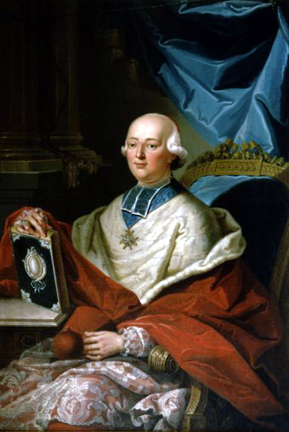
Overview
Louis René Édouard de Rohan, usually called Cardinal de Rohan (25 September 1734 – 16 February 1803), was a high-ranking French clergyman and aristocrat. A member of the powerful House of Rohan, he combined ecclesiastical office with political influence. His career included important diplomatic postings and a prominent role in one of the most notorious scandals of late ancien régime France.
Image gallery
1 Image
Family background and offices
Born into the Rohan-Guéméné branch of an old Breton princely family, he belonged to the social elite of the French court. His parents were Hercule Mériadec, Prince of Guéméné, and Louise Gabrielle Julie de Rohan. Over time he held senior church appointments and the title of cardinal while exercising political authority typical of aristocratic prelates of his era. He is often described as a bishop, a prince of the church, and a participant in high diplomacy.
Diplomatic career and Vienna
De Rohan served in diplomatic roles for the French monarchy, including a posting as ambassador to the imperial court in Vienna. His behaviour at court and his attempts to build influence there made him a conspicuous figure and attracted both attention and disapproval from members of the Habsburg court. He was born in Paris, but his public life was shaped as much by foreign service and court politics as by his ecclesiastical functions.
The Affair of the Diamond Necklace
In the mid-1780s Cardinal de Rohan became entangled in what became known as the Affair of the Diamond Necklace. Seeking to regain favour at the French court, he was approached by a woman who claimed intimacy with the queen. That woman, Jeanne de Valois-Saint-Rémy, persuaded him that she acted for Marie Antoinette and that the queen wished to acquire an expensive necklace indirectly. Believing the deception, Rohan arranged for access to jewels that were then diverted to the conspirators.
Trial, punishment and later life
The revelation of the scheme led to a sensational public trial. Cardinal de Rohan was arrested and subjected to a legal process that received wide publicity; the case ended in an acquittal for the cardinal but left his reputation damaged. The affair undermined public confidence in the royal household and contributed to the growing unpopularity of the monarchy. In the years that followed he left court life and, as the political situation in France deteriorated, spent his later years away from the centre of power until his death in 1803.
Legacy and significance
Cardinal de Rohan is remembered less for doctrinal or pastoral achievements than for the way his rank and actions intersected with the social and political crises of late 18th-century France. The necklace scandal became a symbol of court excess and venality for contemporaries and later commentators, and it is often cited as one episode among many that eroded the credibility of the monarchy before the Revolution. His story illustrates how aristocratic privilege, clerical rank and court intrigue could combine with dramatic effect.
Related articles
Author
AlegsaOnline.com Louis René Édouard, Cardinal de Rohan Leandro Alegsa
URL: https://en.alegsaonline.com/art/16939