
Carl Barks — cartoonist and creator of Scrooge McDuck
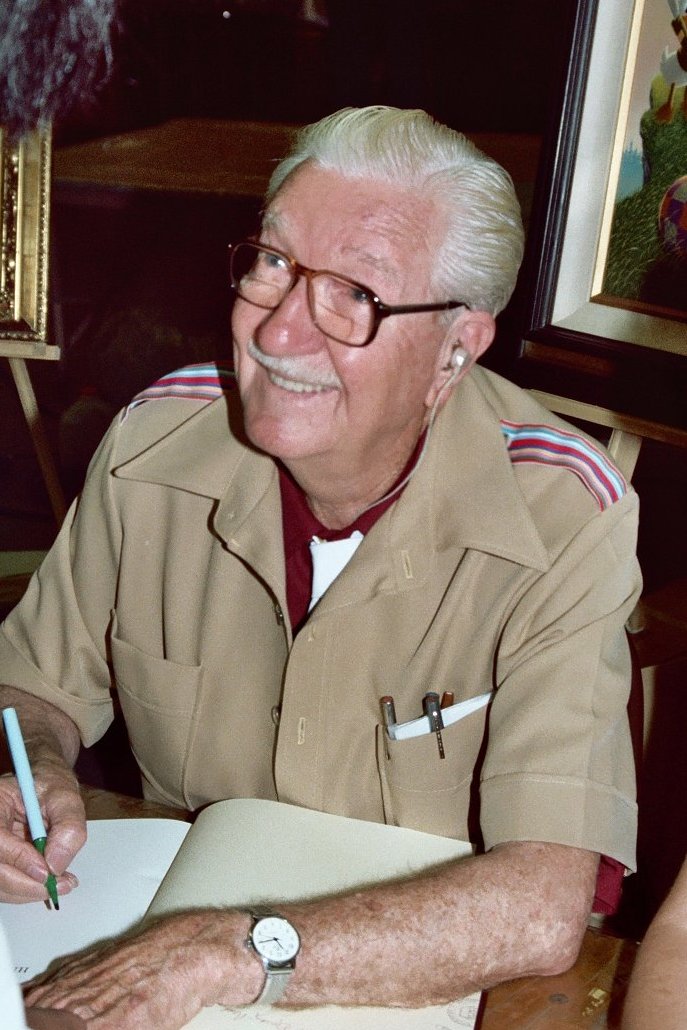
Carl Barks (1901–2000) was an American cartoonist whose Disney comics — notably those starring Donald Duck and Scrooge McDuck — reshaped comic-book storytelling and inspired generations of artists and readers.
Overview
Carl Barks was an American comic-book artist and writer best known for developing many of the characters and settings that became central to Disney comics. Working first for the Walt Disney studio and then for Western Publishing, Barks created enduring figures such as Scrooge McDuck and a rogues' gallery of supporting players, while refining a storytelling style that combined humor, adventure and detailed backgrounds.
Image gallery
3 Images

Biography and career
Barks was born near Merrill, Oregon, into a farming family in 1901. He took an early interest in drawing and, after family hardships, turned to art as a vocation. In the mid-1930s he joined the Walt Disney studio where he contributed to animation story work and wrote numerous scripts for short films featuring Donald Duck. In 1942 Barks moved into comics with Western Publishing, producing both scripts and artwork for many years. He drew and wrote the majority of his best-known comic stories during this period, continuing until his retirement in 1966.
Major creations and themes
- Key characters: Scrooge McDuck, the Beagle Boys, Gyro Gearloose, and other members of the Duck universe.
- Settings: Duckburg and the iconic Money Bin, where adventure and domestic comedy intersect.
- Recurring themes: Treasure-seeking adventures, moral complexity in characters (notably Scrooge), and a mix of slapstick with cinematic pacing.
Barks's work is noted for clear, expressive character acting and meticulously composed panels. His background in animation informed his sense of movement and staging, while his solo work allowed him to build recurring locations and a cast of supporting figures with distinct personalities.
Style, influence and reception
Although many of Barks's early comics were published without bylines, readers and later scholars elevated him to a central place in 20th-century comics. He came to be widely admired by both fans and fellow cartoonists in Europe and North America for storytelling craft and imaginative scope. His stories found particularly enthusiastic audiences in countries where Disney comics were a major cultural presence, and creators who followed have cited Barks as a formative influence.
Later life and legacy
In later decades Barks received growing recognition from the comics community and the public. He made a memorable trip to Europe in 1994, at an advanced age, meeting readers and colleagues who had long celebrated his work. Personal losses marked his later years; his third wife, Margaret Garé, died before that trip. Barks suffered declining health at the turn of the century and died in 2000 at his home in Grants Pass, Oregon. Fans often referred to him affectionately as "the Duck Man," a testament to the lasting affection for the characters and worlds he shaped.
Notable facts
- His transition from animation to comics allowed him to build long-form adventures and recurring settings.
- Several of the characters and plot devices he introduced remain central to modern portrayals of the Duck universe.
- His work continues to be reprinted and studied for its craft and influence on sequential art.
Carl Barks's legacy endures through reprints, tributes, and the many artists and writers who draw on his blend of humor, invention and narrative clarity. For readers interested in exploring his stories, many collections are available that gather his most influential Donald Duck and Scrooge McDuck tales.
Related articles
Author
AlegsaOnline.com Carl Barks — cartoonist and creator of Scrooge McDuck Leandro Alegsa
URL: https://en.alegsaonline.com/art/16992