
Cape Floristic Region (Cape flower region)
A biodiversity hotspot at South Africa's southwestern tip, the Cape Floristic Region is a tiny but species-rich floral kingdom dominated by fynbos vegetation, notable for its high endemism and conservation importance.
The Cape Floristic Region, often called the Cape flower region, occupies the southwestern tip of South Africa. Although small in area compared with other global biogeographic zones, it is recognized as one of the world's six floral kingdoms. The region is famous for its exceptional plant diversity and the high number of species found nowhere else on Earth.
Image gallery
6 Images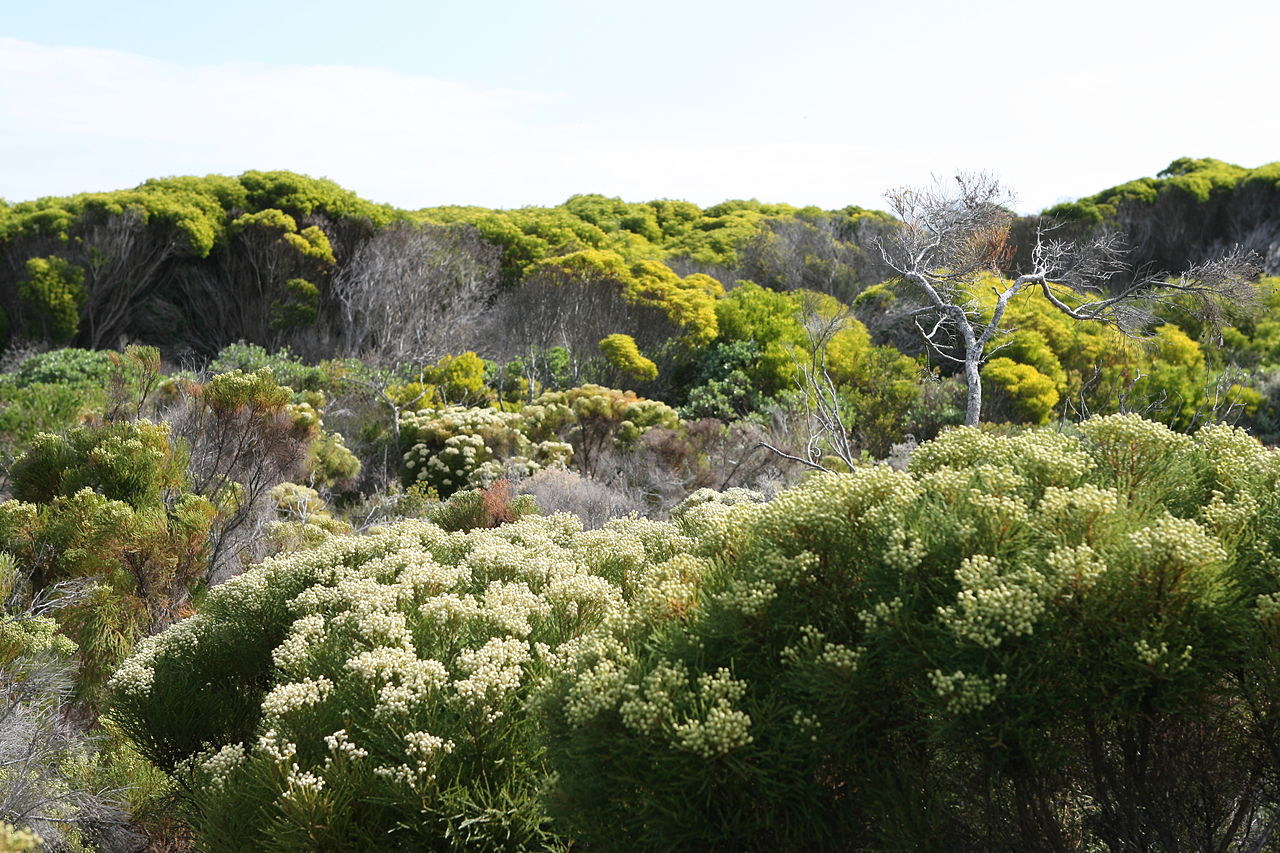


Overview and extent
The region centers on the Western Cape and adjacent parts of the south coast, including mountain ranges and coastal plains. Its dominant vegetation is fynbos, a heathland-type shrubland adapted to a Mediterranean climate of wet winters and dry summers. Soils are often nutrient-poor and acidic, and many plants have evolved specialized strategies to thrive under these conditions.
Flora, endemism and ecological traits
About nine thousand vascular plant species occur in the Cape Floristic Region, and a large proportion are endemic—found only within this limited area. Well-known plant groups include proteas, ericas (heaths), and restios, which together create a patchwork of floral communities. Many species have restricted ranges, narrow habitat preferences, and complex relationships with pollinators, fire regimes, and soil microbes. For botanical reference see general resources on vascular plants and species lists such as those compiled in regional flora catalogues (species references).
Fire ecology and landscape dynamics
Fire plays a central ecological role in the fynbos: many plants are adapted to recur after periodic burns, which clear old growth, release nutrients, and trigger seed germination. At the same time, inappropriate fire frequency—either too frequent or too rare—can damage populations and reduce biodiversity. Wildfires are therefore a natural but sensitive element of the system; their occurrence is influenced by climate, land use and invasive plants (wildfire and fire ecology).
Human uses, values and threats
The Cape Floristic Region supports economic activities such as horticulture, the commercial collection and cultivation of wildflowers, medicinal and aromatic plant harvesting, and nature-based tourism. It also has high cultural and scientific value because of the distinctiveness of its flora. Major threats include urban expansion, agricultural conversion, invasive alien plants, altered fire regimes, and climate change. Conservation efforts combine protected areas, private reserves, research, and community-based initiatives; a portion of the region is recognized under international protection frameworks.
Historical and conservation significance
Botanists have long been drawn to the Cape for its remarkable plant life. The Cape Floristic Region was formally acknowledged as a distinct floristic unit by early 20th-century phytogeographers and later recognized in global schemes of plant kingdoms. Because of its unique biodiversity and conservation challenges, parts of the region have been inscribed as protected areas to preserve representative habitats and the many endemic species they sustain. Ongoing research continues to refine knowledge of species distributions, evolutionary history, and effective conservation strategies.
Notable distinctions
- It is the smallest of the world's floristic kingdoms yet disproportionately rich in plant species.
- Fynbos, the characteristic vegetation, is fire-adapted and highly diverse despite poor soils.
- Conservation importance arises from both biological uniqueness and economic benefits derived from sustainable use and tourism.
The Cape Floristic Region illustrates how a compact geographic area can harbor extraordinary botanical richness and complex ecological processes. Its preservation is a priority for biodiversity conservation, scientific study, and sustainable livelihoods that depend on healthy, functioning ecosystems.
Related articles
Author
AlegsaOnline.com Cape Floristic Region (Cape flower region) Leandro Alegsa
URL: https://en.alegsaonline.com/art/16705
Sources
- koedoe.co.za : abstract
- dx.doi.org : 10.4102/koedoe.v50i1.153