
Cantuta (Cantua buxifolia): Andean flowering shrub and national symbol
Cantuta (Cantua buxifolia) is an evergreen Andean shrub with pendulous tubular flowers. Native to the highlands of Peru and Bolivia, it is an important ornamental and a shared national symbol of both countries.
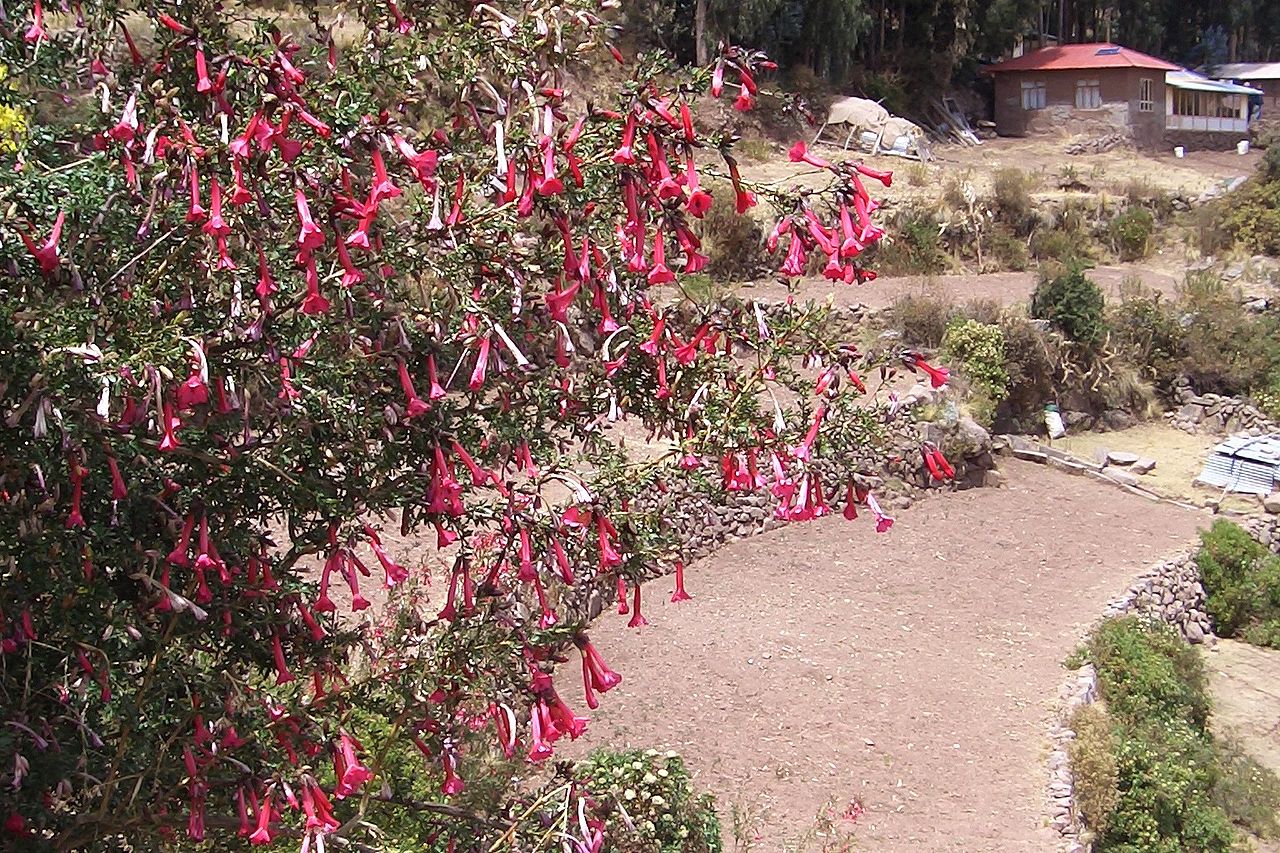
The cantuta (Cantua buxifolia) is a compact, evergreen shrub known for its showy, tubular flowers and cultural importance in the Andes. Often grown for ornamental display, the plant produces clusters of pendent blooms in shades of red, pink, yellow and white. The name "cantuta" is commonly used in Spanish-speaking countries of the region and appears in botanical literature as Cantua buxifolia. For a general reference to flowering plants see flower.
Image gallery
2 Images
Description and taxonomy
Cantua belongs to a small genus of Andean plants. Its flowers are tubular with flared, three-lobed tips and emerge from short shoots. Leaves are small, simple and arranged alternately along slender stems. While several cultivated forms are recognized by color and habit, the species is most often cited under the single name Cantua buxifolia.
Distribution and habitat
Wild cantuta grows naturally in the highland valleys and slopes of the central Andes. It is most closely associated with the flora of western South America, particularly the nations of Peru and Bolivia. Broader geographic descriptions sometimes mention regions of Central and South America, but the plant’s core range is montane and semi-arid Andean country.
Cultural significance and uses
The cantuta has long held symbolic value for peoples of the Andes. It was esteemed in pre-Columbian and later folk traditions and is officially recognized as a national emblem: it serves as a national flower and cultural symbol for both Peru and Bolivia. Today it appears in gardens, public plantings and cultural displays, and is valued for its bright, pendulous blooms.
Gardening and notable traits
- Light: prefers full sun to partial shade.
- Soil: thrives in well-drained, moderately fertile soils.
- Climate: adapted to cool highland conditions; tolerates mild drought but not prolonged frost.
- Maintenance: responds well to pruning to maintain shape and encourage flowering.
Although sometimes compared visually to other tubular-flowered shrubs, the cantuta is distinct in its Andean origins and cultural role. Gardeners and botanists prize it both for ornamental use and for its place in Andean botanical heritage.
Related articles
Author
AlegsaOnline.com Cantuta (Cantua buxifolia): Andean flowering shrub and national symbol Leandro Alegsa
URL: https://en.alegsaonline.com/art/16673