
British Rail Class 74
A late-1960s British Rail electro-diesel rebuilt from Class 71 units for Southern Region work; fitted to run from electric supply or its own diesel engine for greater route flexibility.
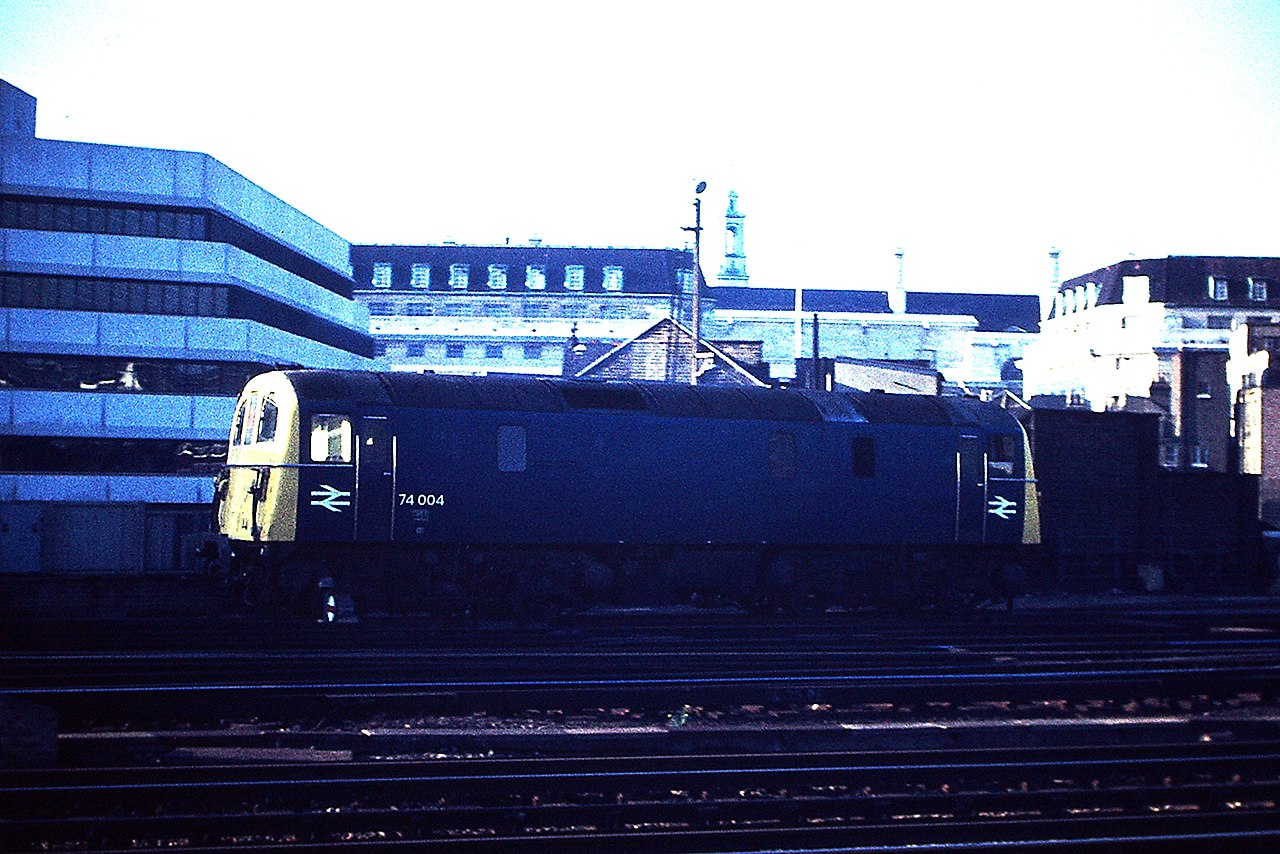
The British Rail Class 74 was an electro-diesel locomotive rebuilt in the late 1960s for use on the Southern Region. It originated as a conversion of older electric locomotives and was intended to provide flexible operation where electrified lines met unelectrified branches. The conversion programme sought to reuse serviceable components while adding an onboard powerplant to extend route availability.
Image gallery
3 Images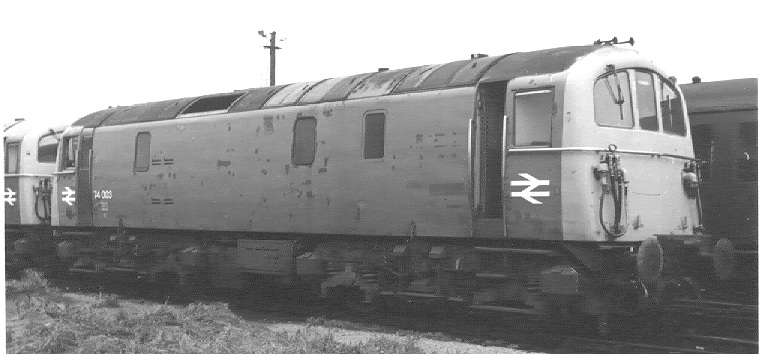

Design and characteristics
As an electro-diesel, the Class 74 could draw power from an external electrical supply or run from an onboard engine. On the Southern Region this most commonly meant collection from an energized third rail, though electro-diesel designs more generally may also work with overhead lines. The rebuilds retained and adapted much of the original electrical equipment but incorporated a diesel prime mover and associated generating equipment to allow independent running where the supply ended.
Modifications from the predecessor
The Class 74 fleet was created by rebuilding earlier electric locomotives: work included structural changes to accommodate fuel tanks and engine auxiliaries, alterations to the control systems to permit dual-mode operation, and revisions of cooling and exhaust arrangements. The conversion programme drew on redundant Class 71 frames and components to reduce cost and speed delivery. The diesel installation itself was central to the concept, providing a self-contained power source when third-rail current was not available (diesel engine).
Operations and uses
- Designed for mixed traffic duties where electrification was intermittent or absent.
- Saw service on passenger and freight workings in the Southern Region, taking advantage of both electric performance and diesel flexibility.
- Offered an operational alternative to changing locomotives at the end of electrified sections.
Despite the practical concept, the Class 74 conversions faced technical and maintenance challenges typical of early dual-mode designs. They illustrate an intermediate approach to route electrification and fleet rationalisation during a period when British Rail was balancing investment against changing traffic patterns.
Legacy
The Class 74 is often discussed in histories of British traction as an example of compromise engineering: an attempt to extend the life and usefulness of existing electric locomotives by adding diesel capability. Interest among historians and rail enthusiasts remains, both for the technical story and for what the programme reveals about mid-20th-century railway planning. Records, models and archived documentation continue to inform accounts of this distinctive dual-mode experiment.
Related articles
Author
AlegsaOnline.com British Rail Class 74 Leandro Alegsa
URL: https://en.alegsaonline.com/art/14497