
British Rail Class 76 (EM1) electric locomotive
Mid-20th-century 1.5 kV DC Bo-Bo electric locomotive built for the Woodhead Line; used for heavy freight and passenger trains and largely withdrawn after the line's closure and system change.
Overview
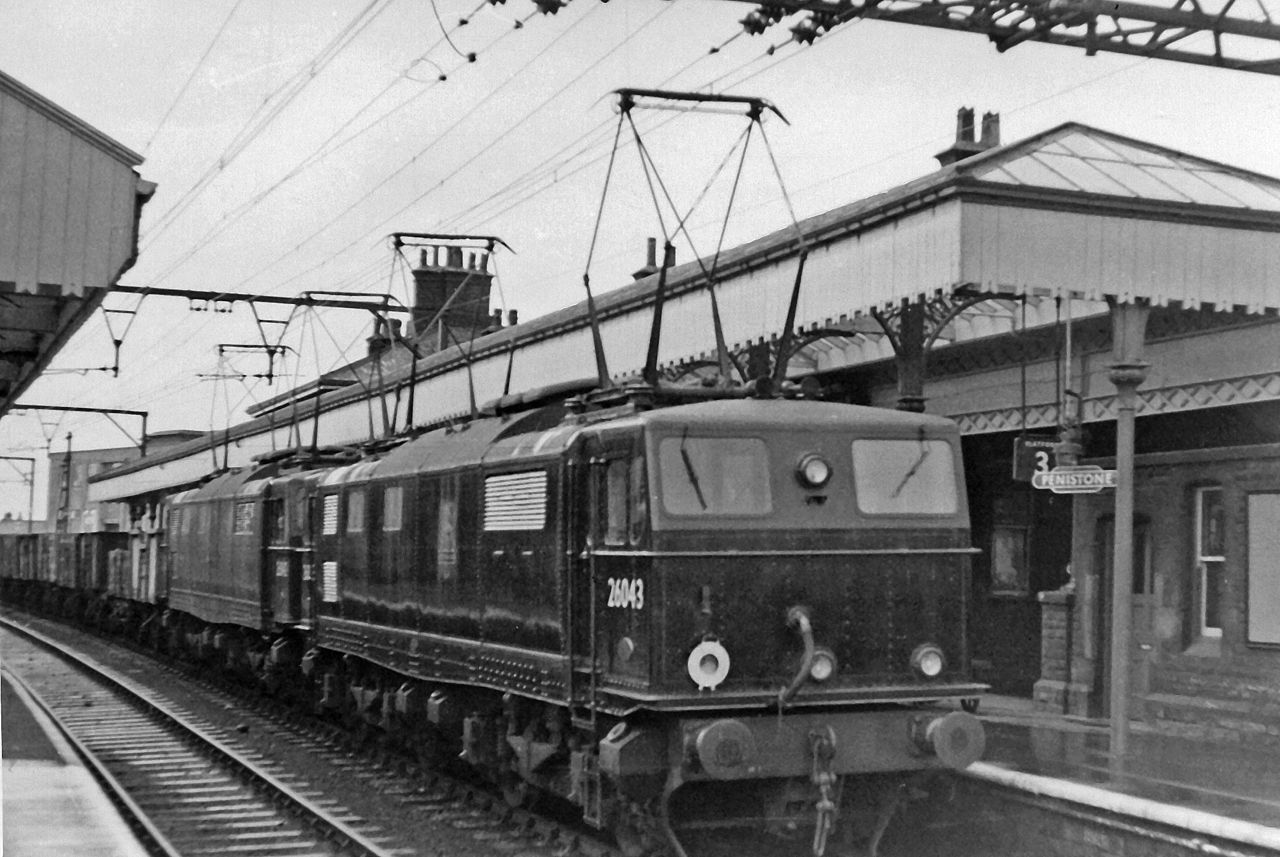
The British Rail Class 76, originally classified EM1, is a family of mainline electric locomotives built to work under a 1.5 kV DC overhead supply on the Woodhead Line across the Pennines. They were intended to haul heavy trains through the long trans-Pennine tunnels and were a distinct element of Britain's mid‑20th‑century electrification projects.
Image gallery
10 Images



Design and characteristics
Class 76 locomotives used a Bo‑Bo wheel arrangement (two bogies, each with two driven axles) and were equipped with traction motors and control gear suitable for DC overhead operation. Their layout and equipment emphasized sustained tractive effort for steep gradients and tunnel working rather than high top speeds. Construction reflected diesel and electric engineering practices of the period, combining rugged mechanical frames with power electronics and electrical control systems of the era.
History and development
Commissioned as part of the Woodhead route electrification in the postwar decades, the Class 76 fleet replaced steam haulage on one of Britain’s most challenging east–west corridors. The locomotives entered service in the mid‑20th century and formed the backbone of electric traction on that route until national network changes and route rationalisation reduced their role. The shift in British electrification policy toward 25 kV AC systems across the network eventually left 1.5 kV DC classes increasingly isolated.
Operation, uses and legacy
They handled a mix of heavy freight and passenger workings, especially services that required reliable traction through long tunnels and steep gradients. After the Woodhead route closed to regular traffic in the early 1980s many members of the class were withdrawn as their operating environment disappeared and conversion to the prevailing AC system was not undertaken. A small number survive in preservation, where they represent an important phase of British railway electrification history.
Notable facts and distinctions
- The Class 76 is often discussed alongside other contemporary electric classes developed for regional DC systems; each was tailored to its particular route and supply voltage.
- It illustrates the mid‑century choice of DC traction for some major routes, a choice later superseded by the national standard 25 kV AC system.
- For technical background and detailed rosters, see a technical reference covering British electric traction.
Related articles
Author
AlegsaOnline.com British Rail Class 76 (EM1) electric locomotive Leandro Alegsa
URL: https://en.alegsaonline.com/art/14498