
British Rail Class 71 electric locomotive
Overview of the British Rail Class 71: a third-rail electric locomotive used on the Southern Region, its design characteristics, operational history, duties, and distinctions from other Southern electrics.
Overview
The British Rail Class 71 was a type of electric locomotive introduced for use on the Southern Region of British Railways. It was a pure electric design that relied on the 750 V DC third-rail supply common across the southern network. Unlike some contemporaries, Class 71 locomotives did not carry an auxiliary prime mover and therefore could operate only where a live third rail was available.
Image gallery
1 Image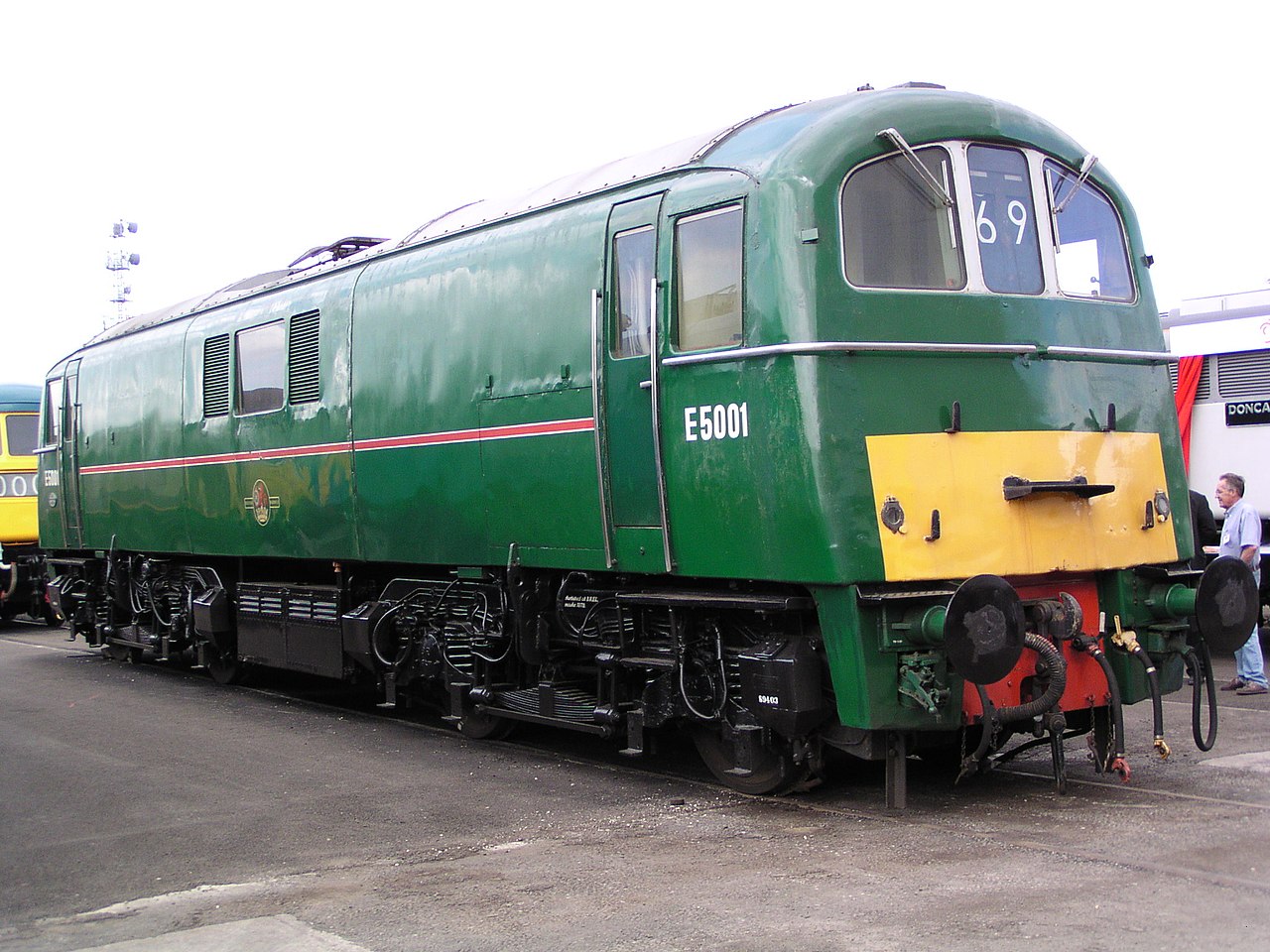
Design and characteristics
Class 71 machines were conventional electric locomotives in that they drew current from the third rail and fed it to traction motors through onboard electrical equipment. Their layout concentrated on maximizing adhesive weight and electrical performance for both passenger and freight duties on intensive suburban and mainline services. Key attributes included multiple traction motors, shoe gear to contact the third rail, and controls compatible with Southern Region operating practice.
Operational role and uses
During their service life, these locomotives handled a range of work: hauling express and local passenger trains, freight turns, and sometimes banking or engineering tasks on electrified lines. Their inability to operate away from electrified track made them most useful on the dense, fully electrified routes of the Southern Region where third-rail supply was continuous.
History and development
The Class 71 was introduced as part of postwar electrification and modernization of southern routes. They represented an evolution of electric traction aimed at greater reliability and performance under the limitations imposed by the DC third-rail system. Over time, changes in traffic patterns and the arrival of newer locomotives and multiple units led to the gradual withdrawal of the class from regular service.
Distinctions and legacy
A defining distinction of the Class 71 was its dependence on the third rail. Other Southern Region locomotives, such as the electro-diesel types, had onboard diesel engines allowing limited operation away from the electrified network. Class 71's purity as an electric design meant good performance where electrification existed but reduced flexibility elsewhere. The class is of interest to students of British railway electrification because it illustrates the trade-offs made when networks rely on a single continuous power source.
- See also: comparisons with other Southern Region classes such as the electro-diesel types: Class 73 and Class 74.
- Technical and historical summaries are available from specialist sources: Overview materials and electrification studies.
While no longer a front-line mainstay, the Class 71 has a place in the story of British railway electrification as an example of equipment optimized for a regional third-rail system and the operational choices that followed.
Related articles
Author
AlegsaOnline.com British Rail Class 71 electric locomotive Leandro Alegsa
URL: https://en.alegsaonline.com/art/14495