
Railway electrification system
An introduction to railway electrification: how electrical power is delivered to trains, system types, history, advantages and trade-offs, and typical applications.
Overview
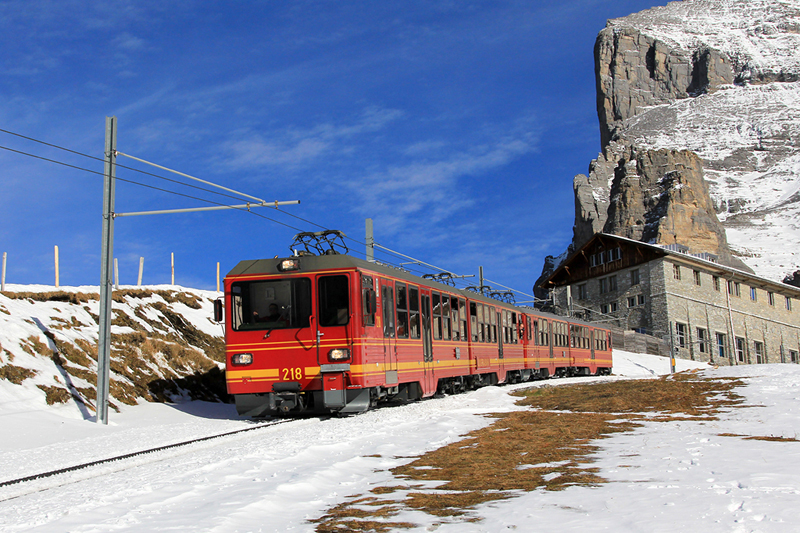
A railway electrification system provides electrical energy to trains so locomotives and multiple units can operate without an on-board combustion engine or other primary mechanical prime mover. Electrification replaces or complements diesel traction by delivering power from a centralized grid through dedicated equipment and contact systems. It is widely used on urban metro lines, suburban networks and high-speed intercity routes.
Image gallery
10 Images




Key components and contact systems
A typical electrified railway includes a power source and distribution network, substations that convert and regulate voltage, a contact system that transfers current to the train, and a return conductor or rails. Different contact systems are used in practice:
- Overhead lines or catenary systems, used by many mainline and high-speed routes and accessed by a pantograph.
- Third-rail systems, which supply power at track level and are common on metro and suburban lines.
- Busbars and conductor rails in depots or tunnels for limited, low-speed sections.
These elements work together: the centralized power supply feeds substations and the contact system; trains such as locomotives and multiple units collect the energy; they do not carry a separate internal prime mover for traction when operating under wire.
History and development
Electric traction emerged in the late 19th century and expanded through the 20th century as electrical distribution and motor technology matured. Early installations focused on urban tramways and metros; later developments favored suburban electrification and long-distance mainline electrification to improve performance, reduce local pollution and enable higher speeds.
Advantages and trade-offs
Electrified railways offer higher overall energy efficiency and lower operating costs compared with on-board combustion propulsion, partly because electric motors are more efficient and allow regenerative braking to return energy to the system. Many operators also cite reduced local emissions and quieter operation. However, installing and maintaining overhead wires, substations and other civil works can be capital-intensive and visually intrusive. The balance between capital expense and long-term operating savings depends on traffic density and service patterns; this trade-off influences where electrification is prioritized.
Technical distinctions and standards
Systems differ by voltage, current type and feeding arrangements. Some networks use direct current (DC) at lower voltages for urban and suburban lines, while many high-speed and heavy-rail routes use alternating current (AC) at higher voltages to reduce transmission losses. Compatibility between systems requires onboard equipment that can handle specific voltages and frequencies or the use of dual-system trains.
Uses, examples and notable facts
Electrification is common on commuter corridors, metro systems, and most high-speed lines because frequent services and higher speeds justify the infrastructure investment. It also facilitates features such as regenerative braking and centralized control of power distribution. Planners must weigh long-term benefits against initial costs and network continuity issues; in some regions, partial electrification or alternative technologies (battery or hydrogen traction) are considered for lower-traffic routes. For more technical reference on infrastructure elements see wires and infrastructure, for rolling stock design see materials on locomotives and multiple units, and for energy and efficiency topics see energy efficiency.
Electrified networks remain a central element of modern rail strategy where emission reduction, high capacity and high performance are priorities. For broader policy and implementation guidance consult region-specific resources and planning studies linked to grid capacity, signaling, and operations planning.
Related articles
Author
AlegsaOnline.com Railway electrification system Leandro Alegsa
URL: https://en.alegsaonline.com/art/80881