
British Rail Class 83 electric locomotives
Overview of the British Rail Class 83 electric locomotives: origin, design features, operational history on the West Coast Main Line, roles in passenger and freight service, and their later replacement.
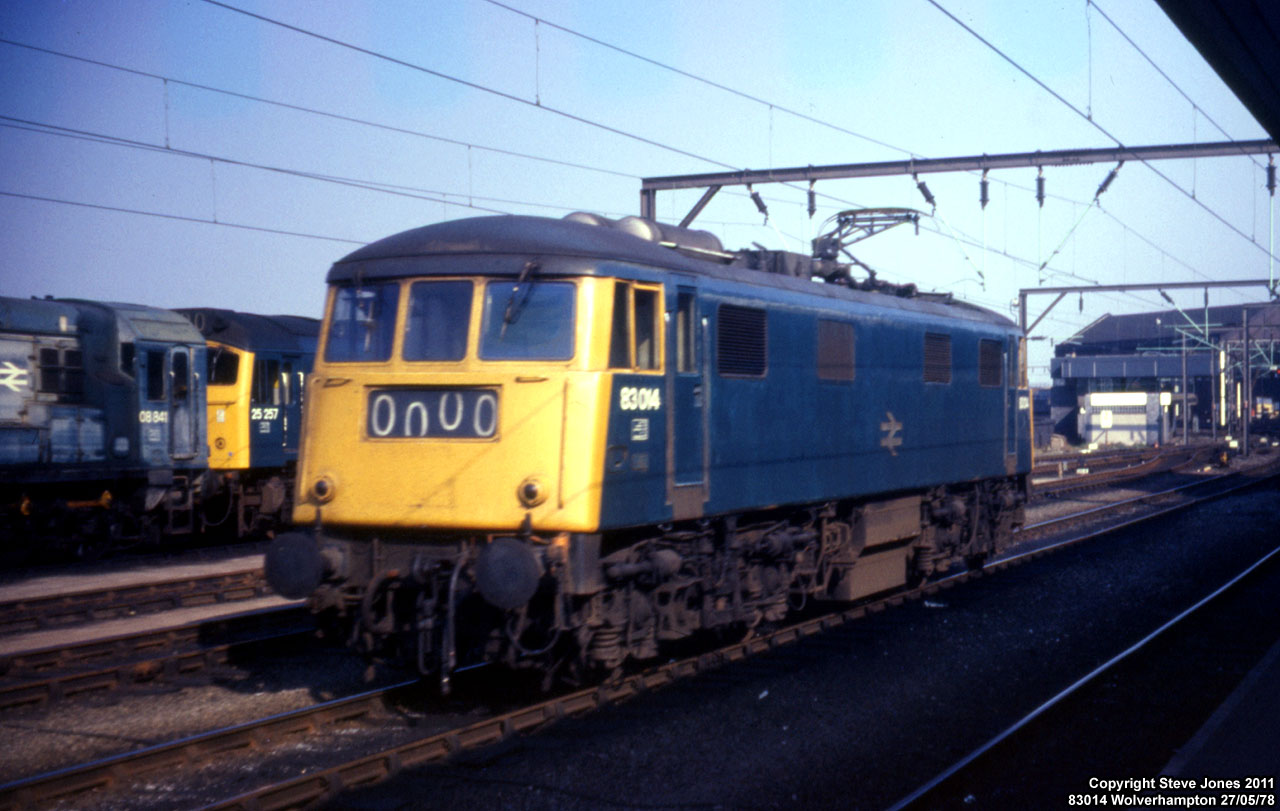
The British Rail Class 83 were a group of early AC electric locomotives introduced to support the modernization of mainline services. Built by English Electric at the Vulcan Foundry works in Newton-le-Willows, they formed part of British Rail's push to electrify key routes. Commissioned during the programme that transformed the West Coast Main Line, these locomotives helped demonstrate technologies and operating practices that became standard for later fleets.
Image gallery
3 Images

Characteristics
The Class 83 design reflected mid-20th-century practice for high-speed mainline traction: they collected power from overhead 25 kV AC lines and used onboard electrical equipment to drive traction motors. Emphasis was placed on reliability, maintainability and compatibility with existing signalling and braking arrangements. Over time components were upgraded to improve performance and reduce downtime.
Development and context
As part of a wider modernization initiative by British Rail, several prototype and production classes were ordered from different manufacturers to evaluate competing designs. The Class 83 batch represented one manufacturer's solution and was evaluated alongside other early electric types. Their introduction marked a shift away from steam and early diesel traction on principal inter-city corridors.
Operations and uses
These locomotives worked both express passenger and freight duties on electrified sections of the network. They regularly hauled long-distance services, regional expresses and heavy goods trains where electrification permitted. Crews and engineers learned operational techniques and maintenance practices that informed later standard classes.
Legacy and notable points
Over the years the Class 83 fleet was gradually superseded by newer, more powerful and standardized electric classes as the network and traffic needs evolved. Their role in the early years of full mainline electrification is regarded as important for testing equipment, establishing operational norms and training personnel. For comparisons, it is useful to consider how different builders approached the same specification and how those variations influenced later standardization across the network.
- Built by English Electric at Vulcan Foundry.
- Delivered for use on the West Coast Main Line electrification programme.
- Part of a group of early AC electric types ordered by British Rail.
Related articles
Author
AlegsaOnline.com British Rail Class 83 electric locomotives Leandro Alegsa
URL: https://en.alegsaonline.com/art/14504